
Making Slow
This is a cross posting, with The Wild Edge, my Substack, to give you a flavour of the writing there. Subscribe for weekly creative reflections, seasonal recourses, creative co-working sessions and monthly tickets to salons.
Winter wore her coat buttoned. A long, heavy coat, which pressed down on the land with dark threaded seams. It has already been a season of slow beginnings. I have watched the days lengthen, only to be swallowed by mists again. I’ve swum in a glinting harbour, only to find the cloud wink out the light. What’s arriving is not a steady current of presence, but of departure too; a pull back, an edge forwards, motion, I am thinking, much like breath. Perhaps this is the natural rhythm of arrival; hesitancy before passage; timidity preceding being known. Perhaps I just need to remember to make my way with slow. I turn to the land, and take note.
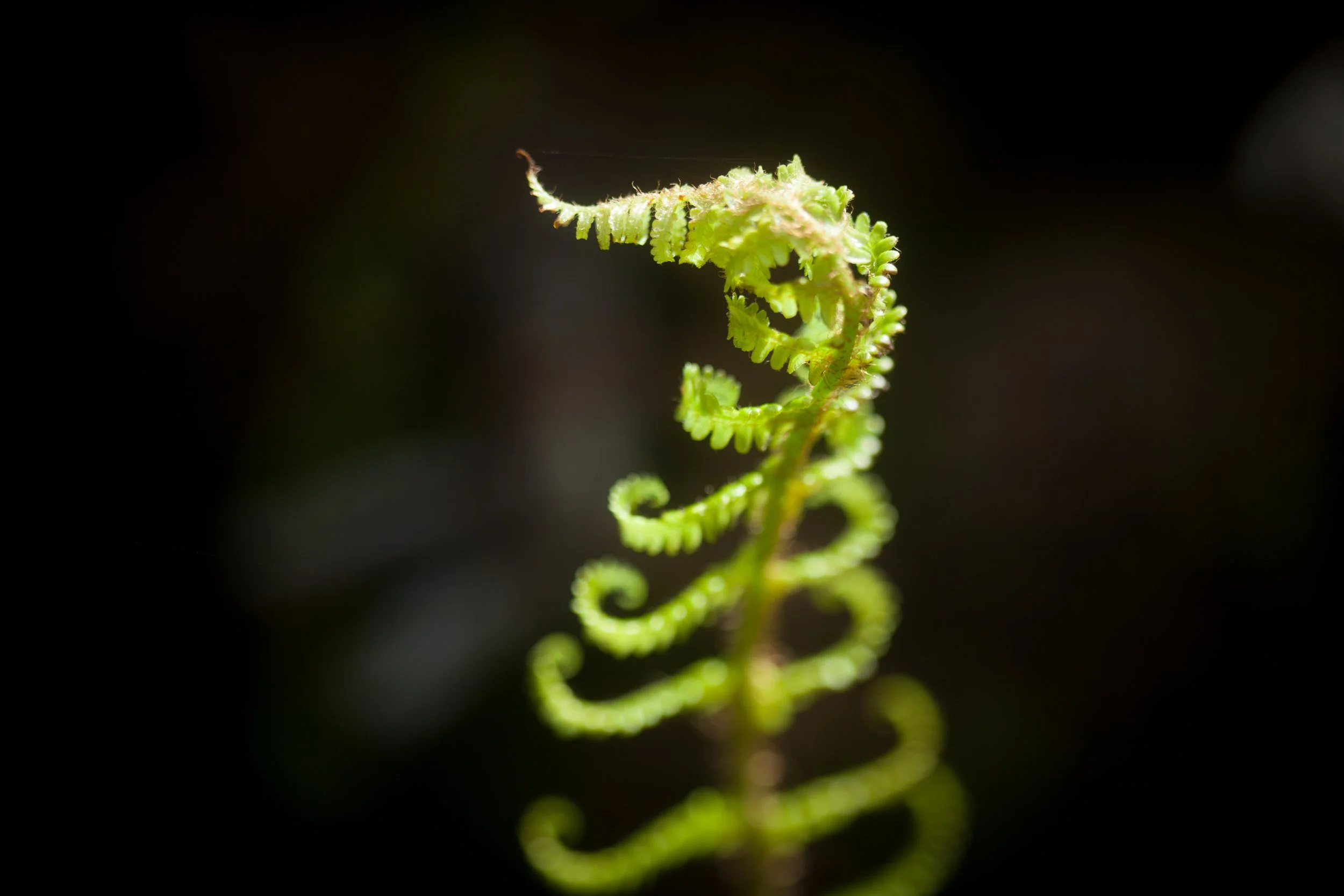
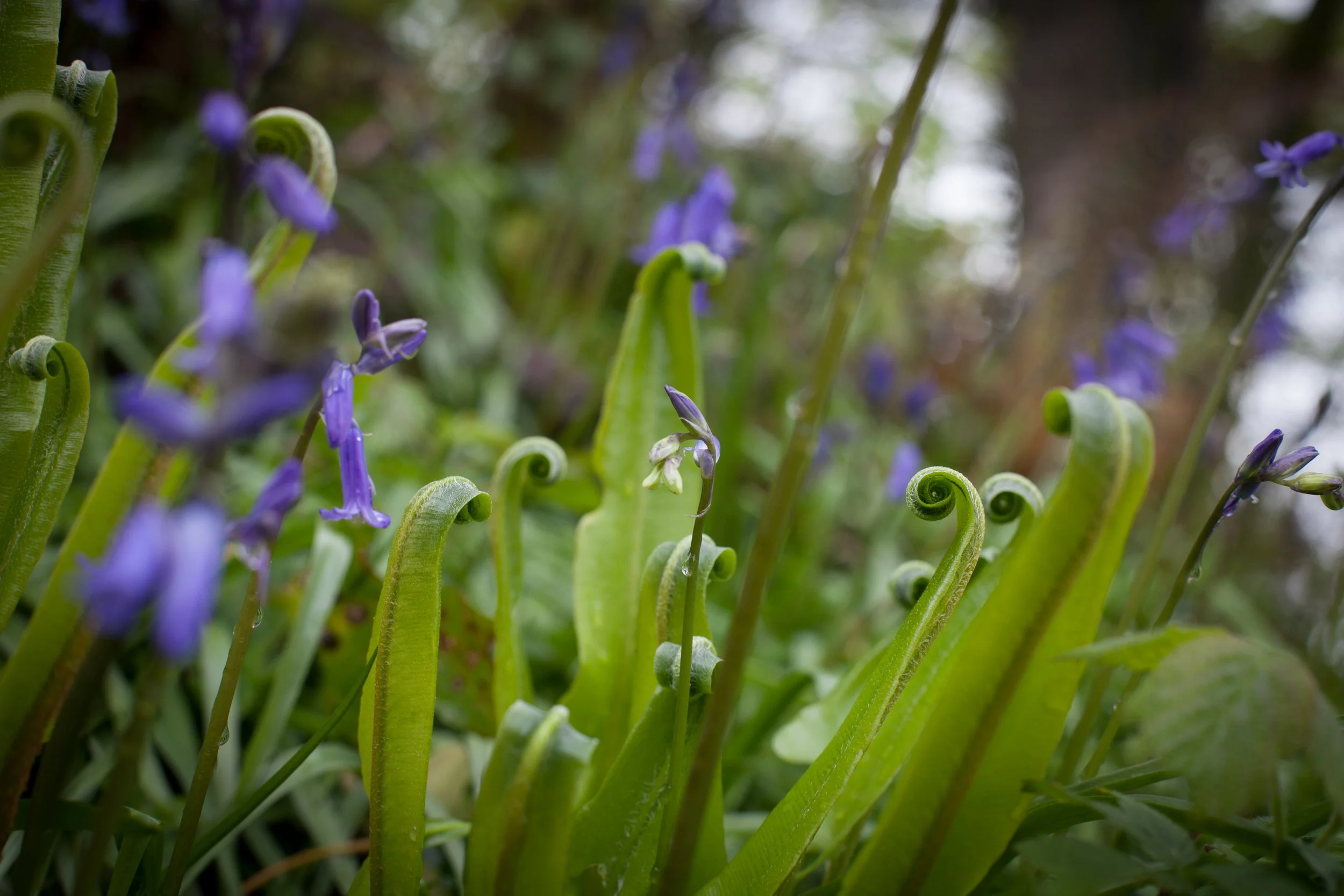
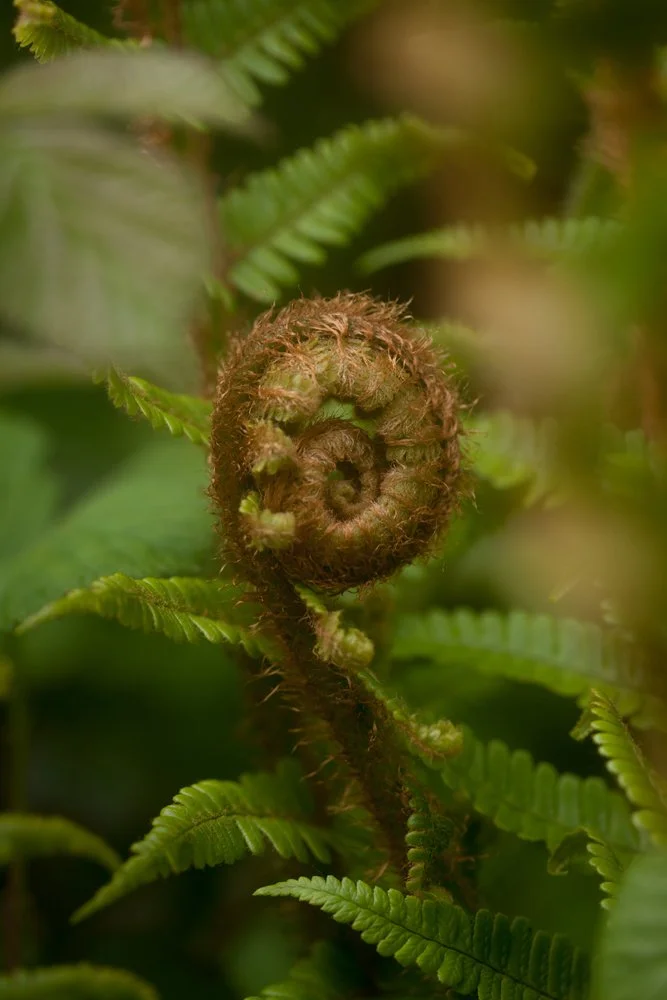
It has been a week of the slow uncurl. Earlier, walking in the woods, I noticed how the young fern began its awakening tucked in a tight spiral, as if bowing to its heart before revealing itself to the world. Its gradual arrival is the unravelling of the spiral, shaped in the way of curve and waves and cosmic folds. A shy, timid, opening, before turning to face the light. The world awakens gently in the pace of fern.
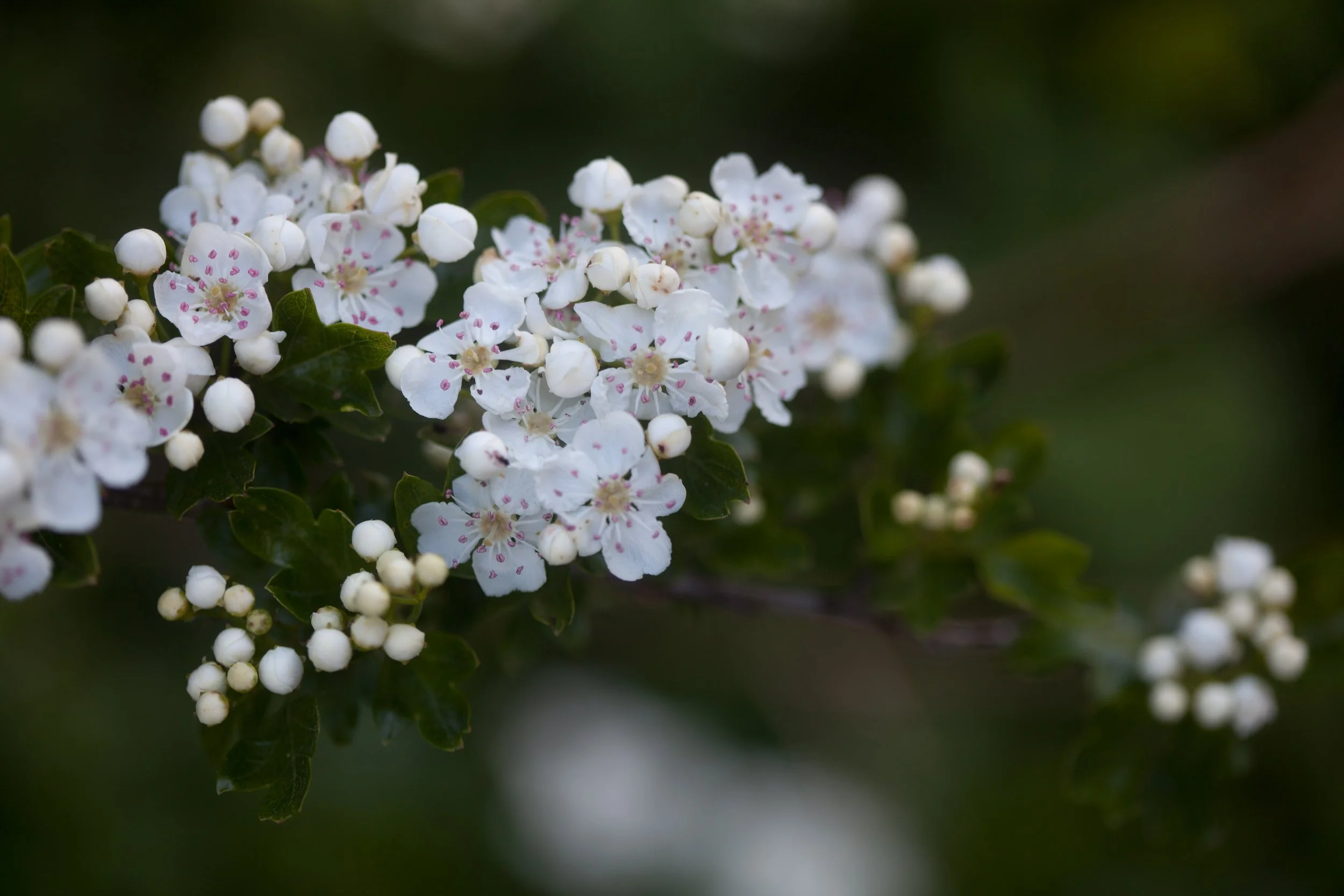
Meanwhile, on the bushes, from hawthorn to bramble, the week has witnessed the gathering plumage of bloom. It’s been a gentle rattle in the land, as if the earth is airing her new sheets and spreading them on the branches. Swatches of bright yellow gorse, like hand printed Indian block cloth, laid alongside the white linen of blackthorn. As the mists clear, the hills are whitewashed again, and the season is opening her hand with her offerings. Her generosity never fails to amaze me; how ever garment of bloom came from that buttoned winter coat; slowing slipping off to reveal the next layer; treasures the darkness kept hidden until the world was ready to welcome.
As the light lengthens now, slowly I am being taught to trust in my own unravelling, to lay the winter layer down. The darkness has served a remedy, and Spring is now taking the reins. The seasons are a splice of time, but they also offer us a language of invitation. What might it be to unburden ourselves of coats which served in one season of our lives, but not the next? What might it be to welcome our own arrival at the pace of fern, a gradual opening to our own possible? The spiral is a patten of arrival from the centre of our being, departure again, before returning; the centre the site of orientation from which the movement comes. To hold our centre in the mist of change. Isn’t this so much of the work of this time. The spiral is also a key.
As I think about the invitation of the spiral, I am also feeling into its pace too, and how far removed from the centre we have become when moving at the pace of fern seems so counter-cultural. So much of the external world is hooked on fast. Fast fashion. Fast acting. Fast food. Fast paced. The algorithms scroll us to the next, leaving us unsatiated. Fed on their hunger for more, it’s so easy to be sucked into their definitions of success, where more is more is more. There is no time for the unfurl, for the departure, for the gradual arrival, for the shy reveal, for craft or skill and the time it takes to truly transform through the process of becoming. Slow has always felt counter cultural but I think it is where the real revolution might be taking place. It certainly will not be televised.
Perhaps it is a function of getting older, but as the seasons pass and the years speed by, my need for slow is quickening. Only in the gentle, am I learning that I can hear my true words. Only in the gradual spiralling of arrival to myself —coming closer, turning away, coming closer again —can I discern the truth of my being. Holding the proximity to centre, like a wave of breath in motion, like another season always on the way in, offers a different form of patterning. I need the slow to listen. In the quite places I am learning to discern the ever whispering invitations. The inner life is a cosmos. I bow my head. The spiral takes me inwards.
Very soon I realise what I have been pushing back against. Fast has been holding the noise of what burdens, weighs me down with doubt and uncertainly, clutters my mind with the debris of the algorithmic hunger for more. I have been craving the certainly of my centre. I hunger for the love which I find there, and the vastness. When I bow my head, I am met not with estrangement, but a welcome. It is warm, and kind and wise. It is set with bloom. Inside are all the answers I will ever need. Inside us all is our own universe, ready to speak.
So I turn off my phone and I go to the woods, where the fern uncouples itself from fear and unloosens itself to the awakening of Spring. The wild garlic brush off my legs, and I am walking now in the scent of awakening. Low to the ground, delicate yellow primrose, blush colour on the soil. There is grace to this pace of arrival.
By what measure, I ask myself, have I been judging my own arrival. By extrinsic deadlines or definitions, or an intrinsic knowing from my own soil, my own soul, from which the spring in me matures.
As I walk in the woods, I am a student of the spiral. Fern is a wise teacher. Slow is too. I am learning to trust in the pace of Clare.
Every person is a cycle, with our seasons of arrival, proximity, distance, return. Yours will be different to mine. There is no right way, or wrong way. You are not late. You have not missed out. We are each our own becoming, ever arriving to ourselves. But what I know is it can not be forced. Just like the fern finds its own shape. Just like the wave breaks within its own beat, our arrival is ours alone. We have our winters. We have our spring, and when we listen inwards towards the universe of our being, we’ll each get the nudge when the time is right: to unbutton our coats, lay the layer down, and arrive the way of our own unfolding spiral, as the breath does, and the seasons. We can always bow to our centre, and begin.


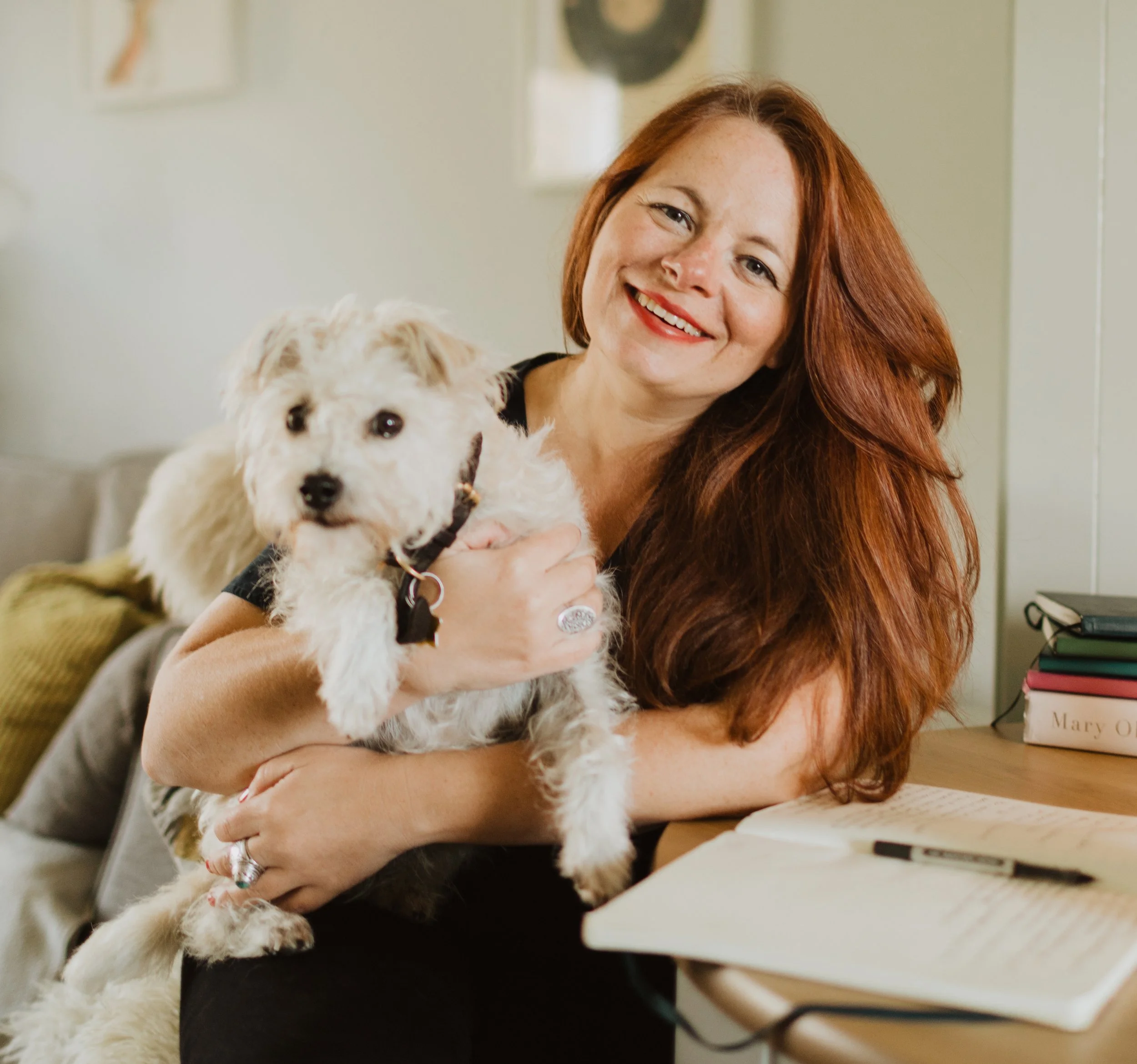
Hello. I'm Clare
I'm a writer, educator and facilitator, living in beautiful West Cork, Ireland. I love to share resources and learning to help harness the transformative power of words, place and story. I hope my work offers nourishment for mind and soul. Thank you for being here. Clare x


Along the Pilgrim Path

You can listen to this post here (5 mins)
Days dream themselves into being in the high places, and dreams dare a little deeper there. Beside the sleeping lake, the still surface reaches up at the first sign of contact. I hover my hand above, and watch her rise to greet me. We both exhale.
In the high places, along the pilgrim path, the old stories are walked along, an ancient route, thousands of footfalls worthy, of pilgrim and fox and hare and wren. These were the walking routes to silence.
We joined at Kealkil, four of us, spreading across two generations, some with more tales in our step, some with more spring.
We gather first in circle.
‘On the old paths, we walk with intention’, I offer.
‘A Sankalpa’, someone else brings.
‘It need not be said aloud, but in your heart’.
We bring our hands together, like a star, or a cross.
‘Go team’. And so we begin with laughter.
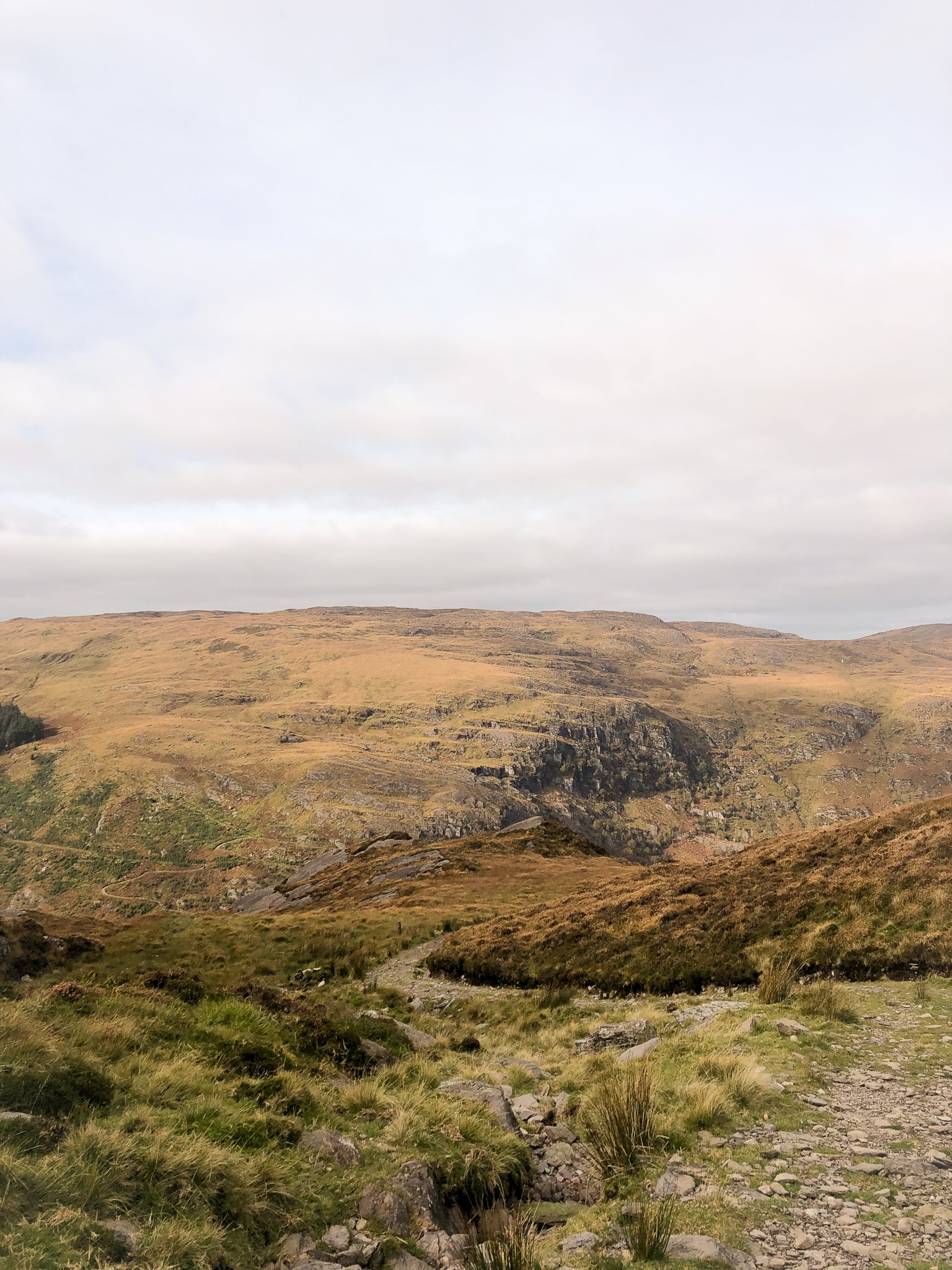
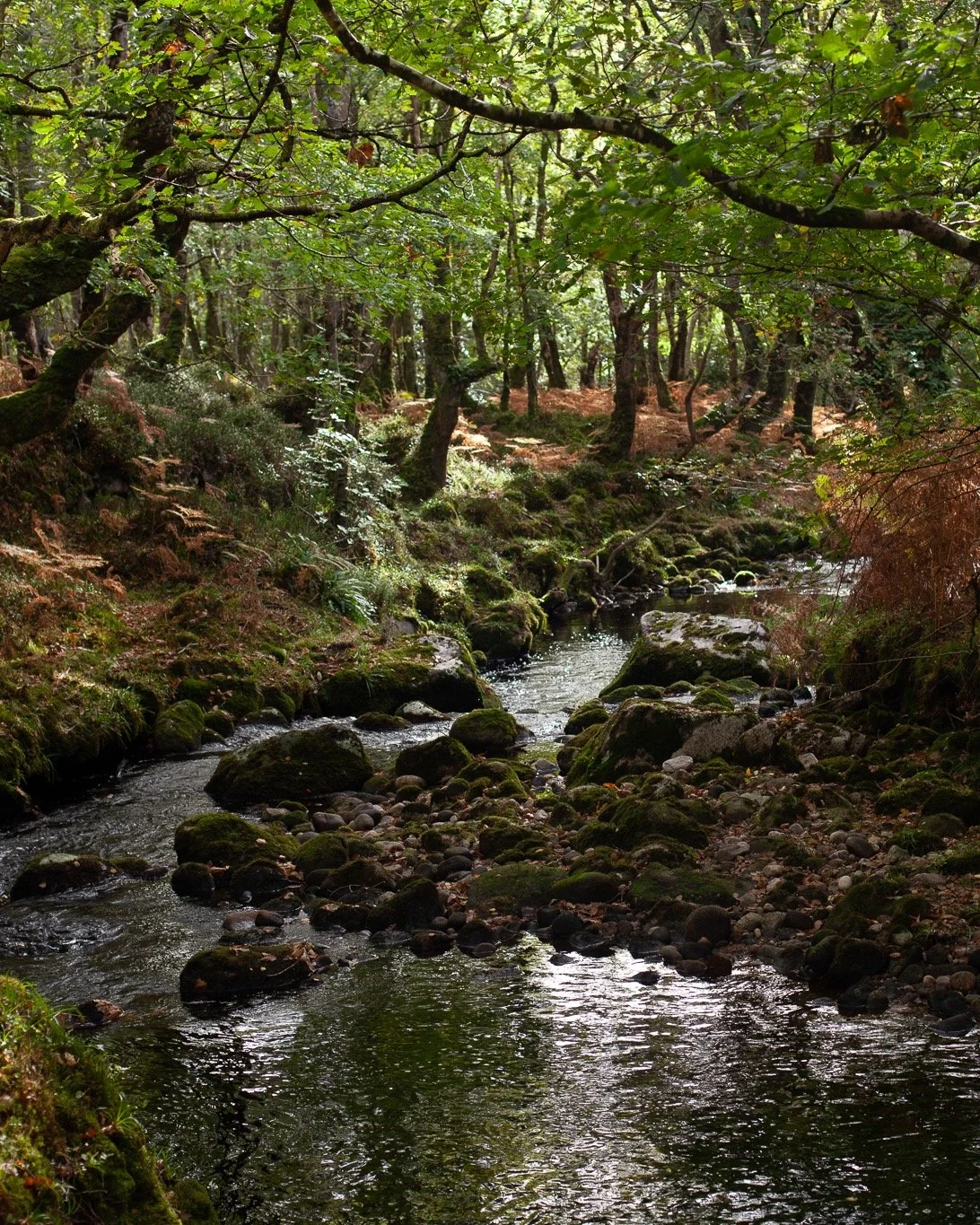
The high paths are never straight. We pass woodland, tinged with Autumn. We pass a singing river. We pass slabs, stripped-lined with quartz. ‘We are walking on millennia’, I say, and we take a step back in time.
In the high places, conversations move at the pace of breath. We walk in and out of silence, then stories. We talk of poetry and places, and of travels which served to take us home.
At the clearing with the welcome sign, we lay our picnic under ‘failte’. The rise is welcoming us. The feast multiples as we each lay our bearings.
Along the old path, there are songs, silly ones, and the one which invites brothers and sisters to come down to the river to pray.
At the river, I wash my face in her flowing waters. I drink. I joke, ‘If I die today, it is a good day to die. And part of me is not joking. I place my hand on the grass, and a bee stings my palm. It swells with the possibility. We walk on.

My friend has a chime. Every fifteen minutes it rings like a resonant singing bowl. It is a moment to pause, to come back from the story to the self, then listen deeper. I keep looking forward to the chime.
At the hawthorn tree, the berries are like congregations, offering their gifts. The silver birch, leafless now, reaches out her limbs for nests. Their wintering is a generous place. We walk on, zigzagging up the steep.
At the highest place, a lake surprises us. I sit by her waters and see the ancient deep. Here she is, settled in her nook, as her waters are forever replenished, rising and falling. The mountain breathes.
After the high places, there are low.
The hills begin to fall and curve; the path a folding current to carry us to the sanctuary.
We pass through hazel, oak, ash, like walking into the memory of the place still dreaming itself awake.
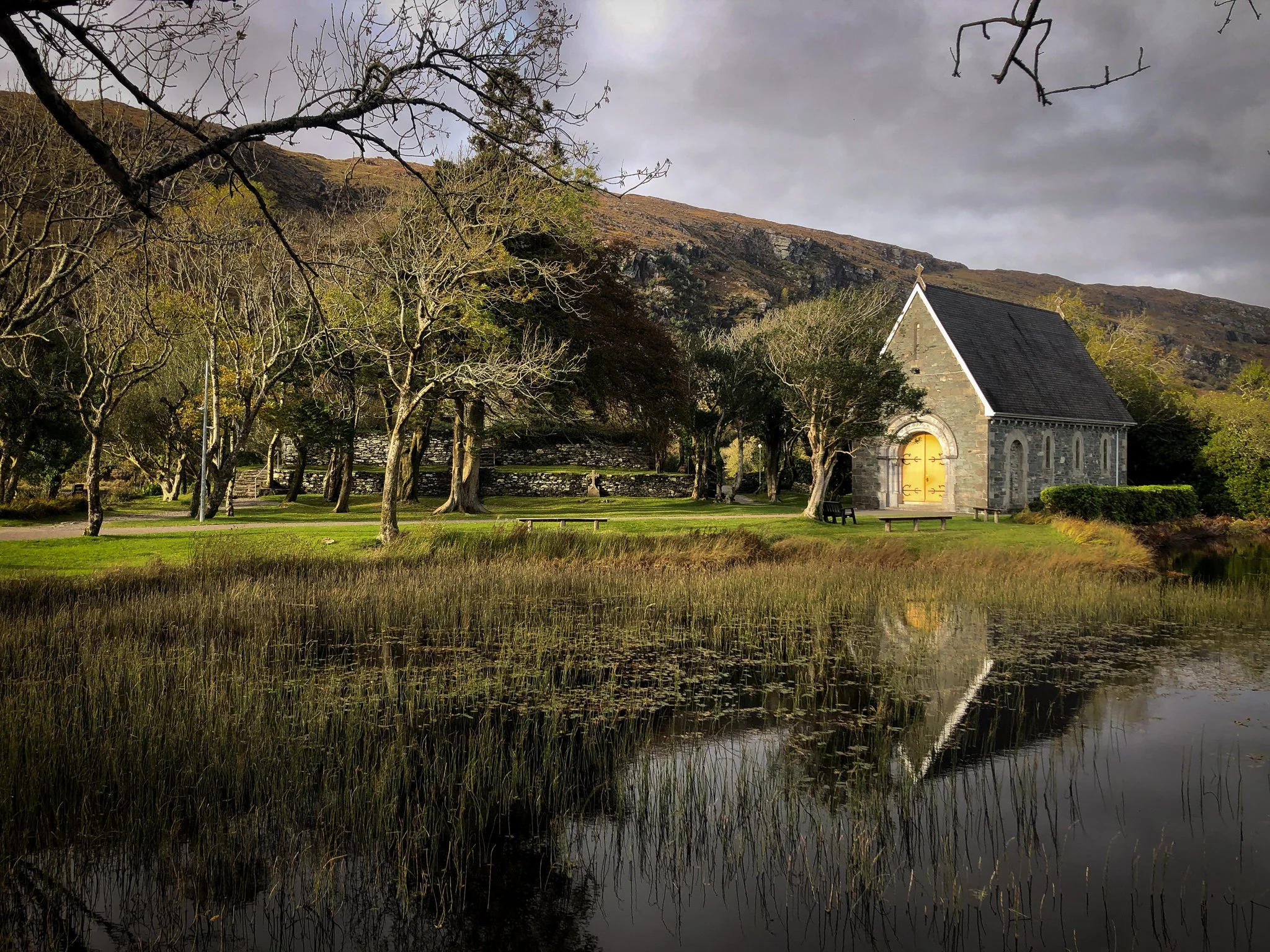
The high place, the old pilgrim path, opens to another lake, then drops to an old monastic site, upon which a chapel rests. Gougane Barra, the rock cleft of Barra. Finbarr’s site.
I do not enter. Instead, I walk to the water’s edge, and see the chapel reflected there, then turn to take the next step towards home. The path continues outwards, onwards. I do not know how long it will take to get there, but as my feet know by now, the journey is a resplendent thing.
Hello. I'm Clare
I'm a writer, educator and facilitator, living in beautiful West Cork, Ireland. I love to share resources and learning to help harness the transformative power of words, place and story. I hope my work offers nourishment for mind and soul. Thank you for being here. Clare x
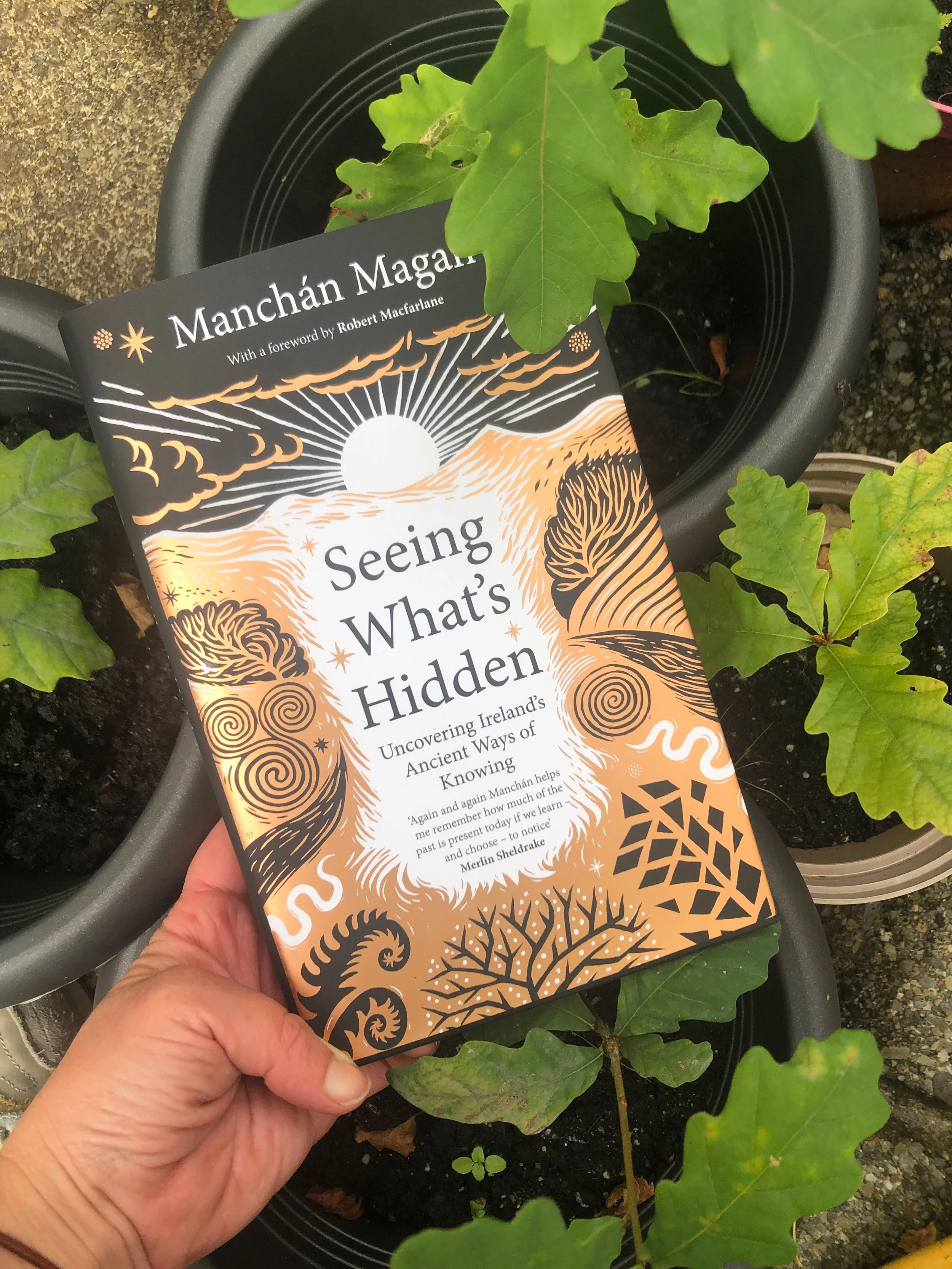
For Manchán
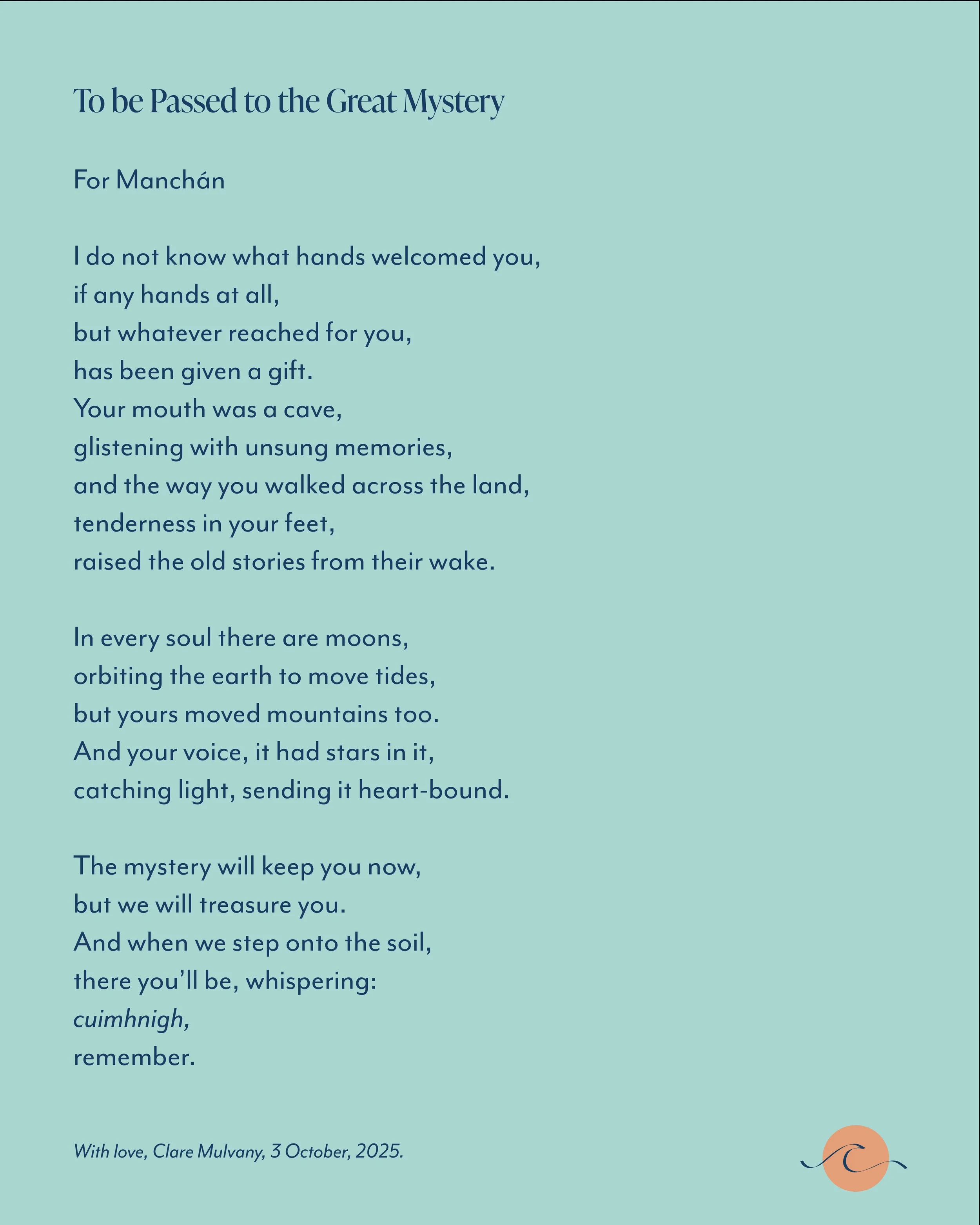
In memory and honour of writer, broadcaster and friend, Manchán Magan.
Hello. I'm Clare
I'm a writer, educator and facilitator, living in beautiful West Cork, Ireland. I love to share resources and learning to help harness the transformative power of words, place and story. I hope my work offers nourishment for mind and soul. Thank you for being here. Clare x

Love and Ink

July days are here. I’m sitting outside as I write this note to you. A chatter of chaffinch and sunbeams join the mix. Around me, seeds I planted months ago are now in bloom; colour bursts. A parade of wild pink roses sit on my table as greeting. The year spins with petal and promise.
By July every year, I am ready for a rest, and some play. After the busy academic months and full season for organisations, summer stretches out a bit, offering some gentler rhythms and time to plan. I took myself off to Seville last week, thankfully missing the height of the heat, and switched off some of my brain for a while as I wandered narrow streets and stared lovingly and longingly at art. Now home, between swims, I’m taking stock, taking time.
I look at the world, and my heart breaks.
I look at the bloom, and my heart sings.
It’s all here; the pain and the promise, so much of both.
Often in my journal, when I am feeling a little overwhelmed or unsure, I turn to a voice inside me. I call her ‘The Wise One’. It’s the ancient elder in me, the voice which is timeless and eternal. I believe it is in all of us - a part of us that knows what is best, what is the wise course of action. But I think it takes practice and time to find her. She is below the noise and the ‘shoulds’, she (or he or they or them- or whatever you choose to call), seeks the best for us. For me, she speaks with firm compassion, sometimes so directly it stings, sometimes so subtly it can be easy to doubt her power. But there she is nonetheless, speaking her wisdom.
Maybe all this seems too far-fetched, too ‘out-there’, but for me it has been a way of really discovering what is ‘in here’. Dialoging on the page with her, I find answers my rational and logical brain does not ordinarily extend to. It takes imagination and the voice of ‘another’ to reach to ideas and pathways which my noisy, overwhelmed brain would have dismissed. But the wise voice is consistent, persistent.
This morning, trying to plan my next few months, and feeling totally aghast, once again, at the news, I asked for her guidance. This is what she said:
The sun is here for you.
And this day: a blank page.
Your pen is here. And the marriage of ink.
Your love is here, let it write the next sentence.
That’s all you’ll need:
Love, and Ink.
Love and Ink. That’s what I have. My words. My art. My offerings. It’s not everything, but right now, she has reminded me of the gifts: a blank page, a summer unfolding, and ink to write it into being.
Hello. I'm Clare
I'm a writer, educator and facilitator, living in beautiful West Cork, Ireland. I love to share resources and learning to help harness the transformative power of words, place and story. I hope my work offers nourishment for mind and soul. Thank you for being here. Clare x
They say it takes 3.5%
You can listen to me read this below:
3.5%
They say it takes 3.5%
to change a regime.
3.5%. How many grandmothers
is that? How many sisters?
Or brothers? How many aunts?
How many you’s?
How many me’s?
3.5% of flag, march, sail, sing.
Of boycott. Of sanctioning.
How many lives saved is that?
How many grandmothers?
How many children’s children?
How many olive branches is that?
3.5%. That’s what they say.
There are busloads already.
There are men, women,
walking to borders,
reaching out with their
olive branches.
3.5%. What percentage is a busload?
Or a single pair of feet?
Getting there.
It is getting us there.
- Clare Mulvany, June 14, 2025
Hello. I'm Clare
I'm a writer, educator and facilitator, living in beautiful West Cork, Ireland. I love to share resources and learning to help harness the transformative power of words, place and story. I hope my work offers nourishment for mind and soul. Thank you for being here. Clare x

With Eyes on The Future

You can listen to this piece below:
I love the pull of the days, either end, like a lever arcing towards the light. The hedgerows are ebullient in their growth, foxgloves now the flag-bearers with their purple-pink singing heads. The chorus fills with elderflower and ox-eyes daisies, flocks of white bloom, murmurating.
I hold it all with awe and tenderness, for where there is beauty, so too fragility. The song of it all hangs on a fine thread of balance, never to be taken for granted. To really witness the bloom, is also to advocate for its protection.
I see, of course, what is unfolding in our fine-threaded world. Along its fractures and faultlines — the injustices, the inhumanities. It is so hard to hold most days.
I am buoyed by witness; the advocates, the protectors, some on land, some on sea, murmurating. It’s about Palestine, and wider conflicts, of climate and our bio-diversity crisis; the eco-systems of our humanity held up against the lens.
I find myself reflecting on my years as a photographer. In schools, in hospitals, in waste facilities, along polluted river beds, on death beds, listening, mostly to the mothers. In Uganda, India, Bosnia, Cambodia, Ireland, and elsewhere, it was the women, mostly, who would look into the lens, with eyes both bright and remorseful. See me, really see me, and you’ll see what we can also be. For in those eyes, I would see mother-love strength: to hold, to care for the lives of their children, and their children’s children, and what they might become. Those eyes were on the future. Please educate, please see our resilience, please, please hold onto hope.
Hope, as advocate, as witness, I learned in those eyes, is a duty of care.
I still see those eyes. They are seared into my pen. And now, as I lay down in the grasses, my camera turned towards those purple singing heads, I notice the ox-eyed daisies winking back. A passage from Terry Tempest Williams sings in my lens.
‘The eyes of the future are looking back at us and they are praying for us to see beyond our own time. They are kneeling with hands clasped that we might act with restraint, that we might leave room for the life that is destined to come. To protect what is wild is to protect what is gentle…’
My prayer these days is in my words, these words, and my images, and the stories I am trying to write. For story, I have also come to know, is both lens and lever. Stories can shift the dial on culture, they can alter our perception, help make the invisible visible, help us make sense, and even better, come to our senses. For under the lens of story we are asked to kneel beside the mothers, the fathers, the bloom, and we are taken inside their eyes, their hearts, their hopes.
See what I see.
Feel what I feel.
No policy document can do that. But story can.
My ink is also a camera is also a lens is also an eye on the future: saying, praying, may be see beyond our own time.
I don’t have all the answers. I don’t have all the perspectives. But I can see the witnesses, the advocates, the protectors, the blossom, the flag-bearers. Now, there is a story with eyes on the future. Look this way. Be the duty of care. Our eyes have ink in them. Our hands can hold the flags.
Hello. I'm Clare
I'm a writer, educator and facilitator, living in beautiful West Cork, Ireland. I love to share resources and learning to help harness the transformative power of words, place and story. I hope my work offers nourishment for mind and soul. Thank you for being here. Clare x
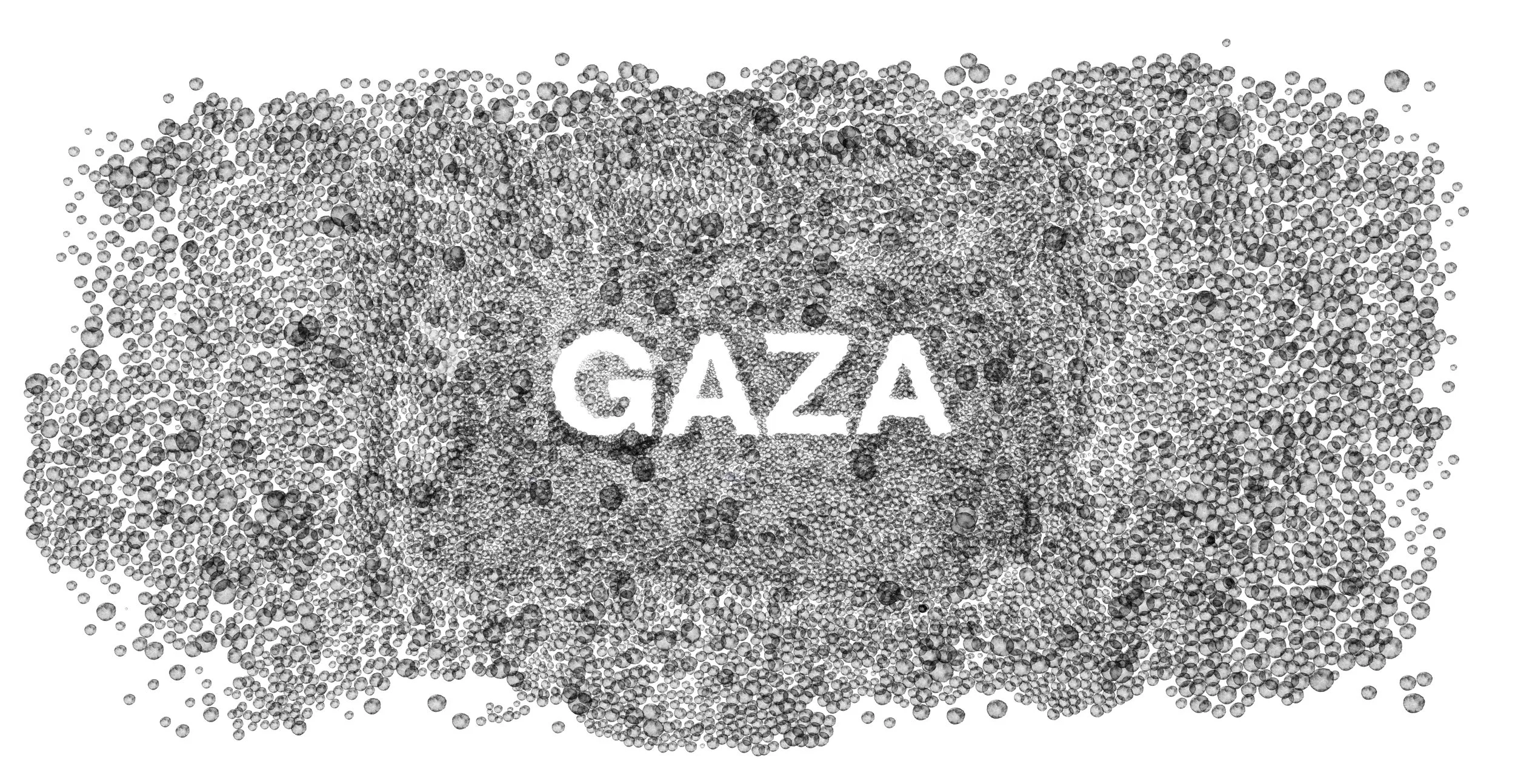
I want to write about Gaza but I don’t know how to write about Gaza.
I want to write about Gaza, but I don’t know how to write about Gaza. ‘About’ is already too distant. Because to write about is to already remove oneself. But writing is what I have.
So I pick up the nearest thing. It is a pencil and there is a feather stuck to its tip.
Go with wings.
You can listen to this piece below:
Trigger warning: This is raw and emotional, speaking about the genocide in Gaza and is not intended for young ears. If you have children listening, please save this for another time.
I want to write about Gaza, but I don’t know how to write about Gaza. ‘About’ is already too distant. Because to write about is to already remove oneself. But writing is what I have.
So I pick up the nearest thing. It is a pencil and there is a feather stuck to its tip.
Go with wings.
So I want to tell you that I can’t fathom what is happening. I can’t fathom how many mothers are burying their children, how many fathers are burying their children, how many children are burying their mothers, their fathers.
I can’t fathom how food is being used as a weapon of war, how civilians are being seen as collateral in that war.
I want to tell you that I am looking at the news, but the thing is, incredibly, it’s not making the news, and when it does, I see three children’s shrouds being swaddled by their mother and I can’t look. I can’t keep looking and yet I need to keep looking because if we aren’t looking, the news will go away and soon we’ll be told that the news of the day is about how tariffs are on or off or on again, and even that is making me dizzy. So I switch to something about puppies, literally puppies, but when I am in that half-dream/ half-awake place, all I can see is a mother holding three shapes which once were her children.
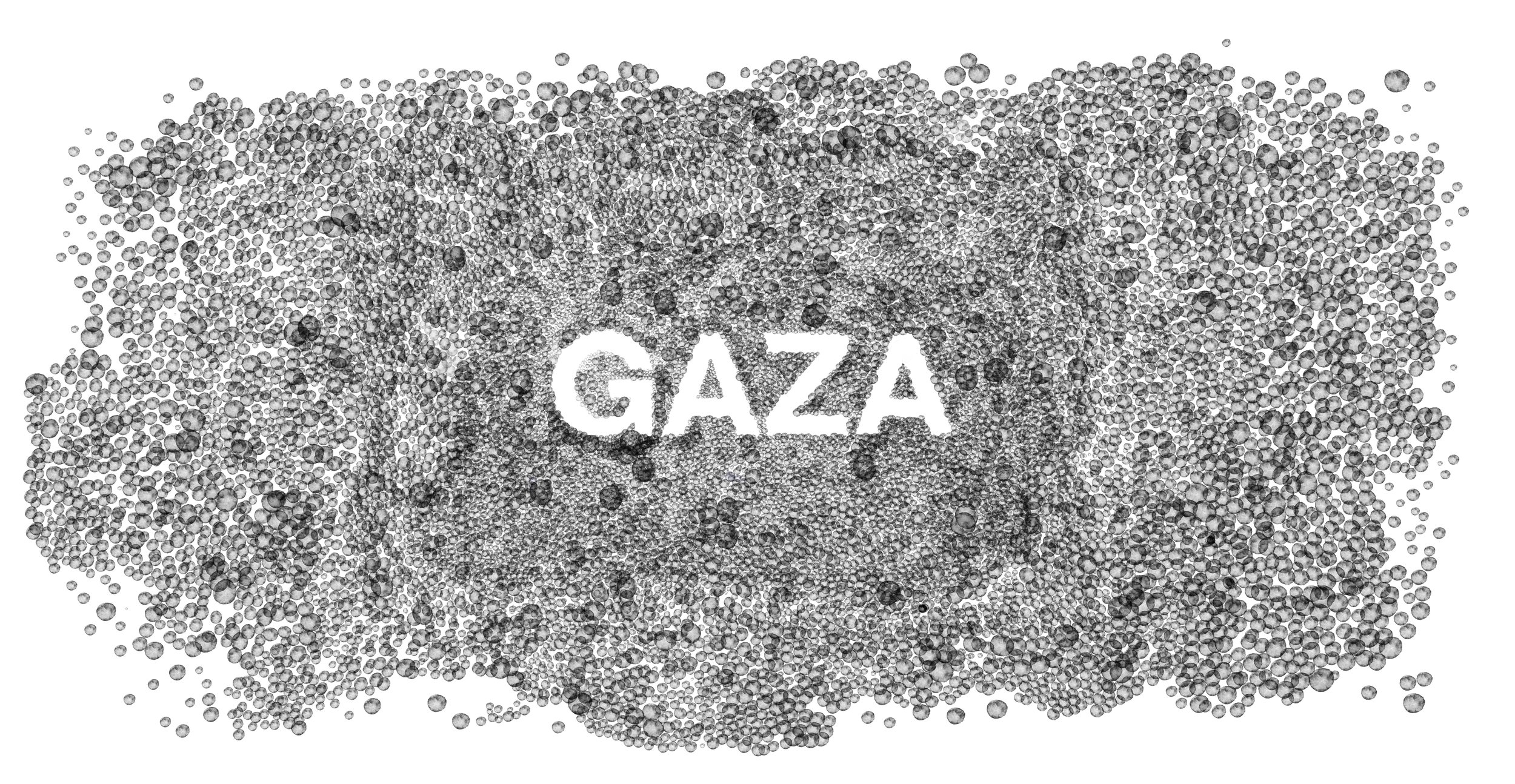
So I want to write about Gaza, but there have been so many words already. So many words. Still I take up my pen and instead of words, I begin to make marks. One, two, nine thousand and fifty seven, eleven thousand three hundred and seventy two, fourteen thousand. And counting.
Last week, these dots were the lives of children at risk of starvation. This week, nothing really has changed.
I want to say: I know there are histories, different sides, but what I really want to say is, future history does not have to tell this history.
I add three more dots, and think of that mother.
So, you can see, it is hard to write about Gaza, because Gaza is the worst of humanity, of how we can look and not look, of how we can turn away, of how we dare or not dare.
And the truth is, I don’t know what to do. I do know that Gaza is also elsewhere. Gaza is Yemen is Sudan is the populations we other is the refugee crisis is the climate crisis is the meta crisis.
Puppies are suddenly more appealing again.
But then there are even more dots and more counting and more shapes.
I want to write about Gaza, but I don’t know how to write about Gaza. But on my pencil, there is a feather, which once was an implement of flight. I think about where the bird came from and where the bird has gone. I think about how it can do a miraculous thing.
I want to still believe in the miraculous.
Hello. I'm Clare
I'm a writer, educator and facilitator, living in beautiful West Cork, Ireland. I love to share resources and learning to help harness the transformative power of words, place and story. I hope my work offers nourishment for mind and soul. Thank you for being here. Clare x

On Listening to the Dream in the Dark.
The sky is a dome of light, tinged peach, tinged purple. Dawn is always forthcoming if we can ride the night out long enough. I wake up early and light a candle. It is the quite hour, before the world has turned and sleep still settles on the hills like an innocent child, dreaming still of a better world.
We all need a place to dream, and to rest. We need a place to make sense, gather resources, build the life, harvest the life. But that is coming. First the space for sleeping, then dreaming. First the dark.
November finds its rhythms in the dark hours. Light hatched only in sketches. It is in the dark where dreams are born, twisting around a body seeking its internal bear. To hibernate in today’s world of always on, always bright, where even the dark has been overshadowed by the commercial bling of Black Friday. How about:
Less Friday
Sleep Friday
A Friday to use up the last throws of the autumnal harvest before the need for more.
Dream Friday
Soon it will be the season of giving, of festivities, but for now still, this is the season for turning inwards, turning to the dream buried in the places only the dark can touch.

You can listen to this piece here:
The sky is a dome of light, tinged peach, tinged purple. Dawn is always forthcoming if we can ride the night out long enough. I wake up early and light a candle. It is the quite hour, before the world has turned and sleep still settles on the hills like an innocent child, dreaming still of a better world.
We all need a place to dream, and to rest. We need a place to make sense, gather resources, build the life, harvest the life. But that is coming. First the space for sleeping, then dreaming. First the dark.
November finds its rhythms in the dark hours. Light hatched only in sketches. It is in the dark where dreams are born, twisting around a body seeking its internal bear. To hibernate in today’s world of always on, always bright, where even the dark has been overshadowed by the commercial bling of Black Friday. How about:
Less Friday
Sleep Friday
A Friday to use up the last throws of the autumnal harvest before the need for more.
Dream Friday
Soon it will be the season of giving, of festivities, but for now still, this is the season for turning inwards, turning to the dream buried in the places only the dark can touch.
I feel asleep in the afternoon yesterday. A scene I had been working on in the book I am writing got caught and it wasn’t flowing. Nor was I. So I took to my bed with a hot water bottle. As my body dropped into the unconscious territory I slept the ending of that scene. I had my directions. When I woke, there was my character knocking on my page, calling me. It came out in a swoop. The dream is an incubator. The dark is the engine that makes it turn.
I am not sure how dark has got such a bad press. The Dark Arts. The Dark Lord. Black as negated, of skin and mind and humour. The black dog. The black death.
I read an article once by Kasia St Clair about the development of black pigment. I learned that there is a material called Vantablack which is the most light absorbent substance on the planet. So non-reflective it looks like you might never come out. Look it up, but I warn you, you may fall down the rabbit hole.
Black holes. The long dark. But it is the cave that holds the treasure as the mythologist Joseph Campbell speaks of. Dark as incubator. Dark as womb.
I think many of us feel we are looking into a vantablack hole, neither able to see our own reflection or find out way out. Wondering if we ever will. But the strange thing about standing on the edge, looking in, is that we won’t know if we will make it through unless we cross the threshold. We must step across. Take the risk. It is classic hero journey arc. Only. when we get to the other side we must be willing to sit in the unknown until the treasures are caught in the glowing dark, and glisten.
What might the treasures of threshold crossing be? What dreams might have a chance to uncurl themselves, to show up on the page, the podium or the policy. The dark, I am learning, over and over again, isn’t about trying to solve the dark, it’s about embracing the space of the unknown, sitting with, learning into, being open to the dream, being open to the treasure, no matter how dark it gets. Even vantablack levels of dark.
My candle flickers, the purple has given way to sky’s winter expanse. The dark has a dent in it. The dream, it has been knocking. I am listening. I am listening. I am listening.
Hello. I'm Clare
I'm a writer, educator and facilitator, living in beautiful West Cork, Ireland. I love to share resources and learning to help harness the regenerative power of words, place and story. I hope my work offers nourishment for mind and soul. Thank you for being here. Clare x

On the Work of Grief and Love (and the great mystery in the middle)
Take a deep breath. We have entered The Dark Times. This is a time and place when the already weak systems which hold things together begin not just to crack, but to fall apart. The bridges that united us are visibly failing. Across the ocean, a man so vile and so dangerous will continue to call for the infrastructure of our humanity to be torn apart. He will be tearing down rights: of access to healthcare, to travel, to democratic privileges, to any semblance of balanced judicial process. He will be dismantling freedoms too, of speech, of movement, of choice. It’s called misogyny. Soon it may more widely be called others things like fascism, violence, collapse. On this side of the ocean, I am grateful for the ocean, and that my own vote did not have to be in direct defence against such darkness.
Yet. Yet. For there is always yet.

You can listen to this piece here:
Take a deep breath. We have entered The Dark Times. This is a time and place when the already weak systems which hold things together begin not just to crack, but to fall apart. The bridges that united us are visibly failing. Across the ocean, a man so vile and so dangerous will continue to call for the infrastructure of our humanity to be torn apart. He will be tearing down rights: of access to healthcare, to travel, to democratic privileges, to any semblance of balanced judicial process. He will be dismantling freedoms too, of speech, of movement, of choice. It’s called misogyny. Soon it may more widely be called others things like fascism, violence, collapse. On this side of the ocean, I am grateful for the ocean, and that my own vote did not have to be in direct defence against such darkness.
Yet. Yet. For there is always yet.
In times of collapse not everything is lost. But everything is up for grabs and we can take nothing for granted.
I’ll tune into metaphor for scaffold here.
While the bridges may be dismantled, there are still rivers, raging most likely, but moving and stirring and binding us together though the liquid of our being. Water is the great connector. Tears. Breath. The river is contiguous with every living thing, no matter its political agenda, social current or leanings. The river, the water, the ocean reminds us that we are always more connected than we realise. I need that reminder today too, for on this side of the ocean, it’s still the same ocean, swayed by tides, rattled by the moving storms. What happens in Dark Times on one continent can set up templates for others, no matter how fortified we think our bridges are.
On this side of the ocean, there are bridges to mend too, as their are waters to heal. There are old, cranky, inept systems which need to be hospiced well, and new ones which need to be midwifed so they are strong enough to hold not just our governments but our humanity. I purposely use ‘our’ here, knowing ‘our’ includes people who I agree with- who want to build and hospice and midwife well, and those who I don’t agree with; those who vote for the demonic and draconian. The ocean is for everyone. Its so hard. So very hard.
I draw on the work of teachers here, and models as I think about this. The two loop model of systems change, for example, from the Berkana Institute, which many years ago was presented to me by its co-author Deborah Frieze. It is a simple model of how old systems die, and how new ones emerge. Like a simple map, it helps us place navigational pins, and position ourselves too.
Along the loops, there are places of action and orientation, all necessary for change, including with the dying. The role of hospicing, for instance, helping a system to die well, is as important as the trailblazer or pioneer, stepping out of the dominant system to seed new ideas. Other roles include the connector, linking and nurturing the new seeds, then supporting communities of practice, establishing new norms and standards which may even be adopted back into the dominant system. I think of one of my dear friends, Jennifer Dungan, as I write this. A primary school teacher, with a deep passion for nature and education, and with knowledge of the emergent forest school model. For years she worked in a school, prototyping and trialling the methods, until, ten years on, she has helped to establish it as weekly practice. Every Friday is fores t school day. This year however, she felt it was time to leave, and so she has taken a sabbatical and has stepped out, with the view to bringing forest school to more people. She is training more teachers, working on a wider curriculum, and helping to build a community of practice around these nature based models. In Dark Times, it is likely the new is already being seeded somewhere, by humble and powerful people like Jenny. We need to keep our ears and eyes peeled, and place our bets on them.
The other model I am thinking about today is the work of Joanna Macy, with her model known as The Work that Reconnects. Joanna, now in her mid-nineties, has been a pioneer in leading the way for groups to gather and take collaborative action for the planet. Joanna outlines three narratives which are simultaneously at play: Business as Usual- a story of head in the sand, continuous industrial growth economics; The Great Unravelling - a story of the collapse of social and environmental systems; and finally, of The Great Turning- a story which speaks of the interconnectedness of all life, and which is oriented towards regeneration, renewal, connection. While acknowledging that these three layers are operative at any one time, within them, we have a choice; to bury our heads, to destroy, or to construct. Crucially, the latter, moving us towards the Great Turning, can only happen when we bring the change to both our inner lives, and our outer actions, which is why I am thinking of it today. Because that inner work begins with grief.
Grief may be a thing with feathers, but it may also come with hammers. There is an energy, sometimes rage, knocking and gnawing- an energy replete with so much pain that, at times, we might feel like it will break us. But the thing with grief, we must let it break us; that is, in the kind of cracking open kind of way.
I think too of a line from a Thomas Kinsella poem, where is speaks of heavily pruned trees, ‘hacked clean for better bearing’ having suffered their ‘brute necessities’. Hacking is a violent process, it can feel brutal and overbearing, but if we don’t fall into grief, into its allowance to mould us, we risk being held in shells- fragile, and in fear of breaking itself, which is exactly what we need to do. Grief is fluid as a river. Grief is a threshold which we are changed through.
From my own experience, of loosing loved ones and loosing identities, I have learned that until I experience the grief, until I let it crack me open, cry so many tears of me, rattle my world, nothing shifts. But when I literally turn to grief and say, ‘bring it on’, the pain immediately feels less acute and shifts into something less brittle. I am then enabled to move beyond reactionary territory and amazingly, into creative territory with grief as a resource, or reservoir of tenderness. There is still tendrils of the pain tethering me to the loss, but the kind of pain that is a reminder of so much love. Grief, in that sense, becomes a companion or ally, accompanying me on my creative path.
When my dear friend and mentor, another Jennifer, died last year, the grief consumed me, and I let it. I danced with it, cried so much I thought I would dry out. I moved with yoga. I swam, swam, swam. Then I painted. Feathers, ironically, at first, then scribbles, and colours, and creatures. And only then was I ready to write. Now, my creative practice includes Jennifer. I have a little altar for her in my home, with memories, gifts she gave to me, images. And when I sit down to write, I light her a candle too, inviting the creative exchange that was so alive between us to guide me onwards, forwards. Today, as we enter the Dark Times Deeper, after much plotting and planning, I begin writing book two of a trilogy I’ve working on. I’ve no idea when or how I will get it out into the world yet, but I do know it is my own small contribution to The Great Turning, for it is a story about how change can happen, and new vision, and the big mystery in the middle. It is a story written with grief, and with love.
So, grieve. Let the fury in. And the rage. Dance with it. Sing with it. Love it. Hold it. Swim with it. Let it move you, literally. And when it feels time, create. In the Dark Times, our creativity is our tool of choice. And creativity is your own gift, whatever that is to claim, and to offer.
Mine: I’ll claim mine, as a gift I seek to use wisely. So I’ll write, and teach and gather people, for I know these are mine to do. Maybe they are yours too - to write a story which is also part of the grief, or the seeds, or the buds. Or maybe it is to grow, literally, and your gift is tending to the seeds, and the saplings, then forests. Or maybe your gift is spreadsheets (bless your precious soul!), and you have a way with numbers with can procure resources and finance and data. Or maybe your gift, your creativity, is being on the streets with banner and voice. Or you are that primary school teacher, opening young hearts to wonder and delight. Or you may even be in a government office, so riddled with bureaucracy that it feels intractable, but you have a gift of finding a way, finding the cracks in the system, where yes, the light gets in.
This work is hard. But it is possible. And no matter how dark it is, we have our tears and our bones and our rage and our love. We have this thing call creativity. And we have the ocean, which right now, I am about to swim in. As I plunge into the cold waters, I will be thinking of the other side of the ocean, and of my fellow humans in Palestine and beyond , and of all the creatures, big, small, vertebrates and invertebrates, who don’t have a voice. And the trees, and the fabric of life which connects us.
In Dark Times, work is what we have. Work, that is, of love and grief, and the great mystery in the middle.

Poetry Salon- 10 November
A hour to gather around poetry and reflect on its meaning and wisdom. Donation based tickets here.

Writing Sanctuary- 17 Nov
An hour of journal prompts, sharing and connection around the power of words and the ritual of creativity. Tickets here
Hello. I'm Clare
I'm a writer, educator and facilitator, living in beautiful West Cork, Ireland. I love to share resources and learning to help harness the regenerative power of words, place and story. I hope my work offers nourishment for mind and soul. Thank you for being here. Clare x

Samhain Salon Spellbook
Samhain Salon spell book by participants of Clare Mulvany’s poetry salon.
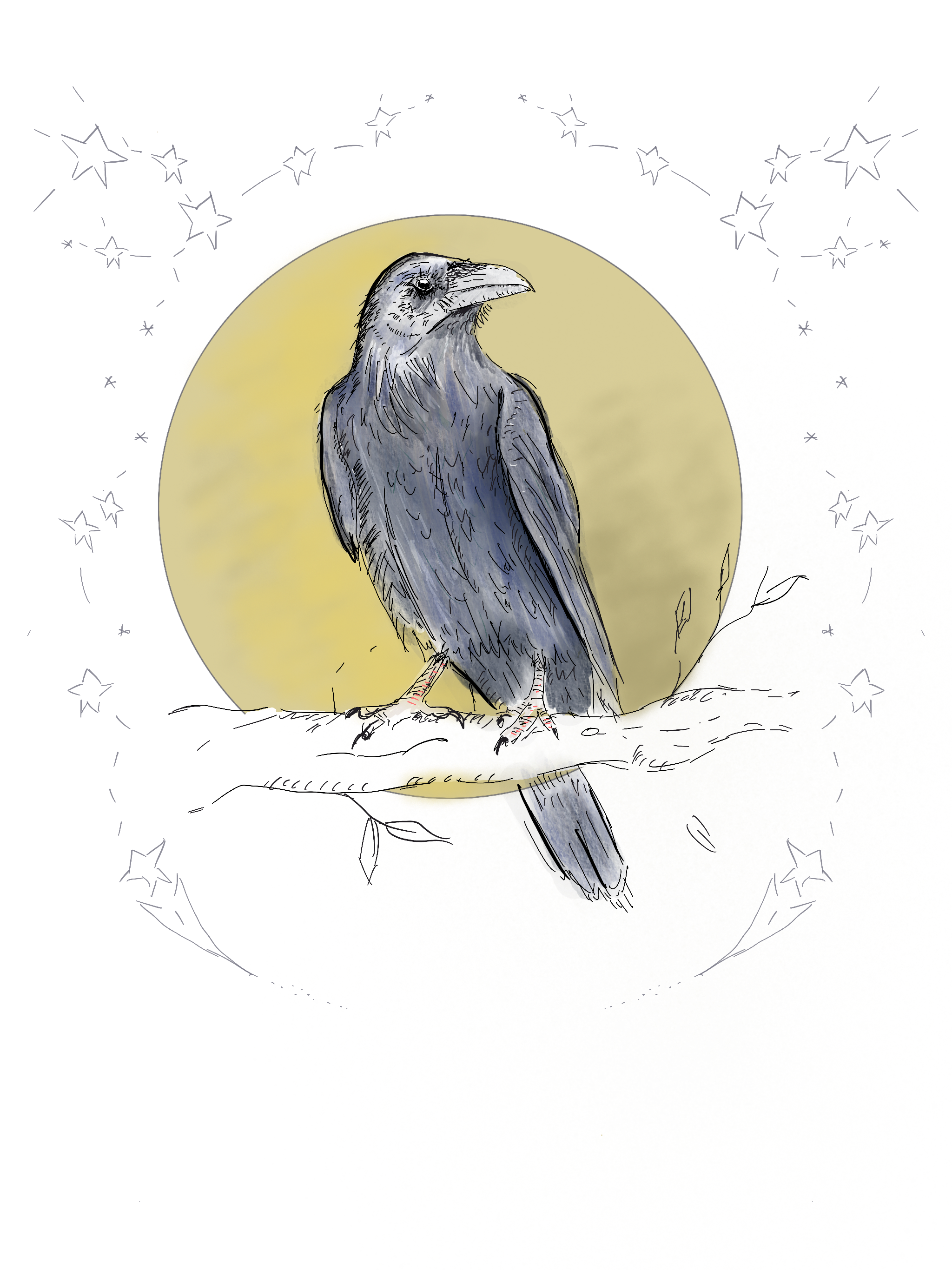
Approaching Samhain, we gathered.
The zoom squares are in rows, but if I could re-arrange them I’d put them in a circle, full of candles, and in the very centre, on this occasion, I’d place a cauldron. Instead, I carry my large computer monitor downstairs so I can be around my own fire and candles and books, and I place a metaphorical ‘cauldron’ in the centre. It’s where we’ll concoct some spells later.
We are calling in from Ireland, France, US, UK, Switzerland, Scotland, Spain. Not a huge group, 15 perhaps, and every person feels to me like a guest who has come with gifts, of their time, their attention, and openness.
In most poetry salons, the guests bring poems with them to share, sometimes their own, but mostly from poets whose work they admire, or poems which have stirred or provoked them in some way. We read the poems together, twice. The first reading is like a greeting, and the second is for it to really arrive- a duel entry into our minds and our hearts
The Samhain salon is a little different. I curate the poems based on themes, then offer journalling prompts, weaving in seasonal reflection, from which, so often, insight arrives.
As Samhain is a time for thinking about thresholds and liminality, poems from Leanne O’Sullivan and Paula Meehan brought us to thresholds into the otherworlds at Autumn’s end and at at holy well. A poem from Ceaití Ní Bheildiúin had us encounter the Cailleach herself, the hag, ‘the essence of weather’, ‘tearing violently at the roof’, helping us tap into the fierceness inside us, and our own capacity for change. Annie Finch’s poem, ‘Samhain’, led us through Samhain night like a ‘seam stitching darkness like a name’. And then there were the spells, Finch's again, and from Doireann Ní Ghriofa, both which offered templates for our own incantations which were were about to create.
As the salon spun, I invited guests to write down words from the poems which caught them, these were to be our ingredients into which we’d place, or fling, our own words into the metaphorical cauldron, to see what spells might emerge. Transformed in our own imaginations and forged with our own ink, as the night drew to a close, we read our spells, our poems, from the Samhain night of encounter, and thresholds and the energy of liminal times. It was simply beautiful.
Afterwards, I gathered the spells, and made our own little spell book, which I share, with blessing.
After reading, you may even want to write your own ‘spell’, which I would love to read if you care to send along. (send to clare@claremulvany.ie)
In these dark times, may these spells offer wisdom and wonder for your own path ahead, into the night.
Onwards,
Clare. x
Poetry Salon- 10 November
A hour to gather around poetry and reflect on its meaning and wisdom. Donation based tickets here.
Writing Sanctuary- 17 Nov
An hour of journal prompts, sharing and connection around the power of words and the ritual of creativity. Tickets here
Hello. I'm Clare
I'm a writer, educator and facilitator, living in beautiful West Cork, Ireland. I love to share resources and learning to help harness the regenerative power of words, place and story. I hope my work offers nourishment for mind and soul. Thank you for being here. Clare x
Letters from Clare
Stay in touch…
@onewildlife
Follow Along