
Samhain: Prompts for Entering the Dark Cycle
Samhain: A time of threshold, of engaging in the mystery. A time of trickster, liminal time, the gossamer, the numinous, the veiled light, the 'all that's seen may not be all'. Some journal prompts to helps with crossing over.
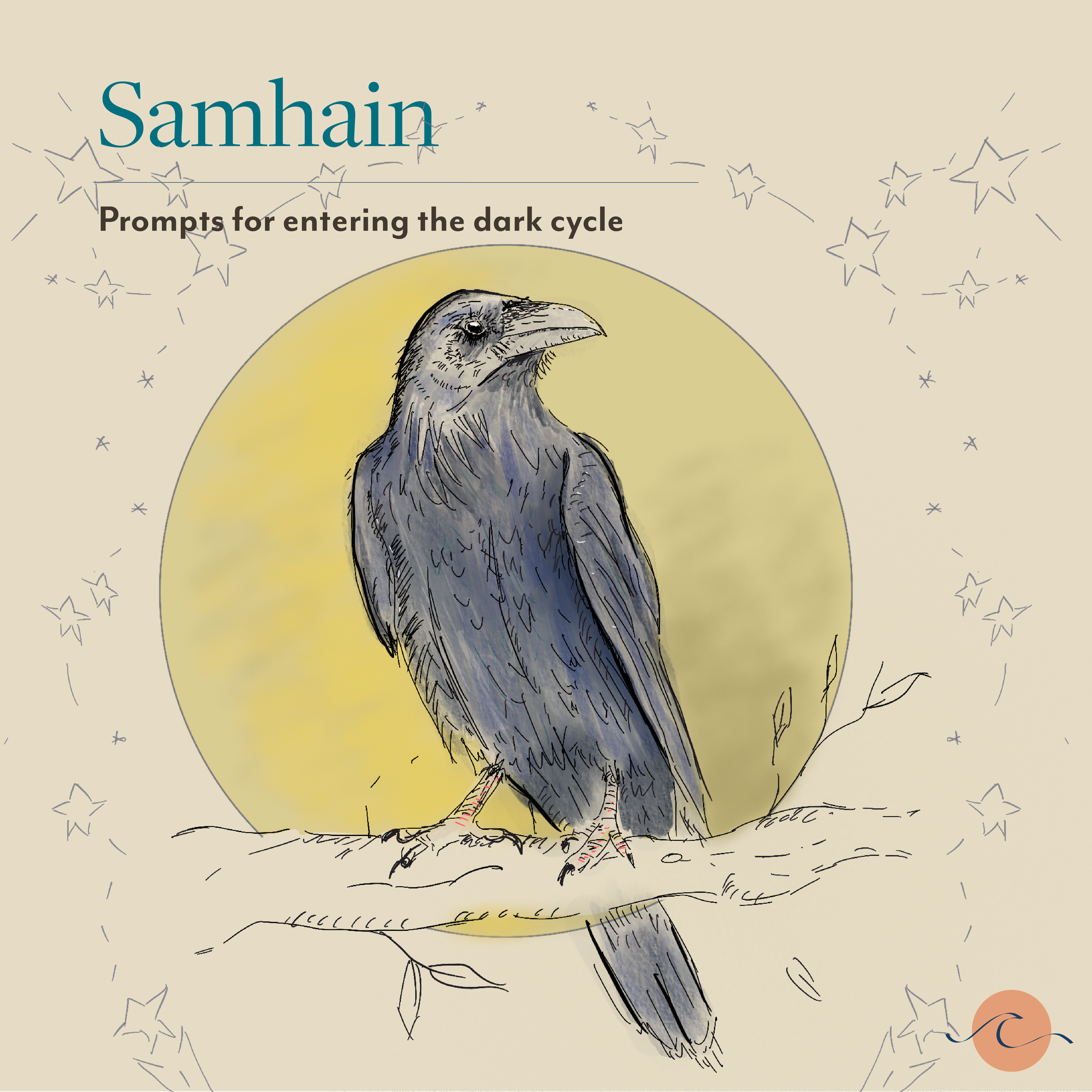
Samhain: A time of threshold, of engaging in the mystery. A time of trickster, liminal time, the gossamer, the numinous, the veiled light, the 'all that's seen may not be all'. This passing over into the new Celtic Year signals the entering into the dark unknown, into the falling of leaf then the fallow of leaf, into the time of invitation to the underworld, the subterranean, the submerged.
Tonight, as masked figures and caped beings knock on the doors, as flames rise from the bonfires, as ghouls and shadow seep, we are called into 'thin time', where ancientness and ancestors bring questions of how to connect with and reclaim the old ways, to renew and revitalise how we move through the longer cycles of time. It is a time too to reflect on this turning towards the stillness and dark of the winter months, to prepare for our own return to the deep unknown.
Some questions as guides:
What areas of your life are craving silence and stillness?
What masks have you been wearing? What masks are you ready to shed?
What does the darkness have to teach you?
How can you honour all that is yet to be discovered within you?
Samhain blessings to you all.
Clare. xx
October Recommendations
October reading/ watching/ listening recommendations from Clare Mulvany.
Looking for some reading/ viewing/ listening and seasonal cooking recommendations.
I’ve been enjoying these- for mind, body and soul.
Reading:
The magnificent, exquisite ‘The Marriage Portrait’ by Maggie O’Farrell, followed by ‘The Vanishing Act of Esme Lennox . I’ll be making my way through her back catalog. Next stop, Hamnet. I’m clearly late to Maggie O’Farrell game
Homelands, by Chitra Ramaswamy. I wrote these words just after reading it. The memory of the book has lingered months on. ‘‘This is a ‘strange’ (in Ramaswamy’s own words) read, criss-crossing histories, continents, time, memory, identity, place and that ever evolving question of belonging. Touching on the past, it brings to life the pertinence and presence of colonialism and post-colonialism, identity politics, mis-placed nationalism, the abiding scars and continuing legacy of fascism, and, importantly, how friendship can be both a revelation and a balm.
The Crane’s Wife. Following on from her remarkable essay in The Paris Review, author CJ Hauser, has brought out a book of memoir essays, some in particular are a finely crafted tale of coming of age in America and the complexities of dating life. A bit of a mix bag , but in the main, worth a read.
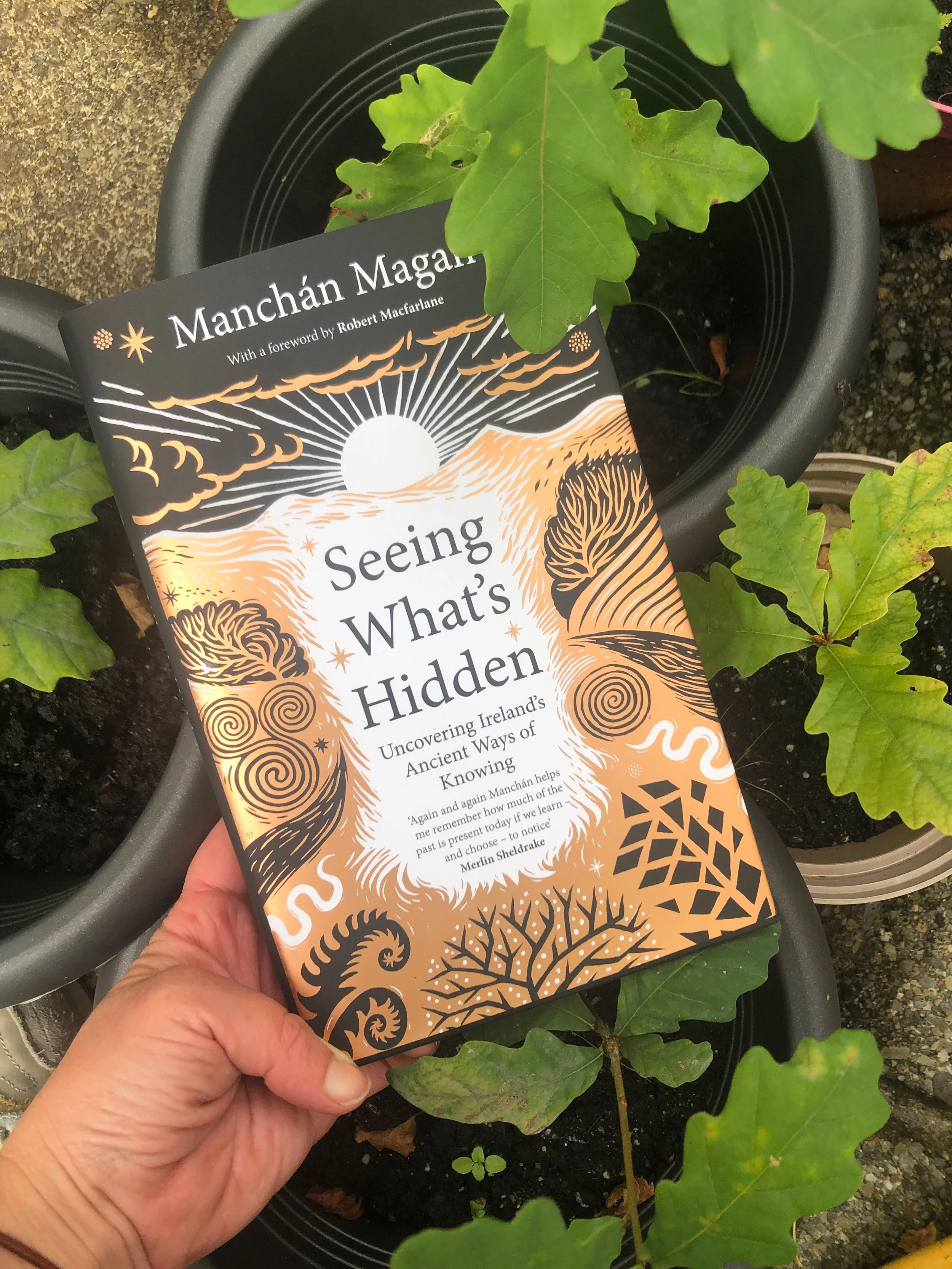
Listen to the Land Speak by Manchan Magan. I’ve been diving into this new publication from land-lover, Irish speaker, curious being that is Manchan Magan. He has a way of bringing land and ancient language to life, explaining the current relevance of myth and legend with ethereal sensibility and a generous nod to the importance of reclaiming our connection to Ireland’s ancient and at time mystical becomings. Beauty-fulll.
And I love the audio narration of ‘Lessons in Chemistry’ by Bonnie Garmus - a gem of a first novel, published when she was in her mid-60s. I find this exceptionally reassuring. I just adored the way Bonnie conjured her characters in this story and looking forward to reading more from her. I know she has a second novel in the works.
Listening:
I’m enjoying the current season on The Women’s Prize for Fiction podcast’, (particularly the episode with Ali Smith in particular),
On a long return drive up and down the country, I listened to back episodes of Desert Island discs (this is their full catalogue) ! Robert MacFarlane, Desmond Tutu, Mary Robinson, and the singular voice of Maya Angelou, collectively made me cry, laugh and open my heart to possibility.
Learning:
I’m currently taking part in Emergence Magazine’s ‘Writing from the Roots II ‘course. More courses on offer soon. Plus if you are not familiar with Emergence Magazine, I HIGHLY recommend- some of the finest writing out there.
Watching:
I had a subscription to Mubi for a few months and totally loved these two cinematic gems. - Nest and Limbo
Seasonal Cooking:
There has been an abundance of apples. And when life gives you apples, it’s time for … Chutney. Plus this amazing apple and olive oil cake with maple icing from Yotam Ottolenghi (a cake which was delightfully shared among neighbours), and baked apples (with almonds),
Hope you enjoy some of these.
Want to stay in touch? Sign up to my newsletter for more resources and learning…
One Layer Deeper- Creative Prompt
When it comes to developing creative work, I find it useful to borrow from geology, and think of a cross section of ancient sedimentary rock.
What gets viewed as ‘creativity’ is often only what has surfaced on the upper, visible realm. It might be a painting, a book, a creative project- something with tangible, tactile form and dimension. Yet below the surfaced entity is an entire eco-systems of life, deeply layered and ancient, rich with context and cultural significance. When we can learn to engage with these layers, through creative conversation and our creative process, our work grows in depth and breadth, moving from something disposable and temporary, to something with at least increased likelihood to last.
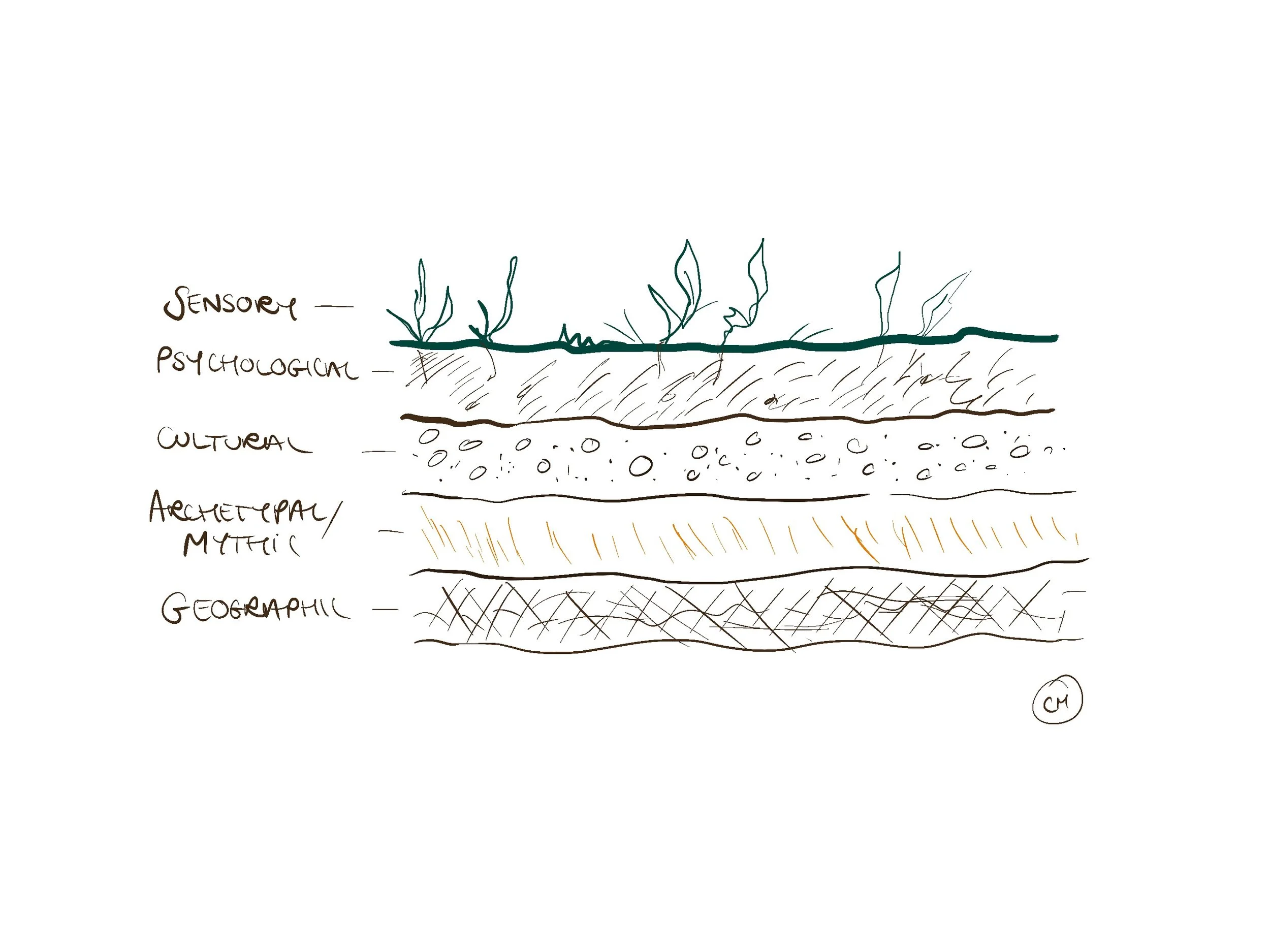
Looking at the cross-section, we can see that some deposits on that rock are laid in the current season - what’s in bloom, what flora and fauna are visiting, what’s present to the eye. These are the current events we write about, the daily fluctuations, the temporary, if sometimes beautiful, sometimes dark, scenery and objects we lay our senses upon. It is the daily life of our experience, moment by moment; significant, but fleeting. Paying attention there is vital to our aliveness, and the quality of our presence in the world. The noticing wakes us up to the infinity of possibility and the expressions of life seeking life, in perpetual motion.
However, we need not stop there. When it comes to creating something of lasting worth, with roots and longevity, while maintaining this alertness and aliveness at the outer sensory layer, we must also we be willing to travel to the the invisible and at times inaccessible stratifications of our being, which is to say, we must be willing to go, ‘one layer deeper’. It is a mantra I take to my own work, and one which inevitably takes me to routes unprescribed at the outset of the journey, and usually, to some form of fear, and some form of insight.
The decent to these deeper layers must come with a warning however. It is never linear, often fraught and is not dictated by logic nor traditional temporal patterns. It has its own pace and timing, more fractal than static, more organic than geometric. This is flow time, where the ordinary clock does not seem to have a place, and we enter into what the Greeks call, kairos, where time is measured in quality, where synchronicities congeal, and where we need to give ourselves space to uncover the gems which may await.
Moving down the sedimentary rock, we start to uncover the layers which we deposited by living through our own timeline of life. Here we are in the psychological domain, and it is where we find our norms, behaviours, values and belief systems, which, in turn, are informed by the deeper currents of the cultural and social constructs to which our individual self has been exposed. Below again, we reach for the archetypical frames, mythologies and stories which span deep time. These are legacy stories at the bedrock of the rock itself; stories of the land, sea, place, mantle- the elemental, but without which, no other story has form to stand.
With such depth and dimension to explore, you can understand why the insistence on ‘one layer deeper’ is never a quick fix and demands rigour of our attention, craft and drive. I may be able to create, share, or write a surface tale, for instance, but what will give the work the lasting depth and significance? Usually more time, and always a willingness to let go of what is comfortable and visible. In other words, to dive into the creative process not knowing what might surface or, even more radically, how the process might change us as a result.
This kind of work, of course, is antithetical to the algorithmic demands of building platforms and social media assets for the quick dopamine hit of recognition. It is work that is in opposition to always on, always in production. Which, in part, is why it is so hard to make. It requires that we may need to disappear for a while and give ourselves permission to move at creativity’s own rhythm and pace- which, at times works at the speed of light, and at times, the beautiful, dense and infinite dark. The treasure, after all, as Joseph Campbell extorts, is in the cave we fear, and sometimes the dive, is exactly what we seek.
Whatever your creative practice, whether writing, art, or even setting up your own creative business, consider the questions, ‘How can I take the work one layer deeper? And how might I release what is holding me back?’
If writing memoir, for example, moving one layer deeper may mean looking towards the archetypal patterns which have etched themselves into how you have lived your own narrative lines. If working in the visual arts, it may mean further examination of the cultural symbolism or social ideologies which are informing your work (and equally, what you are subverting), and if working on a social/ creative project, it might mean asking yourself how you can fulfil a deeper need for your beneficiaries by meeting an emotional or even spiritual need. As an educator, you can think about how ‘one layer deeper’ might inform your programming. That may lead to more reflection time for learning integration and establishing new norms and patterns.
So next time you are creating something, I invite you to carry with you that little mantra of ‘One Layer Deeper’. You may be surprised at where it will bring you. And when you surface, you’ll bring more awareness and presence back to the outer realm, knowing you are held by multitudes, spanning back to the beginning of rock itself.
Creative Prompt:
Consider a creative project you are working on. Thinking of the image of the sedimentary rock, ask yourself, ‘How might I take this one layer deeper’, and ‘How might I release what is holding me back’. Set a timer for 10 minutes and write in free flow to see what insights might arrive.
The Breaking Open

You can listen to this essay here (17 mins)
·
The Breaking Open.
Sometimes we need time away to move towards.Sometimes we need to understand the towards by virtue of distance.Sometimes distance is the exact measure of proximity.Sometimes proximity trades in the currency of tenderness.Sometimes only in returning do we understand what it is we have been grasping to hold.
Schull, West Cork. In the aftermath:
My palms return full, coaxed towards the sky, prayer bound. In one hand: the textures of grief; in the other: the defiance of love. Strung between the two palms; a broken open heart, and a line travelling holding the creative tension of a renewed task: to stay broken open for therein lies the seeds of possibility. What happens next is about root, and flourish.
I’ve needed time away. Away from social media, away from my default of words and ideas, away from routine, and particularly away from screens. Like so many of us, the Covid restrictions were pressing inwards and the moment of release had arrived; like a pressure valve, it was time to let off some steam. So when an invite came from Yerina and Juliana, some friends in California to join them on a road trip to Oregon to attend another friend, Cindy’s play, in Portland, how could I resist. It would be over a 2000km round trip, tracing the run of the Cascade mountains, crossing through State parks and reserves. And so it was that the waters of time and possibility parted, and I joined the jet stream. From the West Coast of Ireland to the West Coast of the US, from the edge of one continent to the edge of another, what is it about edges that hold such fracture, and such grace?
Into the belly of friendship I fell. Into a sisterhood of solidarity and unrelentless care, I was swallowed. Songs blasting on the car speakers, singing our hearts out, singing our souls out, singing it all out, because suddenly, we can. Jumping on hotel beds, because we can. Walking for miles through Redwood forests, Douglas fir and eucalyptus, laurel and cedar, watching out for bears, then from the pungency of the dense forest floor, looking up through the high canopies to buzzards and white-tailed eagles on wing, in praise of the sky and the stars and the wonder of knowing so little. Tracking coyotes, finding out about about gophers, learning about badger habitats, identifying plant species, down in the dirt learning about the hidden trails and systems which help to keep everything bound. Reading poetry late into the night. Playing cards later into the night. Skimming stones. Watching the ripples radiate. Dancing out our hips. Dancing our feet out. Dancing because sometimes dancing is the only thing that makes sense. 80s tunes. 90s. Irish jigs and Swedish drinking songs. Columbian melodrama and an array of romance. We even made up our own tunes, and failed miserably. So we danced. Dancing because to deny dancing is to deny the joy, deny the passion in the joy, deny what it is we are really craving. Dancing because sometimes the pain of the fracture is too much for one body to bear. Dancing because reading the news of the fracture, bearing witness to the fault lines, seeing the repercussions of the fear and the division, is as about as far away from dancing as you can get. So we come to the conclusion: let’s not evade the joy, let’s create it instead.

..
Davis, California.
The living room was filled with candles, a plate of nightlights in the centre- like a vigil, holding court. Along the stairs and the mantle, rings of light to settle ourselves among. When Yerina sent out the poetry salon invite to her network, her network seemed to grow. The yeses were expanding at a rate her living room may not have been able to hold. Yes said the professors, and the students, and the cook and the community radio worker. Yes said the surgeon and the psychologist, the activist and the ethnomusicologist. It was the poetry getting the yes, but so too Yerina’s hospitality and a craving in them all: to gather and to gather in circle. To listen.
‘What might the promise of the salon hold this time?’ I wondered. It would be the first live salon I’ve hosted in over two years, and I could feel the pulse of it already thicken.
In ancient times we gathered in circle around a fire, telling stories, sharing tales. Now, the candles flickered and the circle opened.
I gave the room over an Irish woman to begin. Paula Meehan’s poem, ‘Seed’, felt seasonally and metaphorically appropriate- a phoenix poem on the alchemy of seed and sun, in ‘conspiracy with the underground’; a poem of blessing, a poem to acknowledge the turning of a season in time- temporally and internally; a poem of gratitude to a greater force. I read it twice. The first is always for entry. The second to let it really in and see what moves.
I could sense a collective sigh in the room. The gratitude for the turning, perhaps, but this has been a season like none other. I was aware of a gravity and a weight of the bodies in the room- each body having held its own form of grief, it’s own particular struggle in these years. That’s the thing: no body has been immune, and too different degrees the pandemic has shaped and moulded the outer lives of so many, but also the inner. And to what extent have we held space to sense the new shape of us, to feel who we are now?
I see the bodies breathing, communing again in a kind of circular time. This feels ancient, yet this feels fresh. The flickering renders the room soft, safe, and into that yielding, I feel it is both appropriate and timely to gesture directly to those griefs- to the ones we have been living, and to the incoming ones of these fractured times. To move beyond, I have realised, we must first learn to move through.
It is then I decide to offer one of my own poems into the mix. C19 was written at the start of the pandemic when the numbers of then belied the numbers of now, when little did we know but so much did we feel, and fear. The poem is about the power of naming and our need to account.
...To the grandmother, to the grandfather, to the lover, to the best friend,to the woman who loved to knit teddybears for the children in the hospital, to the nurse about to give birth..
Can we name the particulars, the poem asks, and acknowledge the human within the masses, consider the lives and the stories each one has marked, and the mark we are yet to make.
‘Tomorrow, we are the ones who get to live another day', the poem concludes, ‘so we can name the dead by their gifts, and live them onwardswith the days we are still lucky enough to count’
I pause. With the days we are still lucky enough to count.
I can sense tears in the room. A silence descends, like the minute silence at a wake, held in memory and in honour, a silent nod to the hidden grief between us. Below, I know there are still layers of grief not yet ready to speak their name. The circle has a way of embrace, and recognition.
That evening, we let the poetry encircle.There are poems in English and poems in Spanish. There are old poems, and baby ones. Some poets in the room who may not yet realise they have every permission to call themselves such, read their own work. There is a poem about joy, and appropriately, there is a poem about dancing.
We have come to be danced, writes the poet Jewel Mathison
Not the pretty dance
Not the pretty pretty, pick me, pick me dance
But the claw our way back into the belly
Of the sacred, sensual animal dance.
The unhinged, unplugged, cat is out of its box dance
The holding the precious moment in the palms.
Of our hands and feet dance.
Later, when we’ve exhausted the room of words, when only a small handful of us remain, we turn the music up loud, and yes, we let down our hair, and we dance.
...
I used to think that joy and pain were a continuum- related, but like distant cousins, once removed, only partially resembling each other. But as I grow older, I’ve come to know them as identical twins; held strong through their blood bond, tied to each other in a way which makes each other stronger. To experience full joy, am I also willing to experience the reality of pain, of grief? And to live into that pain- so I may move through it- am I also willing to make space for its bedfellow: joy. Pain and joy. Twin A and Twin B:conjoined amplifiers on the continuum of living a fully lived life- intense and difficult that may be at times- but fully lived.
...

On the Road to Portland
The Redwoods grow in circular stands, tall and clustered, familial, in dialogue with generations and a timeline beyond the span of our own. Beneath them, breathing with them and noticing the way the canopy is dense in part and loose in others, I am aware of their strength and their holding. This is arboreal nobility; a monarchy of trees, one could think their reign could go on forever. But this is certainly not the case, and at the hands of man, chainsaws, and clear-cut policies, these are the trees which built the American West; railway sleepers, beams, telegraph poles, scaffolding, electrification of the urban dream, San Francisco. So much old growth forest consumed with a notion of progress which forfeits real motions of growth. Listening now, I can sense the poetics of the Redwood forest hold sacred secrets. I want the trees to keep their secrets hidden, in case they too will be consumed.
The songs blare on the car speakers. We’re heading North, on a Latin America roll. There is tango coming from the back seat, and salsa in the front. Until that is, the mood dies and we begin to see the skeletons. Miles and miles of charred forest. Blackened hillsides. They call it fire season now, I hear, as if the seasonality is taken as a given. Like Fall.
We return to another kind of silence. ‘Am I really witnessing this?’, I wonder. I’d seen footage, of course, and I’d read essays, climate change polemics and reports, but this is barren and black and bleak. For miles. Then we notice the waterline. Shasta reservoir, fed from the melt waters of Mount Shasta; a mountain revered for generations, sacred to the Klamath tribes, site of myth and legend, now so low we can see layers of grooves along its banks, each groove a marker of the receding. The melt waters have not returned. This season, already 125ft from capacity. What level of receding becomes normalised? When is drought taken as given?
I trace the waterlines like scars; a new map of the territory is being drawn. Then I drive on, complicit.
..
It is so hard to reconcile travel in this age of complicity. The flight, the car, participant with the fossil fuel engine of the economy. But what of friendships, and what of connection? What of travelling poetry salons and writing workshops? What of learning and exploring and different smells, tastes, languages, perspectives? Do I give this up? Or stay longer, or do less of it? For the moment I choose to go, knowing my choice is bound with a system which exploits the very things I care most about. My heart breaks that bit more and I realise I need to ask myself some direct questions. So what am I willing to do to amplify that care? And for as much as I take, how much more can I offer back in return. Then amplify that.
Something always brings me back to story.
..

Time is a malleable mould. It seemed like we were moving for days. There was another friend’s home, and a friend of a friend, whose doors welcomed us as if we were returning ancestors, here to complete a cycle. We soaked in a hot tub, sharing tales of love won and love lost and dreams still yet unfolding. We talk of nature, climate change, somatic psychotherapy, poets and the creative process, psilocybin, politics, racial healing, the constraints and the gifts of marriage, languages, hope. We make pasta from scratch and roll each strand as if they are bonds to sustain our connection. We walk dogs, play more cards, wander in bookshops. We eat a lot, drink the best of wines, and my gosh, do we laugh. I don’t want it to end.
Of course, everything comes to an end, but need it come to a conclusion?
Away from screens, and away from the daily familiar, distance was holding a mirror up to me, and a bridge. Travel was reaching out a hand to guide me to parts of myself I have forgotten about, or simply did not have the chance to encounter in the lockdown/ lock in. Now instead, the newness was a platform to look back and see where I have come from, and sense into the gap which I am being called now to grow.
One night, Juliana said she had a gift for us. She’d been mischievous all day, dodging questions, disappearing for a few hours, sneaky grins.
We’d made our way to Portland, five women now- Juliana, Yerina, Cindy and Emily. We’d all met four years ago, held in the presence of another circles of Redwoods, as part of the On Being gathering. We’ve been meeting every month since, online, for conversation, connection, presence. But a body is a body is a body. I had not realised the extent to which I was craving the living breathing presence of being. Until, that is, I got it, on full blast in this circle of wise and wild, wonderful women.
Juliana made us stand outside the living room, blindfolded us, then guided us one by one to a seat. Waiting, waiting. Then on came the music and the poem, off came our blindfolds, and out came her dance. She danced the dance of her life, her long flowing dress capturing the movement of flamenco, her sway like the current of flight, and the ocean. A woman, who just that week had become a grandmother, abuela, for the first time, dancing because sometimes that is the best way to say, ‘let’s celebrate, each of you for your fullness and your femininity, for all that we are and all that we are becoming’.
She then gave us books as yet more gifts, we shared more poems, she gave us sparkly gloves and some sparkly bindis, we laughed so hard, and yes, we danced.
..
In returning now, there is still remembrance in my bones: all this movement is an embodiment of what friendship can create, a sanctuary of presence to that which is unfolding around us and within us. The friendships are a way to let our own light in, then to amplify each others, even through the pulse of our fears, and the grief. And there is a remembrance now too, it is easier when we learn how to travel together, for then we can help each other navigate our own edges with more acceptance and grace. This, I realise, is compassion in action. This time, it happened to come in circles.
Into the circles of Redwoods, I was awed. Into the circles of poetry I was enchanted. Into the circle of friendship I was held, then held deeper. It was a trip where my sense of scale was expanded, and the distance mapped outward would mirror the distance mapped inward. For the trees and the rivers, my heart breaks. For the divides and the fractures, it breaks some more. For the fear and the fearful, yet more divide. In one palm I still hold the pain. But in the other I hold this renewed sense of possibility- this love, this love, this love. And in the breaking, in the opening, suddenly, space.
..
Sometimes only in returning do we understand what it is we have been grasping to hold.

Intentional Year Guidebook 2022
 Hello all, As we stand on the threshold of another calendar year, many of us will be glad to see the back of 2021- a year of global flux, intense change, loss, grief, complexity and challenge. And yet, as we move into 2022, the sands have not yet settled and the ground beneath may feel ever uncertain and unsettling. And so, the spaces we can go to make meaning and sense, take solace, steady our course and bring clarity to our actions are vital to our sense of ground and our courage; qualities so necessary to live both wisely and bravely in a world that bit off kilter. This guidebook is intended as one of those spaces. In it you will find prompts and questions, meditations and reflections to guide you back to your inner self, so you can listen to your own wisdom, and translate that wisdom into intentional action and ways of being.

New, Revised and updated edition
As many of you will know, for the last few years I have been offering out the Intentional Year Guidebook and this year it got a total refresh and redesign, with new sections, illustrations, audio recordings and more.
- New digital edition- edit in a pdf version
- Expanded review section
- Revised and updated audio introductions
- Additional resources for clarifying intentions around 6 key life areas: health, career, spirit & creativity, financial, community and family/ relationships.
- New illustrations and layout
- Routine and Daily rituals section
- 12 monthly check in & reflection pages to use throughout the year.
So before moving into 2022, as a way of steading, the guidebook will take you back over this year, asking you to sense into the things you may need to release, grieve, acknowledge while also giving space for the insights you seek to carry onwards. How might you lay your own guidelines for helping to steer you back to course and remind you of what matters in your own centre? What does your future self wish for you? And what will will be your support structure to offer scaffolding as you live your way there. These are just a few of the questions the guide will navigate you onwards. I hope you find it all a nourishing process, filled with sweet wisdoms from your own heart and ballast for journey ahead. Onwards, with loveClare. 
Intentional Year Guidebook 2022- What’s Involved
The Guidebook is and intention setting process designed in five parts Grounding, Reviewing, Sensing, Becoming, Sustaining. Each part contains a combination of writing, meditation and creative practices. Part One- Grounding: In which you will be invited to clear some space, externally and internally, find some stability within, and capture your learnings and insights from the past year. Grounding questionsFinding Stillness Audio Meditation2020 Review- journal prompts
  Part Two- Reviewing: In which you look back for insights and learning on 2021Looking back & taking stock promptsPage of gratitudesRitual of Release
  Part Three- Sensing: This is all about tuning in with your highest future self, through creative visualisation and ‘future writing’. Questing and QuestionsAn Introduction to Future WritingAccessing your Future SelfLetter from the Near FutureBonus Practice: Create your Imram
  Part Four- Becoming: This is where you will clarify your core intentions, articulate your priorities and think through the scaffold or support structure to help keep you close to your highest self for the year ahead.Refining Core IntentionsSelecting your word for the yearPriority Projects & Mapping the Year Ahead
  Part Five- Sustaining- Rituals, Accountability and Monthly check ins and learning pages to sustain your practice. Daily Ritual and RoutinesSupport StructuresAccountability PartnersMaking intentions visibleFinal blessing - plus audio
How I’m offering the guidebook:


Honesty Box Payment Process:
Step One: Make a payment contribution via PayPal Me- the link below takes you there. Payment in multiple currencies accepted. When you have made the payment, return to this page for step two below.
https://paypal.me/ClareMulvany
Step Two: Once you have made an honesty box payment… click on the link below. The files (all in one folder )will download automatically (check your downloads folder)
>> download the guidebook<<
(8 files in total- a pdf of the full colour guidebook, a low ink version of the guidebook and 6 audio recordings, stored in dropbox)Should you encounter any technical difficulties with the payment or download, please email: clare@claremulvany.ie


The weekly check in
 What are the insights to carry forwards? At the end of each week I take a few moments to review. Looking back at my weekly plan, I gauge where I am at by the end of the week taking into account progress, quality and learning. It’s one of the most valuable 30 mins of my week. Without pause, insights are lost, and it’s insights, not information, which drive learning and change. Essentially the process is a check-in on the key areas of life I’ve set out as most important. For me these currently are: health (physical and mental), career, core relationships, creativity, service/ community engagement, spirituality and nature stewardship.Among the questions I ask at the end of the week are ones which try to harness the learning in both the high and low moments. I ask: How are my values being expressed. What are the key insights? And what is the learning to be carried over to next week (and beyond).These questions help me see change and commitment over longer spans of time, and particularly help to put my voracious inner critic to rest for a while. I can track ‘progress’ in it’s full dimensions- not just in a linear growth model, but taking into account qualitatively and quantitatively a range of motion.It may sound like a lot of effort to do this, but I find it so liberating and gently of my system- releasing me from time-bound expectations of ‘success’, to slow, steady and consistent appreciation of how I am showing up to my deeper desires and purpose each week. I can track learning and commitment- which I find very satisfying, since one of my top 5 values is ‘learning’.I’ve been relatively quiet online and in the wider world over the last few months. But behind the scenes, new products and services are brewing, including a planning system and design process to help others act consistently around what matters most, and it includes these weekly planning templates. It is slowly and excitedly coming together as I build and test prototypes. I hope to have it all to you in 2022.So, in the meantime, have you any questions you’d like me to answer about the weekly check-in?And for yourself, a weekly prompt for you?‘What key insights from the week can you carry over to the next’?(An insight is an ‘aha’, a learning, a piece of information which helped you see or experience something differently, an inner knowing).
The Metrics of Success
 What does success look like, for you? This may at first seem like a simple question, but how often do we take time to re-evaluate the parameters and scope of our own definitions? So often success is measured through an accumulative lens. More and bigger are qualifiers for achievement. More productive. More wealth. More followers. More sales. Bigger everything. The linear and scaleable are what whole economies are measured in. Gross Domestic Product is a function of output, not sustainable processes. More and bigger do not capture depth, quality or equitable growth- for the earth and for ourselves. If not in check, it so easily becomes extractive and exploitative, at personal and social levels. So, what if we re-framed the metric, and therefore the question. Rather than reflecting on progress, we track process. So, rather than what did I do today, who am I becoming today? And some accompanying questions: Did I live into my values today? Did I honour the earth today? Did I attend to the sacred today? What did I give today, not just what did I gain? What if the measure of success was a measure of the quality of our relationships- reciprocal and replenishing, rather than extractive and depleting. When we expand these contemplations to our teams, communities, societies, what a different place of potential and enquiry we arrive into. Who are we becoming? Are we living into our values? What did we contribute? Did we regenerate resources? Did we attend to our relationships? Changing the metrics changes the outcome. What we pay attention to, grows. For me today: Did I swim? Did I ring my mother? Did I offer something of value? Did I attend to the unfolding of my gifts and talents? Did I let the sacred inform me? What does success look like, for you?
Practices for Equanimity
 The autumn equinox is a time when the light and the dark are in equal measure; some refer to this time as a balancing of the light and the dark, the night and the day.However, balance is a fragile and precarious place. Any person who has ever attempted Vrksasana, or ‘Tree Pose’ in yoga will be able to tell you that ‘balance’ is only the result of perpetual adjustments- the continual micro movements necessary to make to maintain the one-legged balance. The ‘balance’ is in the way the inhale and the exhale exchange, it is in the shifting of weight in the standing leg to account for this upper body movement and it is in the counterweighting of the hips to accommodate the natural fluctuations of energetic pulses up the spine. To be in balance is to be in constant adjustment. And yet, ‘work-life balance’ has been projected on society as an achievable goal, and individuals tend to admonish themselves if they are unable to reach it. They are not able to reach it because it does not exist.So, what if, instead of aiming for balance, we aim for equanimity. This is a place of composure, stability, and spaciousness in times of flux. Below I am sharing two practices for equanimity. The first is a physical practice related to the breath, and the second is a journaling practice to deepen the learnings. It is best if the practices are done in order- the physical preceding the written.
Physical Practice.
1) Take a few moments of pause, sitting comfortably. As you sit, begin to bring some awareness to your breath. Trace your breath for a few rounds, observing the natural flow of the inhale and the exhale.2) Once you have tuned into this pace of breath, invite the qualities of equanimity into your breath. Can your breath be more composed? Can your breath be steadier? How about more spacious? Notice how your breath alters when you invite in these equalising questions.3) With your next few breaths begin to bring a steady and equal exchange of breath between the inhale and the exhale. You can introduce a count of breath to support you- inhaling for the count of 3, then exhaling for the count of 3. Slowly extend this count, increasing the length of the inhale and the exhale until you reach the count of 6. Continue this steady, balanced and spacious breath for a few minutes.4) After a few minutes release the count of breath and allow your breathing to fall back to its regular rhythm. Notice the feelings and sensations within the body.
Journaling Practice
5) Within this quiet space of contemplation, journal your responses to the following questions:What does equanimity feel like for me?Where do I need to create more space in my life?What parts of my life are seeking composure?What one thing can I do today to honour this desire for composure, space and stability?What parts of my life are seeking stability?What small adjustments can I make to my day or week to create equanimity within all elements of my life?
Making habits out of words

"Get in the habit of welcome your words. You are making a map to the days of your life" - Naomi Shihab Nye
With September high upon us, schools back and jobs pilling up, who else has been feeling a little overwhelmed and could do with some structure, internal space and focus? I’ve been thinking about the power of habits of late (with particular help from James Clear’s excellent book, Atomic Habits). It got me making an inventory of the habits which serve, those with don’t and those I’d like to introduce so as to support my business vision, mental and physical health… and basically, help me get my snazzle together. Looking back at the inventory of the habits which have served, one in particularly jumps out: my 30+ year daily journaling habit. Since I was 11, daily writing has become part of me. Those blank pages are my sanctuary and idea incubator, a shoulder to cry on and a friend to celebrate with. These last 18 months, they’ve also been a lifeline. In thinking about the benefits regular journaling, one would think I’m describing some sort of wonder drug: increased focus and attention, reduction in stress hormones, support with idea generation and creative flow, assistance with the development of personal awareness and inner resilience, brings routine and structure, is low cost and efficient. But that’s the thing, a pen and paper, regularly administered, may cause… all of the above. But journaling need not be hard labour, needing hours of our time. I’ve learned that as little as 5 minutes a day can help turn my day around. So maybe the question is: where to start, and how to sustain the practice for the real long term benefits to accrue. In thinking about these questions, I’ve developed a workshop to share 5x5min journaling techniques to help you establish and sustain a regular writing habit. They include things like intention setting, curiosity mapping and ‘future writing’, plus I’ve updated the workshop to include more tips and tricks of how to keep your practice going.My next workshop is this coming Sunday, 26th Sept (5-7pm, Irish Time).You can book your ticket here.You just need to bring a pen and notebook/ journal… ....However, I know not all people can make the live workshops. So if you are still keen to develop your own practice, first step is to set aside 5 mins of your day (mark time and location into your schedule). Then show up with your journal, and here are a few reflective prompts to bring you more into awareness and develop the valuable technique of perspective taking. Set a timer for minimum 5 mins (you may have more time on some of the days), and see where the following prompts take you…
- Today, I’m beginning to notice…
- What if look at (insert challenge) from a future perspective. I’d realise…
- When I give myself permission to simply relax and accept, these things begin to release their hold…
Happy writing. May your words help you to make maps to your heart, and put hope in your hands, Clare.
Other journaling resources:
It doesn’t matter what kind of notebook you use, but I have to say, I’m a huge fan of moleskins. I write on blank extra-large softbacks. My drug of choice! Natalie Goldberg’s beautiful and encouraging book, Writing Down the BonesChristina Baldwin’s ‘Storycatcher’ And Atomic Habits, James Clear
Reflections on routine, rhythms and ritual
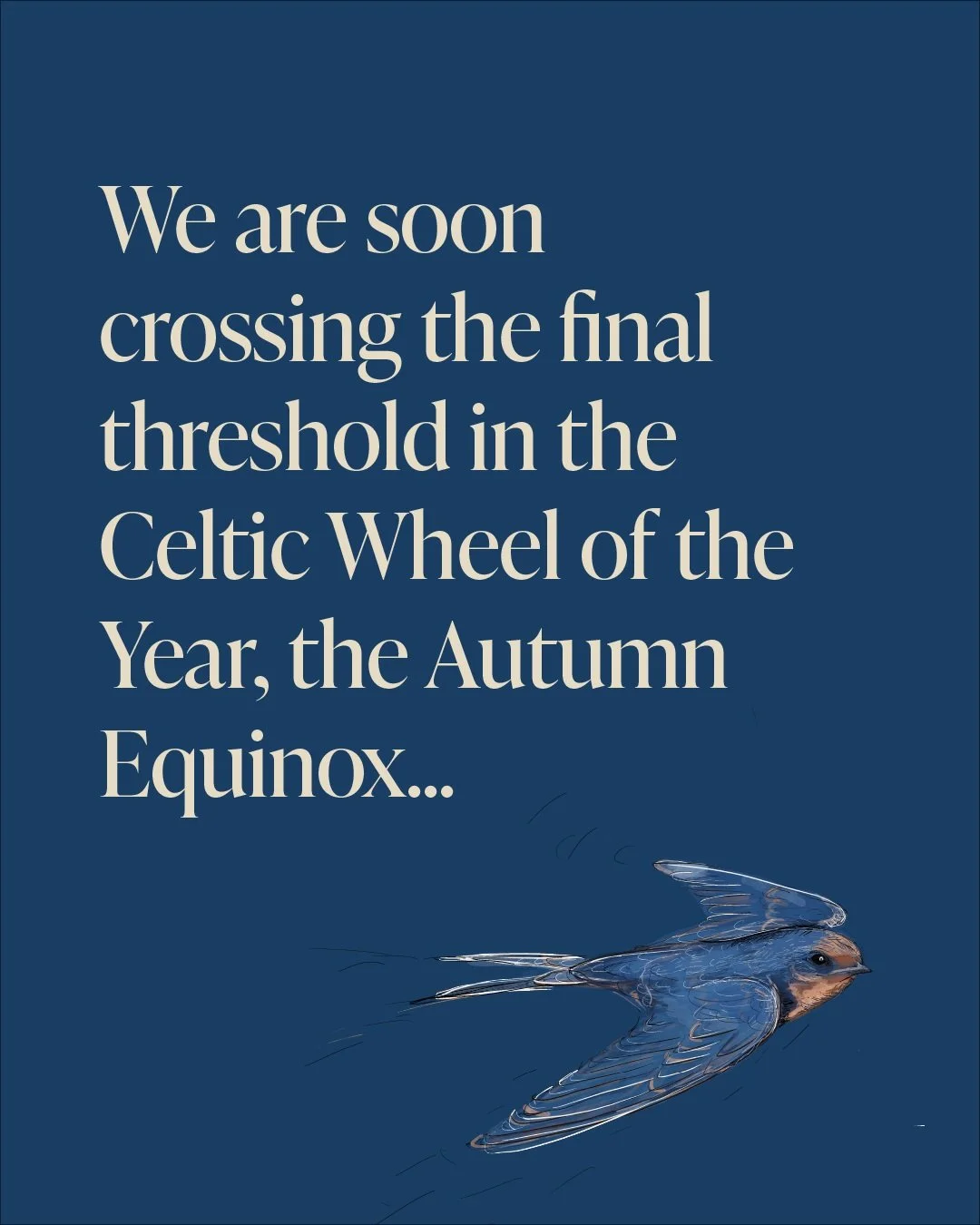
 Reflections on routine, rhythms and ritual… As September tips on the open skies, the swallow’s have been gathering on the telephone wires across the village. Some are just fledglings, fattening up for their long flight south. They’ve made it through the summer, delighting me with their darts of inky wing and swooping flights. And, rightly so, soon they will leave, into the great unknown, on a journey their instincts dictate, just like their ancestors. Only in departure can return be anticipated. To travel south is the signature of all things natural to them, closing a cycle in the greater rhythm of continuance.It’s around this time too that the rhythms of the year take on a new season and that ‘back to school’ feeling, with all its new beginnings and own anticipations, clicks into gear. However, in a year that has felt like none other, when so many of us have been challenged to our core and when our own rhythms and routines were up-ended, it can be tempting to think we are returning back to ‘normal’. In my own life, and through conversations with friends and family, I know this year has given pause to take stock, re-evaluate, re-prioritise, and think about what matters most. There have been such valuable insights among the challenges and I am keen not to loose these as the world opens up again and the demands on time, attention and presence increase. So, before the big rush back to ‘normal’, I think it would be useful to take some time to think about our own rhythms of continuance. How do we get intentional about what to carry onwards and where to travel from here? And how to create routines and habits which support renewal- for ourselves and our communities? To support you (and me!), I’ve complied a series of journaling prompts to help you reflect on the last 18 months, and, as you transition across the seasons, think about the routines and rituals which will help to nourish you from the inside out. You may choose to work through these in one sitting, or spread out over the course of a few days. How about lighting a candle to accompany you, and usher the sacred in too. There are three parts:
- Reflection
- Routine
- Ritual
I hope these questions can help you take stock of what has been a challenging time, and support you to move into the next season with intentionality and clarity. May there be ease and kindness too, to yourself, and those around you… Clare. x
Journal Prompts
1. Reflection: Looking back.While the pandemic is not over, here in Ireland at least, things are beginning to open up again. The following questions are designed you help you reflect on this momentous time of challenge, growth, learning and change.
What did you learn about yourself in the last 18 months that surprised you?
What aspects of your pre-pandemic life did you miss most?
In what ways has the last year destabilised you and what were the challenges and gifts of this uprooting?
What aspects/ elements of what you created over these last 18 months are worth savouring and sustaining?
2. Routine.
The return of routine can bring safety, stability and comfort. Boundaries and limits can usher creativity and freedom. With routine can come rhythms which support and nourish, but so too those which deaden or flatten our senses. And so, how to create routines which enliven and enrich our lives? Take a few moments to think about the routines which will support your own wellbeing. Here are a few journalling prompts which might help:
What routines are serving you? What aren’t?
What is your ideal morning routine? What aspect of this could you realistically incorporate into your mornings at present?
What is your ideal evening routine? What aspect of this could you realistically incorporate into your evenings at present?
Where might you need more structure in your day? Where might you need less?
What would support you or what supports do you need to establish healthier routines?
3. Ritual
Simple ritual elevates the everyday moments to sacred. Ritual helps to uplift the ordinary and reminds us of the preciousness of time itself. Lighting a candle at dinner, placing flowers on the table, cooking a special meal, planting seeds with a child, writing in a favourite journal or with with a special pen- these simple acts can delineate our days and can be used as triggers to bring us back to gratitude and appreciation for what we have. In my own life, this year I have made a habit of lighting a candle at dinner, even when I dine alone (which is most of the time). The candle helps me pause and appreciate the meal, slowing me down. The light is a form of companionship and has shifted my relationship to mealtime and to myself. Similarly, I have a few very simple homeware items passed down to me from my grandmother, including a blue and white table cloth. Each time I go on a picnic, the table cloth comes with me. When I spread the tablecloth out, the picnic is elevated too, endued with special memory and the legacy of my grandmother. It doesn’t take much, but the smiliest of rituals can be transformative.
So think about your own weekly rhythms. Where can you introduce simple rituals into your week?
How about changing the sheets every Sunday evening? Or starting every Monday mornings with some poems instead of to-do lists? Or lighting a candle at work meetings to bring the sacred in there too?
Take some time to jot down your ideas. What one or two can you start to implement this week. Mark these ones on your list.
Thank you for taking the time. x
Letters from Clare
Stay in touch…
@onewildlife
Follow Along