
A Lughnasa Ritual: Time to harvest your gifts.
 Hello all,For those who have been following along this year, you may remember we started the year with an invitation to set our intentions for the months ahead. Then, over the course of the year, I have been sharing rituals, inspired by the celtic calendar, to help us tune into the gifts of the season and stay close to our intentions.Tonight is Lughnasa in the Celtic Calendar- a time that signals the beginning of the harvest. And so, an offering and a gift from me to you- a short ritual for reflection on your own gifts, that you may honour them, embrace them and have the confidence to offer them outwards and onwards.You can access your seasonal ritual via my mailing list by signing up here. You'll be sent a download link directly.Below, the introduction to the guide, happy reading, and savouring, and harvesting of your wonderful and important gifts.Clare xx..
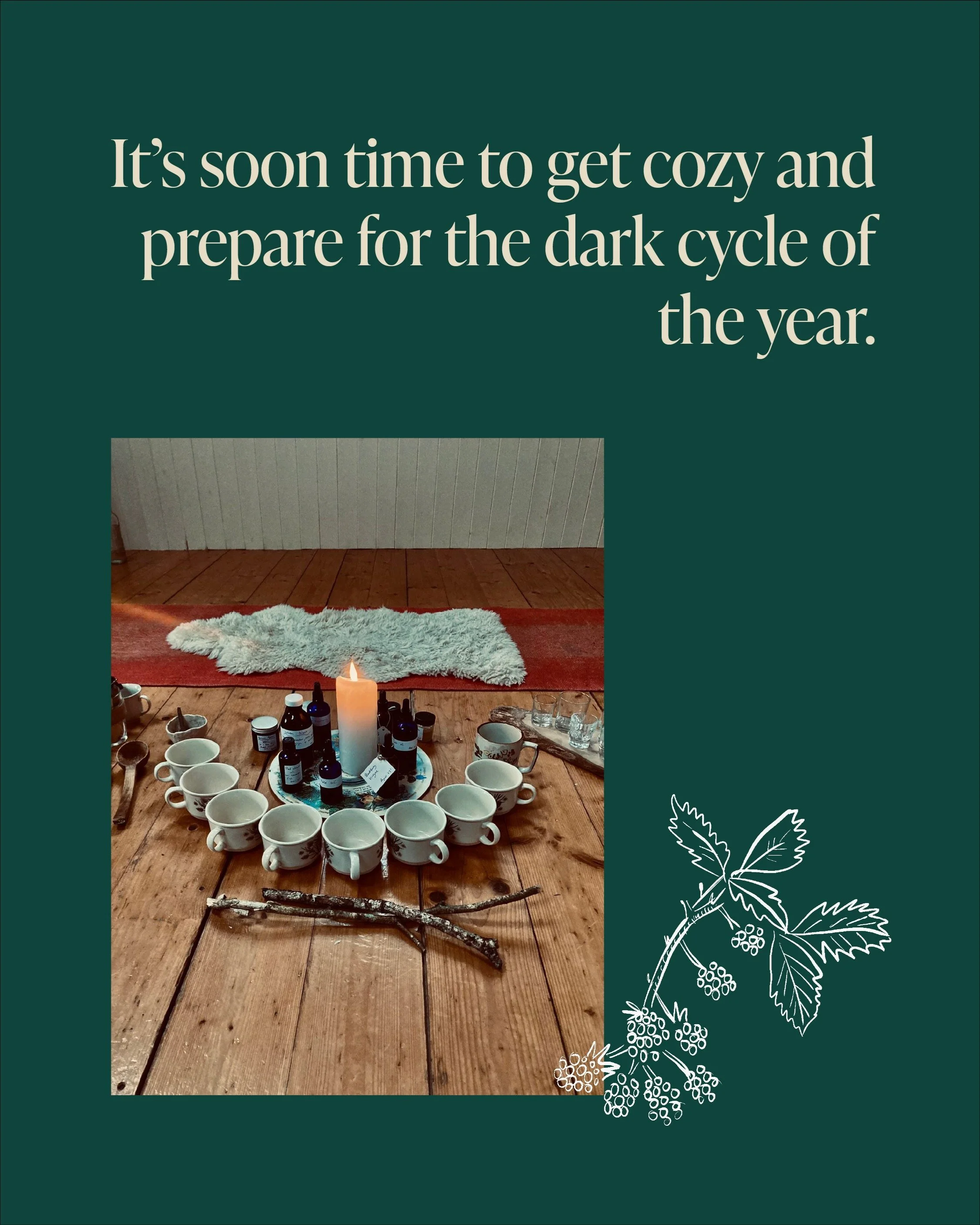
  From the Lughnasa Ritual'The ripening is upon us. Along the roads the blackberries are changing their form, from tight knots to full of summer swell, their juicy bulbous domes are rising for the picking. The thought of blackberries also brings thoughts of poetry, their sight is so coupled with Seamus Heaney’s remembrances that his are also my own. Moving into the memories of when ‘briars scratched and wet grass bleached our boots’, ‘Blackberry Picking’, the poem, is now synonymous with blackberry picking, the act.All year I’ve been collecting jars. What once was filled with pickle is soon to be filled with jam. I’m awaiting the days when the berries are at their best, perhaps a few weeks from now, when a day will be given over to the picking and jam-making. I’m thinking already of who I’d like to invite along and what pot I’ll use. I’m thinking of being able to give the jam-filled jars away, as gifts, and I’m thinking of the winter ahead, when a dollop of sweet jam will be added to warm porridge, to ride the winter tide with sweetness and let the gift of the harvest extend it’s time. For what is a harvest but a gathering of the gifts, in extension.As the blackberries turn, so to does the season. We have reached another turning point on the celtic calendar,moving into Lughnasa (pronounced Lu-na-sa), a time that signals the beginning of the annual harvest. Lughnasa, a cross-quarter celebration in the celtic wheel, rests mid-way between the summer solstice and the autumn equinox and is named after the sun God Lugh, of the Tuatha De Dannan. Lugh was said to be a God of many gifts and talents, a Master of the Arts and Culture, who yielded a cunning sword and a swopping presence which harnessed the light energy of the sun.The festival of Lughnasa (July 31- August 1) is a time to celebrate and give thanks and praise for the coming harvest, that which has been ripened by the sun, as if the dance and the joy will aid the final stages of growth and quicken the ripening. After months of tending barren soil, then tending seeds, the land now offers it’s fruits. In the offering is also the gift, and with any gift comes the invitation to rejoice. Yet how often do we see our gifts as offerings, as things to rejoice? How often do we really honour our own gifts so that they may be quickened?Thinking of Lugh today, we might say that he was ‘gifted’. However if Lugh claimed it for himself, if he declared his own giftedness, we’d perhaps call him egotistic, or obnoxious, or a little bit full of himself! In contemporary society to honour our own gift, to really own it and to declare it, requires a confidence and a defiance. So often we dismiss the gifts we have been given, for fear of being labelled too full of ourselves, or sure of ourselves. Instead, inside we hide, keeping our gifts close, and in keeping them close we don’t reap the opportunity to share them with others.So perhaps there are deeper lessons from the blackberries too: if they are not picked, shared and savoured- either by humans or animals, their fruit will go to rot, not serving their full potential. Similarly if we do not learn to harvest and share our own gifts, they too go underground, even to rot. And so in reclaiming the festival of Lughnasa we are also given this opportunity to reclaim and to declare our own gifts. It does not need to be a loud declaration, or even a public one, but an inward appreciation of the gifts given, from which we can share and serve, and seed the future we long to create.So this Lughnasa, let’s take some pause to harvest and to celebrate. Let’s take time to name our gifts, claim them, declare them, so we may move outwards again, with a knowing that our gifts are also our generosity; that our gifts are our offerings, in extension'...Sending love, onwards and outwards from my heart to yours,Clare. xSaveSave
On Creating the Conditions for Growth
 Meet Plant. My beautiful friend Yesim gave me Plant for my birthday at the end of March. Or rather she gave me a lovely pot, covered in moss, and told me that she had planted a bulb. She spoke of Plant’s potential but was hesitant to show me a picture of what plant should look like, in case it spoiled the experience for me. But I really wanted to see the packaging so I could have an image of what it is I have been ask to steward into care. Yesim obliged and showed me the picture of a full blooming Ismene Hymenocallis (Festalis). I was so excited about what was to come even though I had never even seen one of these before. The gift was intriguing.
I was in between homes for a little while, so for a few weeks Plant lived in my car as I moved from place to place. I was nervous I would damage Plant, but Plant had not sprouted yet and so seemed OK with all the transition. When I moved into my new home one of the first things I did was find a place for Plant, right by the back door, in shelter and in light, as per instructions.
Then nothing. Then nothing. Then nothing. I visited Plant regularly, checking to see any signs of life. Still nothing. I wondered if something was wrong. Had I killed Plant? Had I thwarted things by moving around so much? I kept waiting and wondering. A few weeks in, I went away for a weekend, and then boom, when I returned Plant had sprouted. Not only that but was now about 1cm above the soil level. Plant was growing!! Since then I have been watching and checking on Plant, making sure it has the right conditions for growth. I don’t have to do much. Just keep checking the conditions.
One morning this week, after visiting Plant, I also had an aha moment- Plant is offering a metaphor for the work it takes to create the right conditions for growth, and also giving me a new way into understanding the work I do in the world. My whole body came alive with this realisation- which always tells me I am onto something.
‘Create the conditions for growth’. This is what I was learning.
I was in the shower at the time of the aha (often when the best ideas come!), so I hopped out, grabbed a towel, and raced to my journal to capture the ideas and insights. I find if I don’t do it immediately, the ideas move on and are harder to find again. I scribbled down a list of the conditions for growth which Plant was helping me to see and how it relates to leadership, creativity and wayfinding in our lives. These conditions are generative, in that they are life-giving and life affirming, and they can apply at an individual, organisational or systemic level. The conditions are foundational, working below the surface (inner life and values), and also with the invisible elements which are is not seen (field intelligence and spirit), but are also very practical and grounded.
More and more I am appreciating the time it takes to grow things. What we seed now may take a long time to come to the surface, but keeping open to the conditions of growth is the key. One, two, three years on, I get emails from clients saying change they made back then is reaping the rewards now- financially, emotionally, physically, mentally, spiritually. I see this in my own life too. Seeds which I planted years ago are starting to come to life now. Others, it may take a while yet. The thing is- to keep planting. Not everything will flourish, but some things will. This insight and feedback in turns gives me a greater appreciation of the role of time and tending to the unseen, and helps me to actively nurture my own growth cycles.
This work of change and learning is not about quick fixes or easy answers. It’s not about growth hacking, or unnatural (and unsustainable) scaling. It is not about diets or denial. Instead it is about creating the ground from which we can evolve the eco-system into which our lives (as individuals, organisations and collectives) can thrive.
So, here goes: On creating the conditions of growth- a creative practice for you.
Think about what it takes to steward into life what it is that is seeking to grow. You can choose something from your personal or professional life.
Draw a picture of a plant, including a pot. Beside each element of the plant, take some time to journal responses to the questions.
The Container
The pot is essential. The pot is boundary or landscape or structure into which we plant our seeds- our ideas, our visions- the thing we want to grow. A beautiful pot helps, but is not essential- it is the boundary which is important. In our lives or projects a boundary can be agreements around what is involved in the project and what is not, who is involved at the current stage, and who is not. It can be a set of collaboration agreements between people involved, or a series of commitments to the project which will help protect and nurture it at the early stage of growth. By creating a container, or parameters, we get to set the stage for the growth.
What is the form of the container for your own ideas? What does the boundary look like? And how can that boundary be protected?
The Image= The Vision
That picture of Plant- or a similar Plant- was so important to the stewarding. Let’s equate this it the vision for the project, or our lives. Without out a picture of what it is we are seeking to create we have less investment with a pot which we have been told has life in it. Our vision helps to carry us through the dormant times, the rest time, the time where all this new life is germinating but we can not see it yet. The vision is our orientation to the future full potential. When Yesim offered me the image of the Plant, I was activated and excited. I gained an understanding of what it is I am stewarding and am appreciation of the time it will take for Plant to grow. The vision is the vehicle through which commitment and energy can flow.
How can you cultivate your own vision? How can you paint a picture of what it is you want to create? How can you share this vision with others who you want to engage in the stewarding process?
The Time
Growth takes time, and not all time is equal. There is a long period of time in the dark when can doubt if things are actually moving. Then there are growth spurts. Then there are plateaus. We can accelerate growth by providing the right conditions and feeding what it is we want to bring to life, but deep change takes time, and patience, and often a lot of fumbling around in the dark.
How can you honour this cyclical and wave like nature of time? Are you giving yourself enough time? Or too much time? What still needs time under the surface? What is ready to bloom?
The Joy
I am so excited about watching Plant grow. Each day more and more so. I realise that it is not just about the end product that I am excited about, but seeing each stage of the growth cycle. The process is the joy. So often we get fixated about the end result, but in fact joy is available all through the process. If there is no joy in what it is you want to create, if it does not bring you alive, then something it off and it is time to change track. Joy is a signpost to your way.
How does your body respond when you speak about the thing it is you are doing. Does your body feel contracted, tight or constrained? Or does your body open up, feel lighter, and more energised? Your body will help to tell you if you are on the right path. Listen for the openings.
The Soil
The soil is the nourishment. It is separate to what is seeding it, but it is offering substrate into which Plant’s roots can grow and through these roots that it is drawing in life force. Maybe the nourishment is poetry, or deep enriching conversations, or actively seeking inspiration from others. Maybe it is taking time out, or reflection, or having a party.
What is the soil of our lives, or projects, our organisations? What is it that nourishes them, inspires their growth and feeds them?
The Roots
Below the surface, the roots of the plant are making their way deeper into the substrate, for stability and growth. These are like our value system. We don’t see them, but our values are like channels through which the life force can flow. When we are clear on our values we are clearer about the types of things we want to say ‘yes’ to , and the type of things we need to say ‘no’ to. (I have previously written a lot about values, and have developed another exercise to help you identify yours. You can view that here.
What are your core values? How do you think they shape how you show up in the world? How can you created a sense of shared values is your team, organisation or family?
The Space/ Place
Place is a powerful factor in supporting growth- what we surround ourselves with and who we surround ourselves with. The right physical space inspire us to take action. Think of the difference in a light filled- airy office, and a dark room with stale air. Space in nature, or co-working space, or a large blank page all have a role in play. Change the space and we can change our thinking. Orientate ourselves to the light and we change the way we grow. Light and space are the unseen factors which are often so overlooked.
Do we have enough physical space to grow? How is the place you are in informing what you are creating? Are you surrounding yourself with inspiration and beauty? How can you be oriented to the light? What does the ‘light’ represent to you’?
Field Intelligence/ Life intelligence
There is an intelligence to life which demands our trust. That life seeks life. That change is constant. That there is an animating life force which is universal. You can take both a scientific approach or a spiritual one, or both. Life, and growth, has an intelligence beyond our control. When we trust, and let go of some of our control, we can align with this larger field of intelligence. Then you start to notice: synchronicities, being in the right place at the right time, the right conversations happening naturally or that very thing you were searching for being under your nose all along- you just had not noticed before.
How can you honour this wider field of intelligence?
Not all seeds will make it.
This too is life. Sometimes there is no real explanation about why one grows and one does not. I was lucky with Plant- it grew, but there was no guarantee. If I wanted to increase my chances, I would have needed to plant more bulbs. When it comes to thinking about our personal and professional life, this is where prototypes and experiments come into it. We try things out in different ways, we realise that not all ideas are ready to grow, we understand that some need to stay in the dark for longer, we realise that failure is just an intrinsic part of systemic growth dynamics. We take a risk, and when the thing blooms, we enjoy it all the more.
Are you experimenting enough to grow?
.....
No doubt my thinking on this will change over time. Right now I hope it will also give you food for thought and you can think about how Plant may inform and inspire your own life.
Thank you Plant.
(Plant takes a bow. Applause from the rest of the garden. Curtains close)
TBC later in the summer, when, all going well, we’ll have a bloom. In the meantime, I’m going to make sure I enjoy each stage of growth!

Want some one to one support to help you steward your ideas and creations to life?
Find out more about my creative mentoring options.
Want to come to West Cork for a deep dive? Wild Edge retreats are open (and the weather is amazing down here at the moment. A good time to book and soak in the place and space this has to offer).
''Clare’s care for details, deep listening and ability to pull the right question created a safe space for me to meet and connect to myself. Not only mentally but emotionally, spiritually and physically. She helped me navigate strong emotions and confusion and come out clearer the other side. She’s a lighthouse for when we need to go on the brave journey to our deeper selves, a journey which lead to truly fulfilled life' - Naomi Fein, Think Visual CEO, May 2018. 
Why I practice...
 At our core in an intrinsic knowing- the spine of us, our unique pattern, our individual code, our purpose, our source. Life gives us a zillion fast messages a day telling us who we should be and how we should show up in the world. They sway us from one manufactured desire to another. Our practice helps to strip that back and return us to our core; who we really are, how life is authentically longing to show up through us, and the intention or purpose for this next phase in our lives.Our practices are designed to help us listen below the noise, below the internal chatter- to the vast expanse of silence, and within that silence, to the vast expanse of possibility and promise. When the world turns wobbly, when feeling off-kilter, when the muddle in the head shows up as anger or fear, or anything but trust and love, it’s time to practice: to return to the yoga mat, to the meditation cushion, to the blank page or the blank canvas, or to that thing which brings you into intimate conversation with your inner life force. Our practice is our prayer, our ritual, our return, our saving grace. This is why I practice. And to that I say, ‘Hallelujah, Amen, Thank you’- over and over and over again.
On Resilience: Part Four
 This is the final part in a four part series on resilience. Missed the others? You can read part one, Part two, and Part threeBuilding our resilience muscle... Any bread makers out there? You’ll know that there is a critical stage in the baking process: the leavening. As the dough sits, the fermentation process commences letting all those lovely bubbles of CO2- the essential raising agent- to do their magical work. The leavening time is when you step away, put the dough in a warm and cozy place and let the yeast be yeast. The rest is part of the rise.In my favourite café in Dublin, the Fumbally, there is a large quote from Miguel de Cervantes (Don Quixote) written on the wall; ‘All sorrows are less with bread’. We can play with this a little and also say, ‘All sorrows are less if we act like bread’. Bread, you see, holds a valuable life lesson; that rest is integral to the whole.As humans we need our own form of leavening time, and yet, why do we resist? In the world of go go go, on on on, it can feel like total self-indulgence to rest. More and more frequently when I ask people how they are doing, ‘busy’ is the response. (Is busy now a euphemism for ‘I am wanted, I am useful, I am important?’). What if we were to step away from work, and let the air that holds us all together do it’s work. In other words; take some breathing space. When it comes to building our resilience, is rest part of our rise too? And when I say rise here, I am wondering if it’s not just about what we do in the world, but how we elevate our state of being in the world.RestThis is where the rest part gets beautifully nuanced: it turns out that there is not just one form of rest. Rest instead is on a spectrum from stillness, to awareness, all the way to flow.Let’s skip over to the poetic for some more clues. The poet David Whyte has written a delightful little book, ‘Consolations’, which is a series of mediative reflections on, as he puts it, ‘The solace, nourishment and underlying meaning of everyday words’- rest being one of them.Rest, he proposes;
‘is to give up on the already exhausted will as the prime motivator of endeavour, with its endless outward need to reward itself through established goals. To rest is to give up on worrying and fretting and the sense that there is something wrong with the world unless we are there to put it right; to rest is to fall back literally or figuratively from outer targets and shift the goal not to an inner static bull’s eye, an imagined state of perfect stillness, but to an inner state of natural exchange’
To feel rested, then, does not necessarily mean to stop everything; but instead to fall into rhythm with life’s daily occurrences, with the exchange of breath, and with our domesticated selves. As Whyte continues..
..we are rested when we let things alone and let ourselves alone, to do what we do best, breathe as the body intended us to breathe, to walk as we were meant to walk, to live with the rhythm of a house and a home, giving and taking through cooking and cleaning…. To rest is not self indulgent, to rest is to prepare to give the best of ourselves, and to perhaps, most importantly, arrive at a place where we are able to understand what we have already been given.
Rest and Design SprintsWhen it comes to entrepreneurship, creativity and innovation, rest is a critical component to the creative process- both within the process, and at either end of it. That time to step back from a canvas and take in the big picture; that time in the writing process when you print out what you’ve done, and set it aside for a few days, only to return to it with fresh eyes; that time in music when there is space and quiet again so that we can really take in the crescendo. The silence, the space, the pause is part of the music too.In design and innovation circles, the idea of working in sprints has been taking off- a period of rapid thinking, prototyping, and launching, followed by periods of rest. These burst of creativity have their own momentum and give rise to new ways of seeing things without getting stuck in the typical creative traps of procrastination, overthinking or never getting started in the first place.David Hieatt, author of DO Purpose, founder of Hieatt Denim and co-founder of the wonderful Do Lectures, integrated sprints into his own working life, commenting:
A short sprint followed by a longer rest, can get way more done. But, we think of resting up as some badge of dishonour. As humans, we are built for short bursts. Our attention span is built for short bursts. Our creativity is built for short bursts. Yet mostly, we work like we are built for marathons. I think sprints are a practical way to make a lot of stuff happen quickly with limited resources.
In terms of building our inner resilience, it could serve us well also to think in sprints; focusing on short bursts of personal goals, short-term but intense creative experiments, using deadlines to build our momentum- and then valuing the break as an intrinsic part of the creative cycle.Stop, Look, Go: Gratitude as a way of livingIf we are looking for a cornerstone upon which to build our resilience as a way of living, then we would be well to go back to Whyte’s sense in Consolations: ‘To be able to understand what we are given’. This awareness, we will note, gives rise to gratitude, and this gratitude could even be the start of a revolution. I’ll let Whyte and the benedictine monk, Brother David Steindl-Rast elaborate further.‘Gratitude’, continues Whyte, ‘is not a passive response to something we have been given, gratitude arises from paying attention, from being awake in the presence of everything that lives within and without us. Gratitude is not necessarily something that is shown after the event, it is the deep, a-priori state of attention that shows we understand, are present for and even equal to, the gifted nature of life.Brother Seindl-Rast also takes on this mantel in his work and research on the power of gratitude in our lives and the importance of this a-priori mode of being. ’It is gratefulness that makes us happy’, he eloquently offers in this TED talk, explaining that in order for us to lead a grateful life we must become consistently aware that every moment is a gift, and within each of those moments is the gift of opportunity. Moment by moment, he suggests, we are gifted with an opportunity to create our lives, to respond to the beauty which surrounds us and to simply enjoy the tastes, the sounds, the colour, the light, the texture or the world presenting itself to us. And if we fail? Well, the will of the world is a marvellous thing: we are gifted with another opportunity to pay attention.The practice of gratitude becomes powerful when it becomes exactly that- a practice. When we learn to orientate ourselves to pay consistent attention to the opportunity arising with each breath. Easier said than done- perhaps?Sensing the complexity in the simplicity, Brother Seindl-Rast gives us a little formula as a methodology for living gratefully:‘Stop. Look. Go’ (remember the safe cross code?)Stop= rest, look= pay attention, go= respond to the opportunity which life is presenting in this given moment.Building more ‘stop points’ in our lives is the key- moments when we actively take note of the gift of life in front of us. Brother Seindl-Rast recounts a little story of living in Africa for a while, when he had no running water or electricity. When he returned home, at first each time he turned on a tap or switched on a light, he stopped, in awe of the miracle of both. After a while though, he became accustomed to these things, and stopped paying attention. And so, as a reminder to stop, look, and be in awe, he put a little sticker on the light switch and the tap.When we learn to build more stop points in our lives, we develop our capacity to notice connections, patterns, creative solutions and new ways of showing up. If we are go go go, we simply miss out on this opportunity to reconfigure ourselves in response to the needs and moments which surround us. To Brother Seindl-Rast, living a grateful life, has the power not just to transform our own individual lives but also to revolutionise how we collectively respond to the ongoing opportunities. When we are grateful, we don’t act out of fear, which in turns leads to less violence. If we are grateful, we act not out of scarcity but with a sense of intrinsic abundance, which, he asserts, in turn leads to more sharing and therefore more connected and strengthened systems.So we really have cause not to stop and pause? It may in fact be the start a revolution.FlowBefore leaving the topic of resilience for the moment, there is one other core principle which is important to incorporate. It’s to do with baking again, or swimming, or painting, or juggling or any multiple of things which brings us into a state of flow. The writer - who I regularly introduce as, ‘you know that guy with the unpronounceable surname’- yes, Mihaly Csikszentmihalyi (see that I mean!), has written about the importance of flow state, describing is as;‘being completely involved in an activity for its own sake. The ego falls away. Time flies. Every action, movement, and thought follows inevitably from the previous one, like playing jazz’.Why do I write so much? Well, it’s one of my flow activities. I can loose track of time and become completely oblivious to any worries or concerns I was carrying before I started. And why do I paint? For exactly the same reason. I’ve a hurler friend who speaks of the same experience on the sports field, and a fiddler friend who speaks of the same flow when he looses himself in playing. And you? That thing that you loose yourself in? That’s a key to your resilience.Maureen Gaffney, the psychologist who I referenced in a previous article (remember the 5:1 ratio, and negativity bias), also writes about flow in her book Flourishing referring to flow also as ‘the art of vital engagement’;
‘the more a person reports experiences of flow in their average week, the more likely they are to describe themselves as strong, active, creative, concentrated, motivated and happy- the way most of us would like to describe ourselves… The capacity for being in flow is intimately connected to your ability to control your precious units of attention and to strengthen your executive self’
There are eight elements identified to flow, including taking on an activity that is challenging and requires skill. As Gaffney explains; ‘You are most likely to enter a flow experience when you take on something that stretches you, when both the level of challenge and the level of skill required are above average level’. This is the good stress, or stretch, which is about reaching for a goal and having a vision. And a critical ingredient to flow? Joy. For flow to happen, the activity must have meaning to you and is something you find enjoyable. I’m personally not going to find it in playing chess, for instance, but you might- and I won’t judge you for that, I promise! But I will find in the things I love- writing, art, photography, swimming and yoga.So, if you know what your flow activities are, but you are rarely doing them, can you increase them to once a week- you’ll find you are more confident and more resilient. And if you haven’t found out what brings flow into your life, then perhaps it’s time to experiment. A clue may be in what you enjoyed as a child. Maybe it’s art, or writing, or doing handstands, or playing chess- whatever it is, it has a little secret to your ongoing wellbeing.A word of caution though too: social media- that endless stream of distraction and noise, is the enemy of flow. To flow, we need learn to switch off the stream and be more discerning of how we use our attention. Our time is precious, and we must learn to use it wisely...So, we’ve covered a lot of territory in this resilience thinking. If anything even the experience of writing these articles has reminded me of the power of paying attention to the joy and beauty which surrounds me. I know I’ll likely get stressed and anxious again, I know I’ll face challenges, but I also know that there is an arsenal of tools and practices available, as immediate as my breath, to carry me onwards.To breath. To pause. To pay attention. To express gratitude. To remember our values. To think of the positive. To cultivate flow states. To rest. To start over. These are the building blocks to resilient living.And with that, I’m off to bake some bread. It’s been a while...Find this article useful? Please share. ..Want to stay in touch with more resources and tools for leading your one wild life? Sign up to the newsletter to have them sent directly to your inbox... Find out about ways we can work together. Taking bookings now for The Clarity Sessions, Creative Mentoring, and Wild Edge Retreats.Contact me today to find out more.

Vernal Equinox Guidebook
 We are travelling through the cycle of the year, traversing the quarter arc, the Vernal (Spring) Equinox, a time when day and night are in equal measure, an auspicious moment in the calendars of many cultures across the ancient world. This marker of time, this nod to the celestial orbit of the sun, was a moment to pause, to create rituals and traditions where stories of identify, ethnicity, religious and cultural roots could be told, weaving cohesive bonds through global evolving societies.With origins in Zoroastrianism, the Persian Spring equinox marks the New Year (NowRúz or NawRúz), meaning ‘New Day’, commencing the first day of the first month in the Iranian Calendar (Farvardin), a moment symbolically carved into the rock of the ancient site of Persepolis, where the bull (earth) and lion (sun) are duelling with equal strength. For members of the Bahá’í Faith, NawRúz arrives after an extended period of fasting, a deep inner spring clean, marked as a holy day- a commemorative shabbat- to honour the crossing of the calendrical threshold. The celebrations for the Vernal new year span as far as Kurdish lands in Turkey, across the Black sea and into the Balkans, across Iraq and on into Tajikistan and to Uzbekistan, where ‘Pisanka’ or decorative eggs are hand-painted, echoing the Easter orthodox tradition of decorating the ‘egg’ of fertility, a tradition which, in turn, can be traced down to Greece. We can travel West too, as far as Mexico, to the ancient Mayan pyramidal tombs of Chichén Itzá and witness the vernal sun lighting the side of the tomb dedicated to the snake god Quetzalcoatl; the light revealing a serpentinecreature descending to the earth; the mythic return of the God to bless the forthcoming harvest.So it may not be surprising then that this quarter cycle of the year was marked in Celtic lands, this time with a turning towards the Anglo-Saxon Goddess Eoster, Ostara, to which ‘Easter’ can trace it’s etymological as well as pagan origins. In Ireland we can find alignment of the equinox sun most notably at Cairn T at Loughcrew, part of the Knowth Megalithic Cairns, when the dawn rising sun, lights up the Sliabh na Caillí, the backstone of the passage tomb, highlighting engraved and decorative sun symbols.
 In the ancient celtic calendar, the Vernal Equinox was one of eight points on the annual wheel of the year, mid-way between the festival of Imbolc (Celtic Spring) and Bealtaine (Celtic summer). While not one of the main festivals in the year, it is a time of celebration of the re-birth of life, a resurrection of visible growth, as the budding of leaves and spring greens arrived in ever increasing abundance as the season turns. It is a time of equal exchange between the light and the day, the ying and the yang, the masculine and the feminine, and it is a time of planting and getting back out into the land to do the work which will be harvested at the end of the Celtic year, at Samhain, six months down the line.So, as we move through this arc of time, let’s take some pause, to tune into our light, to re-calibrate our intentions, consider our relationship to equanimity and to actively plant what we want to harvest, with intention and with hope.I have designed a planner to help you do just that. It incorporates meditative and journalling practices alongside some powerful questions to tune you into your intentions for the season ahead.
Sign up here to my mailing list to download your free copy.
An invitation to slow...
 It felt a bit ironic that I read ‘Slow at Work’ quickly, but the ease in which it reads is part of its charm. Aoife McElwain writes in such an earthy and grounded way that reading her new book is like sitting down beside her in her favourite Fumbally Café as she openly and honestly talks you through her quest to get to core of the often ‘elusive’ concept of ‘Work/Life Balance’.Aoife is a freelancer. For a long time that meant, like so many, running around like a mad thing, chasing deadlines, and juggling multiple projects. Then, one summer, after a bad back injury - induced by too much work and carrying heavy loads, both physically and mentally- she clearly realised the trap she was in: a distinct unbalance modulating her between extreme activity and burnout. And it was taking its toll.Slow at Work, published by Gill, is the result of Aoife’s year long (ish) investigation in this core question, essentially: how to stay sane in an always ‘On’ world. Alongside extensive reading into the topic she interviewed about 100 people from different sectors- wellbeing professionals, coaches, other self employed people, restauranteurs, artist and creatives- gathering insights. Over the year she then experimented with new approaches and tools to actively apply to her personal and professional life and kept a list of her own nuggets of insight and 'aha's' along the way (which she shares at the end of each chapter).Diving into topics ranging from managing our inner critics, procrastination, technology and social media, burnout, energy management and gut instinct, Aoife provides a useful distinction between ‘percolation’ and ‘procrastination’ and a handy approach for getting to know (and tame) your inner critic. There are also plenty of insights into how our working environments, diet and physical activity have an impact on our overall wellbeing, alongside an open conversation about money and also our relationship to social media.It would be tempting to wrap up such a book with the presentation of a ‘Seven Steps to having it all sorted’, kind of list. Refreshingly Aoife instead gives a considered evaluation of the evidence for ‘slow’ in the context of her own life. In that sense ‘Slow at Work’ is not a prescription, more of an invitation. “It turns out you can slow down and keep up’, she writes, ‘it just depends on what your idea of keeping up is”. Like many of the interviewees, Aoife is open and frank about the pitfalls of the entrepreneurial lifestyle- that the promised freedom can come at a high cost unless clear boundaries around time and a very very conscious commitment to wellbeing is applied - with discipline.In our fast paced, ‘always on’ world, it’s reassuring to meet someone life Aoife who is writing so candidly about the perils of ‘ON’. It’s reassuring too that she’s not alone in her quest to switch gear, still do brilliant work and find ways to create flow and freedom. So if you are looking for new ways into considering what ‘keeping up’ means for you, you’ll find a fresh, friendly and honest voice in Aoife. So grab yourself a coffee, turn off the devises, and in finding your way to Aoife’s words you are already finding a way towards your own quest for sane…You can pick up your copy of ‘Slow at Work’ in any good bookshop, as they say, or over on Gill Books website.Happy reading :) And if I have one piece of advice: take your time…..(I was honoured to be one of Aoife’s interviewees in the book, alongside many wonderful Irish voices who I respect and admire. I am also so delighted that Aoife’s work is out in the world in book print form- such a great achievement and a valuable addition to the wellbeing conversation.. well done Aoife! )
More or less?
 More or less? Here is a 5 mins writing practice to take us to our real cravings…....Less scrolling, more connectionLess fear, more hopeLess stuff, more spaceLess noise, more storiesLess cynicism, more actionLess doubt, more faithLess shallow, more realLess isolation, more belongingLess milk chocolate, more dark chocolateLess skepticism, more listeningLess bullying, more befriendingLess strangers, more neighboursLess drama, more presenceLess hesitation, more courageLess hate, more love Now over to you: What are you craving less of to have more of? Grab a timer, a blank sheet of paper and a pen. Set the timer for 5 mins. Keeping writing until the timer rings. Go. .. Want to stay in touch? Sign up to my newsletter for more creative practices and tools for creative leadership.
what to do when you don't know what to do
 Figuring out what to do with our one wild and precious lives; that seems to be a universal eternal quest.What a beautiful gift we have, the questions. But sometimes the questions seem so dense and impenetrable that they seem to turn us away from the very things that bring the wildness and preciousness to our life in the first place. We get stuck in a loop asking 'what next?' We think we are far removed from our own answers. We become disillusioned, and when the going gets really tough we get tired of asking the question, and so we stop. Yet the questions are our lifeblood, and the questions raise the quest.So instead of letting the questions push you aside, can we learn to invite them to come along for the ride, step by little step. If you you are struggling to know what to do next- with your life, in your job, in your relationships, remember that there is always the invitation to do the simple things; and as you are doing the simple things, you can ask for some clarity; for that next elegant step that would be good for you to take.The ‘Simple Things’ list is beautifully individual and remarkably universal:Journal. Go for a walk. Spend time with an animal. Walk along the beach in bare feet. Star-gaze. Have a bath. Sit in silence on your mat. Exercise. Mend a bike. Bake a cake. Garden. Paint. Sing. Dance. Scribble. Sit some more. Write a letter to someone you admire. Help a stranger. Share your lunch. Share your knowledge. Share your joy.The challenge is this: the simple things are often labelled as ‘procrastination. They can be seen as keeping you away from the thing that think you need/ should to be doing. Do enough of them and some may even deem you as wayward, lazy, unfocused, unsettled, misguided. But what if we flipped all of that? What if deep in the heart of the simple thing there was a clue or a signpost which has the capacity to carry you onwards, into your own deep clarity of knowing what to do next. The simple thing then becomes a map.There is one secret ingredient though which you’ll need to apply, consistently. It's the raising agent otherwise known as intention.Our intention is what refines our action. Without intention our actions can indeed fall in towards procrastination, but by focusing our intention we start to be able to use the action of it, the doing of it, as a way into the deeper knowing of what to do next. The answers are within us and our intention takes us there.That may sound abstract but I suspect we have all experienced this. Head in a muddle- go for a walk and later the idea pops in the shower. Frustrated and annoyed? Dance that dance and the anxiety dissipates too. In the space of the doing we make room for the next step to reveal itself.So here’s the little practice:Next time you are feeling stuck, take your question on a walk or to the bath or to the trees. Kneed it into the dough or onto a canvas. Dance it out. Scribble it out. Plant it deep in the veggie patch and watch it evolve.And the added bonus is this: Piece together enough simple things- the walks, the wanders, the star-gazing, the frenzied nights at an easel, the shared meals, the shared gestures, the secret letterbox goody drops, the silent moments on a mat- and it makes for a pretty wild and precious life- filled with moments of intention and questions and evolutions- intentionally.…If you want to take this #toolsforthriving practice to your journal, here are a few steps.Step One.Make a list of the questions you are carrying with you. Keep going. You likely have many.Step TwoIn a different coloured pen circle the questions which are really niggling. The ones that are waking you at night or the ones that are particularly entrenched.Step ThreeMake a list of your go-to simple things. (they are likely free or inexpensive, easily accessible and things that bring you joy)Step FourDo that thing! As you are doing it, bring just one of the questions you have circled with you. There is a discipline to this to keep our intention, and attention, focused on that question. If you find your thoughts going astray, bring them back to the question. As you are doing the ‘thing’, you can internally ask for clarity or insight. And for your next step.Step FiveJot down any next steps that come to you. It may not be the obvious thing. You may think of a person you have not been in touch with for a while- maybe that person has a clue for you too. Or you may think of resource which will available to you which you have not thought about for a whileStep SixTake action quickly on the thing that popped. Write that email that day. Phone that person as soon as you can (this is the key difference and way to utilise the thing- otherwise the circle of questions will spin and spin.Step SevenRepeat for another question. This is a practice as much as a process.#toolsforthriving
...
Want to stay in touch for more resources and happenings? Sign up to my mailing list here.

To be an individual drop in the tide of change...
 As news rolls around the world of deeply turbulent times, it settles uneasily in our hearts. It can indeed feel like we are on very shaky and uncertain ground. It can be so easy to feel overwhelmed, uncertain, even cynical. Where to turn? What to do? What difference can I make or will my work make?The questions are understandable and legitimate. But let’s lay it down on the line: what we choose to pay attention to matters. What we choose to create, support, honour and do with our time, talent and attention matters more than ever. Our kindness, our compassion, our empathy, our trust in strangers, our courage to keep going, our hope and our actions, send out ripple effects. Individually they may be small but even a small act can welcome a stranger, or see the beauty in the broken bits.You see alongside the turbulence, there is another a rising tide- a tide of people stepping up to their dreams, visions and values. We have seen the rise of creative leadership, a whole new field of social entrepreneurship and investment, the tech for good movement, the environmental movement, and those reaching out a hand to refugees, those choosing not to give into hate or fear, those willing to see beyond the black and white headlines. This rising tide knows there is always a choice.So, today, as the sad news enters into a deep chamber of the heart, let’s all do something small for another person. Something kind and compassionate; something simple that signals that there is always another way. It’s not to deny what is happening but it is to be part of the countercurrent.So maybe there is a person you have not been in touch with for a while- give them a call and say hello, tell them how much you have missed them. Maybe there is a cause you care about- make a donation. Maybe a loved one really needs a hug- offer your arms as a home and a haven. Yes, they are simple things, but each act, no matter how small are the individual the drops in the tide of change.With that in mind I have listed a few things in the resources and shared some happenings which are part of the tide too.Onwards, with hopeClare. xx
Resources & Happenings

Street Feast is happening again, with the big hearted Sam Bishop at the helm. Sunday 11th June. Time to get the tables, chairs and neighbours out..This Fund It Campaign: My friend Libby set up this wonderful dance company, Traces, which challenges perceptions of dance and disability. Now her daughter, Jessie Rowell is putting together a new show in collaboration with Downs Syndrome Ireland.I’ve never met Bill Megalos in person, but our paths online paths crossed years back and I have been tracking his beautiful initiatives. This time he is in Greece, making a documentary, Stuck in the Doorway’ about the refugees who are stranded as Europe continues to close its borders.The indefatigable Ruairi Mc Kiernan is also at it again, this time with his beautiful podcast, Love and Courage. I turn, over and over again, to the work and words of Krista Tippett. Her On Being radio show is solace and balm. Dive into the archives. This episode with Joanna Macy is rich with spirit. I have been studying the work of Diane Muso Hamilton via her book ‘The Zen of You and Me’- A Guide to getting along with just about anyone (thank you Mari Kennedy for making the link). Both Diane and Mari are wise women, and the book feels globally timely.I find a tribe of beauty and compassion gathering around the work of Elena Brower. Her Teach.Yoga site has beautiful resources and connections to great teachers around the world.I loved this interview on Design Matters with writer and illustrator Maira Kalman. Mario’s curiosity and quest for the extraordinary in the ordinary served a great reminder that inspiration is everywhere.This TED talk with architect Siamak Hariri, who was the designer of the first Baha’i Temple in South America, speaks about designing for sacred space, taking inspiration from the swirls, twists and texture in nature. It too is a story of hope.And if you fancy a bit of fun this weekend, and you happen to be in West Cork, the Fastnet Film Festival in Schull is starting tomorrow. I’ll be hopping over to Long Island to see The Crash Ensemble perform at dusk. Magic in the making..
In Memory
 I would like to make a special mention in the post to the late Eamonn O’Dwyer. Eamonn was a mentor of mine in the early days of Suas when he voluntarily offered his time and impeccable facilitation skills helping us design the leadership training for our volunteer programme. He later became a board member of the organisation and I subsequently became a family friend, getting to know his beautiful wife, Tessa, and his three children. Eamonn sadly passed away earlier this month after a graceful and deeply open hearted struggle through cancer. As much as his life was an inspiration, his death has been too. He was one of those people who sent major ripple effects into the world by his very presence, compassion and insatiable zest for life. He was one of tide changers. His inspiration lives on. May you rest in beautiful peace, dear Eamonn and thank you for all, always.
STAY IN TOUCH...
Want to stay in touch? Sign up to my newsletter for more updates & resources for leading your one wild life
Morning questions.
 How we frame each day is how we’ll live our lives.Some morning questions to guide us: How will I nourish myself today?Who can I support today?How will I listen today?What can I offer today?How can I honour my dignity today?What can I let go of today?How can I amplify the sacred today?What can I learn today?Where is my attention required today?….
Letters from Clare
Stay in touch…
@onewildlife
Follow Along