
On the Power of Storytelling and Why your Story Matters
 You can listen to this post here too (10 mins)
  Summer is hitting West Cork in full glory. Across the skyline a heat haze hovers. It has the look of a mirage as the sea lights up in sparkle and dance. None of us can quite believe it. This is the weather of ice-creams and ice cubes, of deep orange sunsets, of spontaneity and buzz. I see people of all ages diving in to the sea, letting their bodies go under and emerge with an exhale of release.Yet, I’ve been finding it hard to locate my words over the last few days. It is as if they have melted in the sun, moulded to the rock, or are evaporating in the mid-day heat. I know the words are there, for I can sense them, so many of them, circling and circling, in an ever widening sphere, spinning a vortex or a cocoon perhaps, into which I can climb and be transformed.But the poets find a way even when we don’t quite have the words, and so instead I have been turning to poetry, to the curve and the swell of it, to its softness too. Reading aloud, and reading at night, under the cover of stars. Among them, these words from William Stafford glimmered and shone,‘There is a thread you follow, it goes among things that change. But it doesn’t change. People wonder about what you are pursuing. You have to explain the thread.’ And so I have been circling, locating the thread, pulling it, wondering where it will lead. I’ve been tracing it back through my work and words, seeing if it will reach a coherence, a theme, or even a guiding word which is the ark of all the other words, under which so much of my work has been unfolding. It’s like I need one word to coax the rest into being. So I go back still, tugging and unravelling, spinning and spiralling, into journals and archives, into memory, and then, just when I think I myself am unravelling, there it is, the one gleaming word shimmering amongst the thousands of words:Story. ‘What’s your story? It’s all in the telling. Stories are compasses and architecture, we navigate by them, we build our sanctuaries and our prisons out of them, and to be without a story is to be lost in the vastness of a world that spreads in all directions like arctic tundra or sea ice’, writes Rebecca Solnit in the opening lines of her book, The Faraway Nearby.‘Without a story, we are lost’. And so then to be with a story is to have a map; a way of locating ourselves in time and place. With a map we can orient ourselves through the terrain of our inner landscape- the rivers of our emotions, the fields of our relationships. The poet Naomi Shihab Nye writes of this also, ‘Get in the habit of welcoming your own words, you are making a map to the days of your life’.Our words give us access to the power of narrating our own stories. They help us to listen in, dig deeper, find the thread and pull it closer. In that sense, when we listen to the stories we have been telling of our lives, we also have the choice to re-tell those stories. We get to narrate our own life rather than be passive about it.Our personal stories may have taken us through loss, or heartbreak, or even trauma, but when we can find the fragments of ourselves in our words, and weave with them into a map of the terrain we have travelled, we get a fuller, and deeper, map of our lives. ‘We make our lives bigger or smaller, more expansive or more limited, according to the interpretation of our life that is our story’, writes Christina Baldwin in Storycatcher. This art of narrative re-telling is also the art of expansion; giving us a broader view, allowing us to survey where we have traveled with the tools of perspective and the tools of writing craft. It seems that our stories hold the key to our growth too.Storytelling is also an art of combining things that otherwise would remain dispersed; we get to cohesion by illuminating the fragments. Take a mosaic- it’s the fragments which get re-worked into a new object, transformed into art by virtue of their brokenness. When we each tell our stories, we get to craft another object of beauty; the mosaic of our lives and place it central, like a cathedral window looking out into our days. It is a way we can heal the past, but perhaps too it is a way we can heal the future. A life, well lived, is the storyteller’s art. So, yes, your story has power in it. Perhaps more than you think. For there are the stories at the individual level and then their are those of the collective. These are the stories we use to tell of the culture we create, and are also the stories of the rules and laws we use to protect and maintain that culture. It is why our stories are our survival, but perhaps our downfall too. It depends on how we choose to tell them, and what we choose to listen too as well. ‘Stories contain the hidden secrets of transformation, the alchemist’s formulas for turning lead into gold. If we hear enough stories about profound transformation, we find ourselves transforming, even in spite of ourselves’, writes Dr. Lewis Mehl-Madrona in Coyote Wisdom, adding, ‘while we can’t command transformation, we can create an enriched environment that makes it more possible’. Which basically implies that if we want to transform the culture we live in, we must learn to transform the stories we tell of that culture too. Storytelling is a collective act as much as a collective art.Let me offer an example.
 I went to a public protest in Bantry earlier this week. Several hundreds of us gathered to stand up for the sea kelp forest in the bay. A company called BioAtlantis has been issued a licence to mechanically extract it, en mass, to be used in the production of animal antibiotics and other veterinary products. There was no proper public consultation and many locals are outraged.As I was joining the march I met a woman and asked if she was joining too. It turns out she was a visitor to the town, and when I told her why we were gathering, she too was shocked. But the flavour of her shock also surprised me, ‘Why would you do that when you can eat it’, she said. As in, why would you harvest the sea kelp for animals, when it can be used for human consumption.Herein lies a core problem with one of our main cultural storylines: it is human centric. What is nature but a resource to humans to exploit for our benefit?, this storyline dictates. When you follow that storyline through it will lead you the problems of over population, the over extension of our natural resources, and then even to mass extinction and the denial of the innate and essential reciprocity of life. It’s a storyline we need to flip, fast.But what if we could tell a different story, one where our non-human neighbours on this planet are given back their rightful place? What if us humans are not the most important species? Think how different that would be, not only to the other species but to ourselves too.‘There is an ancient bond with the natural world surviving deep within us’, the naturalist Michael McCarthy writes in The Moth Snowstorm, ‘which makes it not a luxury, not an optional extra, not even just an enchantment, but part of our essence- the natural home for our psyches where we can find not only joy but also peace, and to destroy which, is to destroy a fundamental part of ourselves. Should we lose it, we would be less than whole. We would be less than we have evolved to be. We would find true peace impossible’.Are we telling a story of fragmentation and ‘other’ or are we telling a story of wholeness? Our lives, all our lives, depend on narrative.What is the story we are telling of ourselves? And what is the story we are telling of the world? I think these may be the two most important questions of our time. Why? Because at the root of it all, we always get to story. How we choose to frame our world, our policies and our practices, depends on the stories we hear. Who we choose to create a narrative of love around, or who we choose to tell a story of hate about, it all comes back to the stories we know. And so it is that our stories are what bond us, but are what can break us too.A life, well lived, is indeed the storyteller’s art. And a culture? And a society? They too are crafted on narratives. How we choose to tell them is up to each one of us. I think it is time, high time, that we learn to tell a better story. We start with our own, so that we can build bridges made of stories between us. And as we listen so too are we transformed.We are alchemists after all, one story at a time, word by precious word.Clare x..
 There are lots of ways I can support you in discovering and telling the stories you want to share. Come on a one day workshop- the next 'Write to your Truth' workshop is on 18th August in West Cork. You can also come on a longer Wild Edge Retreat - diving into your writing process and crafting narratives.Look out for a new online writing programme this Autumn, and also you may want to consider some one to one writing coaching and support... please get in touch and I can tell you more...
..
Want to stay in touch? Sign up to my newsletter for updates and resources.
Summer Solstice: A Ritual to Celebrate the Light
 The summer swell is here. The days have reached out at either end, with open arms, to embrace the light. By morning, the dawn chorus rises from the land, like bubbling cheer; pops of music to open the day. To close it, the late twilight stirs with the warbling of enlivened bird chatter, marking a full circle of a full day.This year, along the West Cork hedgerows, blossom bursts from even the tightest of places.The purple foxgloves are ascending to the open skies as applause does, in rapture and in thanks. Their rising salutations, these bright flashes of bloom, are visitors to what only a few months ago was blanketed in heavy, uncharacteristic snow. Now instead the sweet scent of honeysuckle join the parade and the wispy white bog cotton raises it’s flag in surrender to the summer light. Everywhere the land is encoded with elixirs. This is life seeking life. Under every stone, a tussle of insects busy. In the bushes, the hum of the bumble bee, carrying the golden pollen; magic dust to carry on the life. The swallows have returned too, their black tips and white bellies tumbling through the fields in great bursts of speed and jubilant flight. Wrapped around every tree, every blade of growing grass, every blooming branch, every song that is carried in the air, there is a single word: fullness. We have reached another tuning of the celtic year. Here in the Northern Hemisphere the summer solstice is upon us; the mid-summer marker in the great turning of the earth into this fullness. The summer solstice is one of the eight points in this great cycle of time and earth spin when we are reminded that we too are encoded into a greater span of time, and a deeper web of life seeking life. The solstice offers a reminder to us to look around, celebrate where we have come from, and prepare for where we are heading. In that sense it is both a summit and a return. Having reached peak light, we will begin the slow return to the dark, the flip-side of fecundity, the yin to meet the yang. In the summer solstice, the winter solstice is born, and here, our light and our shadow are reunited in this mid-summer yielding to the earth’s natural spin. We inhale to exhale. We rise to fullness, to return to emptiness, in order to rise again. To honour the ancient rhythms, is to acknowledge our own connection to the flow of life and creation into which we offer our gifts.
  In the celtic calendar, the solstice was not marked with a particular kind of ritual, but it is marked in stone. Summer solstice alignments can be seen in Bonane, in Co. Kerry, and in Co. Louth among the Knowth range of standing stones and sites. However, on St. John’s Eve, June 23rd into 24th, across the West Coast of Ireland, and in particular in Connemara, there is the tradition of the lighting of bonfires to commemorate St John the Baptist. This could be seen as an extension of the Bealtaine fires tradition, or the incorporation of a more ancient mid-summer fire lighting tradition; to gather and commune with the light.To commune with our light. To gather around it. To celebrate fullness. These are the threads of ritual which the summer solstice now offers to us to weave into our own ways. We can take it as an invitation to pause in the fullness of the summer days, rest in the knowing that the bees and the plants, the trees and the wildness are preparing the way for harvest. We are invited also to use the solstice as a gesture to honour the way we have travelled across the span of the year, a moment to take stock, and a pause from which to align to our own intentions for our own becoming.This is the power of ritual: the pause, the marking of distinct movements of time, so that we too can feel encoded into the very life that surrounds us; our gifts an intricate element of this fabric of time, our offerings- whether through our work, our families or our wider communities, a chance to contribute to the continuation of the life which supports us all. This is our call to protect those bees and those birds, those foxgloves and that bog cotton, so generations down the line they will still be giving thanks to this great summer flourishing, and this great span of unfolding fullness.Our lives, all our lives, are woven. Our rituals help to keep them so. ...Tonight, after I teach a yoga class (with lots of sun salutations!), I’ll head down to the beach, with some friends, some poems and my journal to take stock, to pause, to honour the gifts of life which have arrived this year and commune with the light.
 I’ve created this short ritual for you too: a series of three reflective practices for you this solstice.‘Taking Stock’, ‘Honouring the Fullness’, and ‘Cultivating Joy’
To receive your free copy, sign up to my mailing list and you'll be emailed a download link.
Thank you all.May you the light in your heart lead your way onwards, always,Clare. xx 
Dark Pints, A Referendum and How to Remake our World
 (7 min read)It has been a buzzy whirl. I’m back in my favourite coffee shop here in Schull, overlooking the harbour, taking a moment to land. It’s hard to believe sometimes how much change can happen in a few days. Not a week ago we took to the polls in Ireland. ‘Landslide’ was not a word I would have expected to be associated with the referendum, but that indeed it was. We had got it wrong- we had misjudged the nation’s position; radically so.The night before the referendum I travelled down to the most southerly tip of Ireland, to the villages of Goleen and Crookhaven to do some canvassing for the yes vote. I was a very reluctant canvasser at first; hesitant and scared to talk openly about what is such a sensitive and personal issue. What’s more, I’ve always got creepy vibes in Goleen so it was the last place I wanted to knock on doors! But there is power in the pack, and when my friend here in Schull, the activist and Uplift founder, Siobhan O’Donoghue, invited me to come along, I knew this was a chance to step into my own margins, to the edge of my comfort zone.With an interest in how social change happens, I suppose I have been training myself to think about the margins too; what’s happening on the edge of society, of innovation, of social entrepreneurship, of leadership. What new ideas or people are bringing things to form, and how can we shine a light on some of these initiatives as a way to highlight the possibilities. The margins, I have come to appreciate, have valuable insights for our collective future.As our canvass grew closer, and as my nerves grew too, I was reminded of one of the core themes from the On Being Gathering which I attended back in February: to listen. ‘There is the power of being heard. Really heard’, I had written in my On Being notes. ‘How often does that happen in our families let alone in political life and leadership? To learn how to be heard we also need to learn how to listen. Really listen, and be generous with it’.Something flipped for me then. I realised I did not actually have to talk much, but instead really listen- to the ‘no’ side, to the ‘yes’ side, to the undecided and to my own fear. Rather than try to impose any view or opinion, what felt more important was to give people space to reflect, tell their story and be heard in a safe and open way. What mattered was to show up with a respectful and compassionate heart. This was my chance to practice and be generous with my listening.As we drove the twisting rural roads, I was expecting No all the way from these little villages on the margins of Ireland. It was a glorious sunny evening when we arrived, the sky awash with migratory birds and evening song, the Atlantic waters calm by our side. Could I not just sit by the sea instead? My nerves grew stronger as we began the conspicuous walk. I tagged close to Siobhan. The doors awaited.We entered in a dark pub. Men in rows drinking dark pints looked us up and down, slowly and with great caution. One man by the bar furrowed his brow and kept his eyes low to his pint. I wanted to bolt. ‘Just listen’, I told my beating heart, ‘and stay open’. I took some deep breaths and imagined sending loving thoughts into the heart of each of those men. I was still scared.An awkward nervousness descended. An old man, raised his pint, then his eyebrows. With a gentle upward nod of the head he finally broke the silence; ‘It’s your body. You make a choice. Who are we to stop you?’. Then another man raised his pint and his approval. Then another. Then another. ‘You have my yes’. All the old men, with their dark pints in this strange village, ‘yes’. The man who sat at the bar remained silent, his brow now softened, a smile about to breach, if only he’d let himself.It was all enough to know: I had misjudged the margins.…Edges. Perimeters. Boundaries. Borders. Peripheries. Horizons. Thresholds. Margins.These are things that hold interest, marking one state of being to another, an ‘us’ and a ‘them’, an inside and an outside. So often we are led to believe that they are fixed; that the boundary marks an end state; that the edge our our comfort zone will always be the edge; that we get to grow only to a point; that minds which are fixed will forever be fixed.Nature tells a different story.Back in Biology class, circa 1995, I learned about osmosis; ‘The movement of liquid or gas from an area of high concentration to an area of low concentration through a semi-permanent membrane’.The cell wall is not a fixed state, but a frontier, or a passage, between one state of being, and another- through the margin of the wall, the entire chemistry of the cell can be modified. No cell wall is fixed. Whizz deeper, and we get to the sub-atomic level in any case, where we realise that we are all just bundles of bouncing energy and space, with plenty of room to manoeuvre. Nothing, not even something that appears solid, is in a fixed or permanent state- not even ourselves. And when when we think of ourselves as immutable and irrefutable, we become locked in our own definition of ourselves; constricted somehow, until the world we want to know is the world we already think we know. In other words: we become small...In the 1983 abortion referendum 66.9% of the votes were in favour of inserting an amendment into the Irish Constitution which gave a pregnant woman and unborn babies the equal right to life.In the 2018 abortion referendum 66.4% of the votes were in favour of removing the said amendment in the Irish Constitution.In the space of 25 years, the nation changed it’s mind, even at it’s edges...Ideas are not fixed. We are not solid. Minds can change. Hearts can too. Men in dark pubs can raise their dark pints and declare that a woman has a right to the margins of her own body. Life at the edge is never as it seems. Osmosis tells us so.…I made so many assumptions about those men, about that village. Sometimes it’s easier just to make assumptions about others rather than listen; for then we don’t have to step outside our comfort zone. We can feel safer in our pack, retreating to what we think we know for sure, or who we think we are. When we challenge our assumptions of others, we have to challenge our assumptions of ourselves. This is the hardest part, for our assumptions live right up against our internal margins; the boundaries of self and identity we place upon ourselves, who we think we are, what labels we define ourselves by (religion, gender, status) and the limits to which we think we can go. But if we don’t learn to challenge our assumptions of ourselves we don’t get to challenge what we are capable of becoming either. We can assume we are not creative, or talented. We can assume that our circumstances alone give rise to our outcomes. In making assumptions about our resources and capacities, we place false boundaries on what is available, and therefore possible. Assumptions are like blinkers, blinding what wants to be seen, or emerge or be created.How do I know? Let me tell you a story.A long long time again, I placed a staunch label of a religion around myself. That religion became my world, and in that world I thought I would belong forever. I felt safe there, and understood. But I had so utterly defined myself by that label, that religion, that I fell into the black and white school of thought. It was either this way or the wrong way. You either believed, like me, or you could be converted to believing, like me. I was young and convinced I had the truth, a singular truth. There was no room in me for grey, or ambiguity, or even giving a parting glance of a notion to the fact that I, one day, would be out canvassing for a yes vote in an abortion referendum. I would not have recognised the me of now, and now, I can hardly recognise the me of then. I am proof of change.What changed me? Well, it was ancient and simple really: stories, and love.When I was in my early 20s I got myself into a fancy pancy university to be ‘educated’. Little did I know the kind of education I would actually get there. It turns out that it wasn’t the education of books, or labrynthal libraries, but the simple act of sitting with a group of different kinds of people around a big dinner table, night after night, and listening to their stories. They each had a different one to tell: stories of believing, stories of abuse, stories of achievement, and honour and failure. Stories of heroism and heartbreak. Stories which melted me. Night after night I realised that I could no longer see these people as other, or wrong, or even different. Story after story, meal by meal, we became friends, and closer friends. I even fell in love with one of them- a young man who was the total opposite of who I thought I ‘should’ be attracted to. In other words, he was nuanced, and complex, and confused, and beautiful. Story after story, love after love, the boundary of how I defined myself started to break down; my own story no longer held to be true. Soon I knew I had to drop the ‘religion’ label. It was terrifying. Who was I without the label? The definition? My tribe? The protection of my own walls? What would happen to me if I stepped across my own margin of myself?I stepped across into what was to become one of the hardest times in of my life. In loosing the definition of myself, for a while, my whole world imploded. I did not have another story to hold me, so instead, I turned in on myself, harming myself. It was terrifying. Until that is, one day, another friend showed up in my life and decided to listen to my story, generously, and with an open heart. He did not try to fix me, he did not try to correct me, or give me his opinion. Instead, he listened, and in doing so, I was returned back to love.To listen to each other, to really listen is to redeem the best in ourselves so we can learn to write a new story for how to fully and beautifully show up in the world.Those old men in the village with their black pints and raised eyebrows? I have been relearning: assume nothing. They tell me to not assume that I know what compassion looks like, and definitely not assume that I have the full picture or the singular truth. Ever. They remind me to be open to listening.…I am now wondering: what if we could each entertain a different story for a while, one that goes something like this: that we are semi-permanent membranes, bouncing around with infinite possibility and space. That we are each other. That as much as we are stardust we are also stories. That if I disagree with you, I can still respect you, still hold you in a universal understanding that your version of the truth is yours, and mine is mine, and somewhere in between we might get to an answer, if only we can learn to really listen, if only we can climb over our walls.…We drove back into Schull, amazed, and shook, and beaming. The swallows and swifts darted across the twilight sky. Schull was buzzing with festival goers; the annual Fastnet Film Festival was in full swing with people travelling from all over the world to see art, make art. In other words, to listen to stories, to tell them and to shape them too.As in art, so in life.The following day, the nation was to vote. That night, I could not sleep. The bird song was on high volume, and with a full moon on the way, the tide was high too. I lay in bed reflecting on how far away the old me now seemed. As the moonlight made it’s way through the cracks of my bedroom blinds, and as the thick blanket of night lay flat across the peninsula, I thought of the strange little village on the edge of things, and I swore, if I listened close enough I could hear the world rewriting itself as the old men with their black dark pints lifted their quite heads and raised a nation.…The film festival will return next year with new stories when I’ll sit again around a big dinner table, with old friends, and new strangers, and together we’ll learn how to listen. It’s the way I’ll remake myself again. In fact, I think it is the only way we’ll remake each other, with stories, and with love. ..Want to stay in touch? Sign up to my newsletter for resources and tools for leading your one wild life.Like this post? Please share with people who you think would benefit from it too...Upcoming Events:
 Is it time to write your story? If you have been thinking of doing some coaching with me, or writing mentoring, this one day workshop in Dublin will be a perfect introduction.June 24th, The Sanctuary, Dublin. Find tickets here and more details here. Limited spaces.
  West Cork is AMAZING right now- the buzz of summer and long days. Come write, come dive deep into the questions of what you want to do next with your own wild and precious life. I am continuing to host Wild Edge Solo Retreats. Dates in June, July and August available. More details here. Please get in touch and we can take it from there.
 Thinking of a career move? Wondering what next? Setting out on a creative venture? Creative Mentoring Sessions are designed to accompany you on your next bold moves. Over a minimum of four months, we partner up and I’ll support you along the way with deep questions, a listening ear, and practical hands-on skills. Taking bookings now for June, July and August. Find out more here
On Resilience: Part Four
 This is the final part in a four part series on resilience. Missed the others? You can read part one, Part two, and Part threeBuilding our resilience muscle... Any bread makers out there? You’ll know that there is a critical stage in the baking process: the leavening. As the dough sits, the fermentation process commences letting all those lovely bubbles of CO2- the essential raising agent- to do their magical work. The leavening time is when you step away, put the dough in a warm and cozy place and let the yeast be yeast. The rest is part of the rise.In my favourite café in Dublin, the Fumbally, there is a large quote from Miguel de Cervantes (Don Quixote) written on the wall; ‘All sorrows are less with bread’. We can play with this a little and also say, ‘All sorrows are less if we act like bread’. Bread, you see, holds a valuable life lesson; that rest is integral to the whole.As humans we need our own form of leavening time, and yet, why do we resist? In the world of go go go, on on on, it can feel like total self-indulgence to rest. More and more frequently when I ask people how they are doing, ‘busy’ is the response. (Is busy now a euphemism for ‘I am wanted, I am useful, I am important?’). What if we were to step away from work, and let the air that holds us all together do it’s work. In other words; take some breathing space. When it comes to building our resilience, is rest part of our rise too? And when I say rise here, I am wondering if it’s not just about what we do in the world, but how we elevate our state of being in the world.RestThis is where the rest part gets beautifully nuanced: it turns out that there is not just one form of rest. Rest instead is on a spectrum from stillness, to awareness, all the way to flow.Let’s skip over to the poetic for some more clues. The poet David Whyte has written a delightful little book, ‘Consolations’, which is a series of mediative reflections on, as he puts it, ‘The solace, nourishment and underlying meaning of everyday words’- rest being one of them.Rest, he proposes;
‘is to give up on the already exhausted will as the prime motivator of endeavour, with its endless outward need to reward itself through established goals. To rest is to give up on worrying and fretting and the sense that there is something wrong with the world unless we are there to put it right; to rest is to fall back literally or figuratively from outer targets and shift the goal not to an inner static bull’s eye, an imagined state of perfect stillness, but to an inner state of natural exchange’
To feel rested, then, does not necessarily mean to stop everything; but instead to fall into rhythm with life’s daily occurrences, with the exchange of breath, and with our domesticated selves. As Whyte continues..
..we are rested when we let things alone and let ourselves alone, to do what we do best, breathe as the body intended us to breathe, to walk as we were meant to walk, to live with the rhythm of a house and a home, giving and taking through cooking and cleaning…. To rest is not self indulgent, to rest is to prepare to give the best of ourselves, and to perhaps, most importantly, arrive at a place where we are able to understand what we have already been given.
Rest and Design SprintsWhen it comes to entrepreneurship, creativity and innovation, rest is a critical component to the creative process- both within the process, and at either end of it. That time to step back from a canvas and take in the big picture; that time in the writing process when you print out what you’ve done, and set it aside for a few days, only to return to it with fresh eyes; that time in music when there is space and quiet again so that we can really take in the crescendo. The silence, the space, the pause is part of the music too.In design and innovation circles, the idea of working in sprints has been taking off- a period of rapid thinking, prototyping, and launching, followed by periods of rest. These burst of creativity have their own momentum and give rise to new ways of seeing things without getting stuck in the typical creative traps of procrastination, overthinking or never getting started in the first place.David Hieatt, author of DO Purpose, founder of Hieatt Denim and co-founder of the wonderful Do Lectures, integrated sprints into his own working life, commenting:
A short sprint followed by a longer rest, can get way more done. But, we think of resting up as some badge of dishonour. As humans, we are built for short bursts. Our attention span is built for short bursts. Our creativity is built for short bursts. Yet mostly, we work like we are built for marathons. I think sprints are a practical way to make a lot of stuff happen quickly with limited resources.
In terms of building our inner resilience, it could serve us well also to think in sprints; focusing on short bursts of personal goals, short-term but intense creative experiments, using deadlines to build our momentum- and then valuing the break as an intrinsic part of the creative cycle.Stop, Look, Go: Gratitude as a way of livingIf we are looking for a cornerstone upon which to build our resilience as a way of living, then we would be well to go back to Whyte’s sense in Consolations: ‘To be able to understand what we are given’. This awareness, we will note, gives rise to gratitude, and this gratitude could even be the start of a revolution. I’ll let Whyte and the benedictine monk, Brother David Steindl-Rast elaborate further.‘Gratitude’, continues Whyte, ‘is not a passive response to something we have been given, gratitude arises from paying attention, from being awake in the presence of everything that lives within and without us. Gratitude is not necessarily something that is shown after the event, it is the deep, a-priori state of attention that shows we understand, are present for and even equal to, the gifted nature of life.Brother Seindl-Rast also takes on this mantel in his work and research on the power of gratitude in our lives and the importance of this a-priori mode of being. ’It is gratefulness that makes us happy’, he eloquently offers in this TED talk, explaining that in order for us to lead a grateful life we must become consistently aware that every moment is a gift, and within each of those moments is the gift of opportunity. Moment by moment, he suggests, we are gifted with an opportunity to create our lives, to respond to the beauty which surrounds us and to simply enjoy the tastes, the sounds, the colour, the light, the texture or the world presenting itself to us. And if we fail? Well, the will of the world is a marvellous thing: we are gifted with another opportunity to pay attention.The practice of gratitude becomes powerful when it becomes exactly that- a practice. When we learn to orientate ourselves to pay consistent attention to the opportunity arising with each breath. Easier said than done- perhaps?Sensing the complexity in the simplicity, Brother Seindl-Rast gives us a little formula as a methodology for living gratefully:‘Stop. Look. Go’ (remember the safe cross code?)Stop= rest, look= pay attention, go= respond to the opportunity which life is presenting in this given moment.Building more ‘stop points’ in our lives is the key- moments when we actively take note of the gift of life in front of us. Brother Seindl-Rast recounts a little story of living in Africa for a while, when he had no running water or electricity. When he returned home, at first each time he turned on a tap or switched on a light, he stopped, in awe of the miracle of both. After a while though, he became accustomed to these things, and stopped paying attention. And so, as a reminder to stop, look, and be in awe, he put a little sticker on the light switch and the tap.When we learn to build more stop points in our lives, we develop our capacity to notice connections, patterns, creative solutions and new ways of showing up. If we are go go go, we simply miss out on this opportunity to reconfigure ourselves in response to the needs and moments which surround us. To Brother Seindl-Rast, living a grateful life, has the power not just to transform our own individual lives but also to revolutionise how we collectively respond to the ongoing opportunities. When we are grateful, we don’t act out of fear, which in turns leads to less violence. If we are grateful, we act not out of scarcity but with a sense of intrinsic abundance, which, he asserts, in turn leads to more sharing and therefore more connected and strengthened systems.So we really have cause not to stop and pause? It may in fact be the start a revolution.FlowBefore leaving the topic of resilience for the moment, there is one other core principle which is important to incorporate. It’s to do with baking again, or swimming, or painting, or juggling or any multiple of things which brings us into a state of flow. The writer - who I regularly introduce as, ‘you know that guy with the unpronounceable surname’- yes, Mihaly Csikszentmihalyi (see that I mean!), has written about the importance of flow state, describing is as;‘being completely involved in an activity for its own sake. The ego falls away. Time flies. Every action, movement, and thought follows inevitably from the previous one, like playing jazz’.Why do I write so much? Well, it’s one of my flow activities. I can loose track of time and become completely oblivious to any worries or concerns I was carrying before I started. And why do I paint? For exactly the same reason. I’ve a hurler friend who speaks of the same experience on the sports field, and a fiddler friend who speaks of the same flow when he looses himself in playing. And you? That thing that you loose yourself in? That’s a key to your resilience.Maureen Gaffney, the psychologist who I referenced in a previous article (remember the 5:1 ratio, and negativity bias), also writes about flow in her book Flourishing referring to flow also as ‘the art of vital engagement’;
‘the more a person reports experiences of flow in their average week, the more likely they are to describe themselves as strong, active, creative, concentrated, motivated and happy- the way most of us would like to describe ourselves… The capacity for being in flow is intimately connected to your ability to control your precious units of attention and to strengthen your executive self’
There are eight elements identified to flow, including taking on an activity that is challenging and requires skill. As Gaffney explains; ‘You are most likely to enter a flow experience when you take on something that stretches you, when both the level of challenge and the level of skill required are above average level’. This is the good stress, or stretch, which is about reaching for a goal and having a vision. And a critical ingredient to flow? Joy. For flow to happen, the activity must have meaning to you and is something you find enjoyable. I’m personally not going to find it in playing chess, for instance, but you might- and I won’t judge you for that, I promise! But I will find in the things I love- writing, art, photography, swimming and yoga.So, if you know what your flow activities are, but you are rarely doing them, can you increase them to once a week- you’ll find you are more confident and more resilient. And if you haven’t found out what brings flow into your life, then perhaps it’s time to experiment. A clue may be in what you enjoyed as a child. Maybe it’s art, or writing, or doing handstands, or playing chess- whatever it is, it has a little secret to your ongoing wellbeing.A word of caution though too: social media- that endless stream of distraction and noise, is the enemy of flow. To flow, we need learn to switch off the stream and be more discerning of how we use our attention. Our time is precious, and we must learn to use it wisely...So, we’ve covered a lot of territory in this resilience thinking. If anything even the experience of writing these articles has reminded me of the power of paying attention to the joy and beauty which surrounds me. I know I’ll likely get stressed and anxious again, I know I’ll face challenges, but I also know that there is an arsenal of tools and practices available, as immediate as my breath, to carry me onwards.To breath. To pause. To pay attention. To express gratitude. To remember our values. To think of the positive. To cultivate flow states. To rest. To start over. These are the building blocks to resilient living.And with that, I’m off to bake some bread. It’s been a while...Find this article useful? Please share. ..Want to stay in touch with more resources and tools for leading your one wild life? Sign up to the newsletter to have them sent directly to your inbox... Find out about ways we can work together. Taking bookings now for The Clarity Sessions, Creative Mentoring, and Wild Edge Retreats.Contact me today to find out more.

Wild Edge Retreats are ALIVE
Two years ago, almost to the day, I packed up my bags from Dublin and made a move to beautiful West Cork. I was drawn to the space, the landscape and the magic of the sea. Two years on, knowing the power of this place, I’m ready to start inviting others to experience it too.My intention is to create safe, beautiful and deep learning experiences for people who are curious about their own power and potential, and who want to lead their own wild life with intention and purpose. The experiences take two forms: writing retreats and leadership retreats. 
The second, the leadership retreats, are space to dive into the question of what it is you want to do with your one wild and precious life! These retreats are for people who want to take the next bold move in their life and are seeking support and clarity to figure out what to do next.
Solo and group retreats are available.

So, today, with great pleasure (and a healthy dose of nerves - which tells me I am doing the right thing), I announce that Wild Edge Retreats is officially ALIVE! Beautiful Grove House in Schull, is our venue, supported by the power of the atlantic ocean just by our side.So, this summer, come spend some time on this wild and wonderful edge of Europe!
FIND OUT MORE HERE
Any questions? Feel free to contact meOnwards we go! With love, with hope, with wildness in our hearts...Clare. xx
On Building Resilience: Part Three
 ‘This is going to be rubbish. I am going to fail. I’ll never be published again. All my words will dry up, forever and ever and ever. And so, what then? Well, I’m still breathing, and life goes on, and I’ll be able to learn, and ultimately I’ll be OK. What was it that Samuel Becket wrote? ‘Ever tried. Ever failed. No matter. Try Again. Fail again. Fail better’. So, let’s write.See what I’ve done there? A seamless trick of the mind in an ancient blend of ancient stoic philosophy and modern science to teach me a thing or two about resilience.Curious? Let’s go back in time.The Stoical ApproachWe may think that a concept like resilience is a relatively new concoction, coined by the economic machinery to keep this engine turning, but no, it’s more ancient and nuanced than that. The stoic philosophers, namely Seneca and Marcus Aurelius, took a rather pragmatic view on life. Imagine the worst case scenarios, they advised, and realise that even if you loose everything, you are made of tough stuff and you’ll still be breathing. Their approach was to train the mind to understand and accept that life is intrinsically challenging, and so, when those challenges inevitably hit, we do not go into battle with them, but rather find ways to navigate our way through them. In doing so, we also learn to distinguish between those things which we can control and those things outside our control. This acceptance leads to a steadier mind, focused on our immediate experience and not on the unnecessary worry of a yet unscripted and uncertain future.Seneca (4BC-65AD) walked his talk. A wealthy and influential man in Rome, he was accustomed to riches and grandeur, and yet he systematically trained himself to live with less. He was, for example, an advocate of regular fasting, and would frequently abstain from food to remind him that he can survive and be happy on much less. His accumulated riches then, were a bonus and not an intrinsic forerunner to happiness. This was his version of resilience training.Cato, another of the Stoic batch, consciously wore bright and sometimes unsightly robes, so as to be ridiculed. Why? So, that he would be reminded that the ridicule was not so bad at all, and he could do harder things if and when duty called. Prepare for the worst, and when hard things invariably happen, you will be accustomed to them by having developed a set of tried and tested coping mechanisms.On the one hand, these stoic approaches may seem a little extreme or even silly, but in another spin they could also be deemed the precursor to mindfulness. Seneca, was a carpe diem man. Seize each day, he admonishes in ‘On The Shortness of Life’, and do not let the curse of procrastination steal the life from you. He writes:
Putting things off is the biggest waste of life: it snatches away each day as it comes, and denies us the present by promising the future. The greatest obstacle to living is expectancy, which hangs upon tomorrow and loses today. You are arranging what lies in Fortune’s control, and abandoning what lies in yours. What are you looking at? To what goal are you straining? The whole future lies in uncertainty: live immediately.
To procrastinate, to worry too much about a future yet to unfold, to fear ridicule or poverty, were, in the stoic’s eyes, fuel for anxiety. Resilience instead comes in greeting each challenge as part of this unfolding life, mindful of the opportunities for learning and insight.The Essential RhythmIt is a mantle that the late and sorely missed Seamus Heaney took up in one of his brilliant commencement speeches to students at The University of North Carolina, Chapel Hill, in 1996- a piece of advice I keep scrawled in the back of my each of my journals, as a reminder of the essential rhythm of what it takes to lead a creative life:
Getting started, keeping going, getting started again- in art and in life, it seems to me this is the essential rhythm not only of achievement but of survival, the ground of convinced action, the basis of self-esteem and the guarantee of credibility in your lives, credibility to yourselves as well as to others.
It is a rhythm which demands the cultivation of a rich internal life, one which only we alone need to have access, and one which will be there for us to draw strength upon whenever we are feeling disconnected or straying from our truth. With his typical flourish of humility, Heaney continued with his own words of wisdom in the same speech,
“I want to avoid preaching at you but I do want to convince you that the true and durable path into and through experience involves being true to the actual givens of your own lives. True to your own solitude, your own secret knowledge. Because oddly enough, it is that intimate, deeply personal knowledge that links us most vitally to reality and keeps us most reliably connected to one another. Calling a spade a spade may be a bit reductive at times but calling a wooden spoon a wooden spoon is the beginning of wisdom, and you will be sure to keep going in life on a far steadier psychic keel and with far more radiant individuality if you navigate by that principle.”
To navigate then, is to turn inwards we can then turn and unfold outwards and onwards.The Role of MindsetI’m going to make a leap here and suggest that both Seneca and Heaney had a growth mindset, an orientation in our thinking which Carol Dweck, a researcher at Stanford, has found to be critical to our learning and the realisation of our potential, or as Heaney framed it, our ‘radiant individuality’.Dweck has a keen interest in how we learn and her research is making waves not just in mainstream educational circles, but in corporate and civic ones too. In her research she has uncovered what could be called a bifurcation of mindset; that there are people with a ‘fixed’ mindset, and those with a ‘growth mindset’. The difference is significant. A fixed mindset is one that has been built on praise, on the ideal of perfection and on getting things right. For people with a fixed mindset have a need to be seen to be the best, and be seen to succeed. Feedback is often taken personally and viewed as negative. A fixed mindset has a singular and static view on intelligence, and in the face of challenges, tends to give up early.Those on the other hand with growth mindset have a learning orientation, and realise that through risk, trial and error, we can all develop our capacities and skill and get better in all aspects of our lives- from relationships, to leadership, to collaboration, to creativity and innovation. Growth mindset takes the view that intelligence is not static but that the brain is wired for plasticity and so can adapt and learn over time. Feedback is taken constructively and seen as an opportunity to expand our possibilities and skills. Those with a growth mindset are more likely to persist through tribulations and personal setback, emerge stronger and keep going.“No matter what your ability is’, Dweck asserts in her book, Mindset, ‘effort is what ignites that ability and turns it into accomplishment.”Dweck asks us to go further,
“Why waste time proving over and over how great you are, when you could be getting better? Why hide deficiencies instead of overcoming them? Why look for friends or partners who will just shore up your self-esteem instead of ones who will also challenge you to grow? And why seek out the tried and true, instead of experiences that will stretch you? The passion for stretching yourself and sticking to it, even (or especially) when it’s not going well, is the hallmark of the growth mindset. This is the mindset that allows people to thrive during some of the most challenging times in their lives.”
So, this you see, is why cultivating a growth mindset is so important for resilience- it helps us to see our failures as integral to our progress. Fail better, as Beckett, said, for at the very least it is making an effort.And the good news is that growth mindset is something we can all learn to cultivate too. It happens when we honour effort over success, for instance, risk over accomplishment, or determination over talent. What is also clear for Dweck is that growth and learning is a process: it takes time, we learn incrementally through successive setbacks and challenges and, through it all, we get to fine tune our abilities and accomplishments. With a growth mindset, we are all a work in progress. Resilience then is not a switch but a practice of continual realignment to the learner within us. We are all students in this thing called life.So, want of cultivate your own resilience? Well, you have some of the greats to back you up- so, think like Seneca, Heaney, Beckett and Dweck. Think stoically- ‘How bad can it actually be? ‘Think creatively- ‘What can I learn through the experience?’ And think incrementally- progress over perfection, with an understanding that practice makes progress. So why not write, or paint, or swim, or start that company, or sing, or learn to play that instrument, or do whatever it is you want to do, for what’s the worst that can happen and isn’t life this precious thing we have which procrastination only postpones. To seize the day, perhaps it is time to fail again, start over, and tune inwards to that essential and abiding rhythm; the beautiful givens of our lives. Some may even call it poetry.
In this article:
Seneca's On the Shortness of Life
Mindset: Changing the Way You Think to Fulfil your Potential by Carol Dweck.
..
Next week, the final part of this Resilience series with thoughts on gratitude and the role of rest.
..Like this article? Please share
Want to stay updated? Sign up here to receive writings and resources straight to your inbox.
On Building our Resilience Part two
 Resilience: Part Two in Series.Missed part one? You can read that here. ..‘When you’re chewing on life’s gristle, don’t grumble, give a whistle, and this will help things turn out for the best…’Eric Idle may have been strapped to a cross and his little ditto a smack of classic comedy in Monty Python Life of Brian, but he wouldn’t be alone in affirming the power of the ‘chin up’, ‘glass is half full’ school of thought, especially when it comes to building resilience.I’ve been curious about cultivating resilience- the ability to bounce back when the going gets tough. I know this is something I need to practice for personal reasons, and while I am not one for general whistling down the street, I do realise that there are things I can do at both an attitudinal and a behavioural level to improve my bounce-back ability.I also don’t think I am alone in my need to build resilience. A glance at global labour market trends will tell us that we are seeing the rise of ‘the gig economy’ and the ‘portfolio career’. Individuals will transition across numerous jobs and careers over a longer working lifespan. We are also entering the era of AI and robotics where the jobs of the past are not the jobs of the future. Never before will our creative capacities, our inner leadership, our soft skills, and our ability to adapt to new circumstances be more in demand.Any change and transition has a related stress. There is a good kind stress, or motivation, which can boost our emotional, mental and physical selves for the job at hand, but then there is bad stress- the long term build up of worry and physical exhaustion, which at a chronic level can have long term effects on our overall wellbeing. Learning to understand the stressors in our lives, and develop effective coping mechanisms and preventative measures, again is more relevant than ever.So, what can you do?Back to the whistle. Actively cultivating a positive attitude may sound like mere cheese, but there is a growing body of evidence to suggest it’s a keeper. Maureen Gaffney’s brilliant and continually insightful book ‘Flourishing: How to active a deeper sense of well-being, meaning and purpose even when facing adversity’ provides a whole menu of useful tool and resources around positive psychology, and also a magic ratio. ‘Knowing ways to generate and maintain positive feelings and thinking- even under great pressure- is a crucial part of effective coping’, she writes, ‘The heart of resilience.. depends fundamentally on the ability to actively rebalance the positivity and negativity in your life’.And that balance? Well, it isn’t quite a balance. There is a trick in the mix you see, and it called ‘Negativity Bias’.We humans can be so hard on ourselves. We get ten good pieces of feedback on a report, and only one bad, but we remember the bad feedback and linger on it for days. We get 80% on an exam, but wonder why we did not do better. Your partner compliments the way you look, but you focus on the stain on the underside of your shirt, or those extra five pounds you want to loose.Gaffney offers some of the science behind this, explaining that we are actually wired for negativity;
‘Once anything negative appears your brain is on high alert, concentrating of assessing just how negative it is. For instance, you know instantly, without anybody telling you, if you have made a mistake in something you are doing. Within 80-100 milliseconds, there is a change in brain response. There is no similar neurological reaction that takes place when you do something right. Feelings of anxiety, distress, anger or disappointment last much longer than positive reactions to a pleasant experience. And negative events have a stronger and more pervasive effect on your subsequent mood than positive events. Having a good day generally has no noticeable effect on your sense of well-being the following day, whereas having a bad day tends to carry over and influence the next day in a negative way. That is negative bias at work.
The Magic RatioSo, how to break the cycle? Focus on the positive. No, really. And it’s to do with the magic ratio.As Gaffney further explains, ‘It turns out that you need a very particular ratio of positive to negative just to function normally. If you ramp up that ratio above a certain threshold a state of flourishing is established. But there is another invisible threshold that is equally precise. When the ratio of positive to negative falls below that threshold, you are tipped from ‘normal’ mode; into languishing. It is the moment when someone becomes depressed; when a team or an organisation is tipped into a downward vicious cycle’That magic positive to negative flourishing ratio? 5:1Yes, you need five times as much positive to negative to really thrive. And just to stay in ‘normal’ state- the ratio is still high at 3:1. Anything less and it’s a slippery slope.The magic ratio appears in all aspects of our lives: from maintaining good relationships, in work and in our personal connection to ourselves.Training our Attention.The Harvard researcher, Shawn Achor takes up this vein of investigation in what he calls ‘The Happiness Advantage’. So often we measure our success, he explains, by the outcome of events. We think, if I get to Harvard, then I will be happy. If I loose those five pounds, or get the next promotion, or just make the next thing happen, then I will be happy. The challenge with this approach, as Achor often very entertainingly argues (see his TED talk), is that when our success metrics are based on external validation, the benchmark for success keep changing. When you get to Harvard, you start comparing yourself to all the others in the class and forget the achievement (hello negativity bias), or when you loose the five pounds and are still not happy, you say, well, when I loose the next five, then…. and so the cycle continues.But, as Achor proposes; what if this was flipped; what if we focused on happiness first, then success.It turns out it is to with what we pay attention too. Here we are to back to 5:1I’m not a scientist, but I started to wonder: could I be more scientific about how I tally the positive to negative in my day to day life, pay more attention to both and actually notice if I am in that positive to negative ratio? So, I took on the experiment, and I recommend you to too. All you need is a pen, a blank piece of paper, and your awareness.Over the course of a series of days I decided to track things in my day to day life, and record them as either positive or negative at the end of the day. I wanted evidence- sticking to actual events during the day, and not just thoughts that were happening in my head. I opened my journal and drew a line down the centre. To the left, were the positive things, to the right, the negative.Quickly, the ‘positive’ started to fill up; the smell of freshly grounded coffee, the morning walk by the sea, cuddles with my dog, a phone call with a friend, an email from a client thanking me for a piece of work, the texture of the new pillow, lighting a candle, running my hand along a fence like I did when I was a child, the interaction at the post-office, the hot shower after a long day- a list of daily occurrences which ordinarily I would not have paid so much heed to, but with this mindfulness approach combined with the decision to categorise things, the list seemed to go on. Next, it was time to tally the negative; again sticking with actual concrete things that had happened during the day, and not a list of my worries or a transcript of my inner critic. I had two things on the list: locked out of my website (which I knew was temporary), and an unsubscribe from my mailing list from an old friend (I realised I felt sad to see her go). That is all.I followed the experiment up the next day. That day, I realised the photographer in me was now in the experiment, and was actively scanning my environment for moments of beauty and positivity: the way the light falls, the roses in the derelict building, the smile of the stranger when I said hello.These were all categorised as positive at the end of the day. And the negative? Well, I was so focused on the positive, I was not really noticing the negative. I noted one thing down.Yes: 5:1As Shawn Anchor has suggested, we can train what we pay attention too. So, I kept telling myself, think like a photographer: learn to read the light.I continued my nightly tally for a few days. Each evening, I noticed that the ordinariness of the day was being categorised as ‘positive’, and in doing so, I was actively appreciating just how many positive things are around me. Of course, I’ve heard the suggestions of ‘keep a gratitude journal’ before, but this really is the first time where I felt some of the science and brain chemistry behind it too.So, what about all that worry I had? Well, it’s not that all the negativity goes away. It’s just that it is no longer the dominant narrative and therefore is not so overwhelming. After just five days of the practice, combined with some daily yoga and meditation, I realised that my thoughts felt a lot more spacious. I am seeking out more of the positive consistently again, I am thinking more clearly and I have more zest for the challenge at hand. When I notice the worry narrative creep back in, I am catching it more quickly and realising I need to train my attention to turn elsewhere, into something more productive, more positive.So, always look on the bright side of life? We can take the Monty Python route and whistle, or we can also take Mary Oliver’s poetic route, and be photographically in awe of the ordinariness of everyday which surrounds us,
Instructions for living a life:Pay attention.Be astonished.Tell about it.
Resilience then is not a switch we just turn on, it is a daily practice of noticing and being in tune with the everyday moments of comfort and beauty which surrounds us. And to help us we can always remember the magic numbers- 5:1.….Next week, I’ll share a little more about how the creative process has a roll to play in building resilience, with a little help from an ancient Roman philosopher.
Found this post useful? Please share.
Resources from this post:
Maureen Gaffney's FlourishingShawn Achor's TED talk 'The Happy Secret to Better Work'Mary Oliver's Instructions for Living a Life is part of the poem 'Sometimes' which can be found in her 'Red Bird' collection.
Building our Resilience Muscle
 (6 min read) What keeps people going when the going gets tough? And what supports people to bounce back?It was a personal experience this week which made me get curious. I was having one of those work weeks were everything seemed intense and I started to worry, particularly about taking on a new home and about money. The worrying led to doubt, which led to feelings of overwhelm, which led to physical symptoms of stress- not being able to sleep, bouts of tears, feeling nauseous- a classical vicious cycle. Thankfully over the years, with my yoga training and learning about cognitive behaviour, I was able to apply some skills to bring me out of the spiral, and this time, relatively quickly.Turns out, I am not alone. Money worry is one of the highest stress triggers there is. A quick google search will produce a litany of articles about money, stress and health. Irrespective of how much money you may have, and depending on your attitude towards that figure, money is cited as one of the prime causes of relationship breakdown and personal anxiety. At a chronic level worry can have knock on effects on long term physical and mental health.I decided to treat myself as my own own guinea pig this week and keep track of the tools and techniques which I applied to bring me back to centre and enable me to bounce back. This buoyancy is a quality which can broadly be defined as resilience and research has shown that it is a learned set of behaviours which can be improved upon over time. Emmy Werner’s landmark longitudinal study on resilience, for instance, identified a set of skills and belief systems which can be acquired and augmented with practice. We can think of resilience in this case as a muscle which if used regularly gets stronger.So what are these behaviours and what actions to take? The first and immediate step in building resilience is to appease any physical stress symptoms. The stress response, trigged by a perceived threat, differs per individual. Typical responses are sweaty palms, increased heart rate, neck and jaw pain, and more rapid breathing. The stress response can only be moderated through the body; which is to say, we can’t think ourselves out of stress. As we begin to feel more stressed, the ‘stress hormone’, cortisol, is released as a way to keep our blood sugar and heart rate up so that we are remain in a heightened state of alertness and are ready to respond to danger. Once cortisol is increased, our thinking mind can not decrease it- but our bodies can. And here is the simple hack: by intentionally controlling, slowing and deepening the breath, our blood is thereby oxygenated and we are able to put brakes on the level of cortisol production. Endorphins are released into our system, our heart rates slows and our body moves out of ‘flight or flight’ mode. It is not surprising then to find that deep breath work (or pranayama) is the basis of many meditative traditions. And so we have lesson one: breath deep.Posture too can play a role. Amy Cuddy’s research at Harvard Business School, is a study of ‘presence’. Her ever popular TED talk has helped to put data behind years of these ancient body practices. Cuddy was interested in the role of body language, non-verbal behaviour and posture in relation to performance outcomes. ‘Could you fake it before you make it?’, she queried.Cuddy went on to up an experiment in which two groups were invited to an interview. Prior to the interview the first group, were asked to inhabit ‘small’ postural positions (folded arms, crossed legs, slightly slumped over), while the second were instructed to inhabit large poses, or what can be called power poses- open arms, chin slightly raised, broad chest- essentially: to take up more space. And you can guess which cohort performed better in interview- yes, exactly- the ‘take up more space’ group.The eminently eloquent, Maria Popova over on BrainPickings offers a brilliant synopsis of Cuddy’s work;At the heart of Cuddy’s research is the idea that the opposite of powerlessness, that ultimate fuel of impostor syndrome, isn’t power but what she terms presence — the ability to inhabit and trust the integrity of one’s own values, feelings, and capabilities. This capacity for presence is the seedbed of the confidence, courage, and resilience required to rise to even the most daunting of life’s challenges.Then to bring us back to the question of how to be present, perhaps we can find some reassurance in Cuddy’s work: that if we are not feeling it, we can indeed fake it. Make yourself bigger, lengthen your posture, broaden your shoulders, take deeper breaths. Do this for two minutes. Bingo. The endocrine pathways are fired and our bodies are filled with a flush of ‘good’ endorphins. Of course the ancient yogis knew this all along: do a few sun salutations each morning to get not just our bodies limbered, but our brain chemistry too.And so, back to how I got myself out of a quandary last week. Knowing the power of yogic breathing, I focused on calming my breath, deeper and slower, expanding the frame of my body. Re-calibrated, within minutes, literally.
So that is some of the short term crisis management so to speak, but what are some of the longer terms tools which can help to build resilience?Values and Purpose
This is where the thinking mind does play a role, on numerous fronts.Let’s start with values. As Popova touches upon above and which is explored through Werner’s longitudinal research, our capacity to develop resilience is related to our relationship to our internal values, or as what Werner refers to as our ‘internal locus of control’. Essentially, that when we can identify ourselves as the drivers of our own lives rather than external forces determining our circumstances, we have the capacity to design our responses to the majority of external stimuli which we encounter. I say the majority here, as of course, picking up a red hot poker will always trigger unconscious auto-responses which are designed to protect us from immediate and real harm, and thankfully so.In thinking about resilience I am reminded of the beautiful book, ‘Man’s Search for Meaning’ by Victor Frankl, a pioneer in the psychological field of logotherapy. The book is Frankl’s personal account of own experiences in Auschwitz concentration camp and how by focusing on finding purpose gave him the will to live. From this he went on to develop a wave of thinking in psychology that ultimately posits that finding meaning and the pursuit of purpose is a central force in what makes each of us tick; the thing that helps us to bounce back in the face of tribulation; i.e. that purpose and resilience are wonderful bedfellows. ‘Those who have a ‘why’ to live’, offers Frankl, ‘can bear with almost any ‘how’.What do I stand for? What do I value? What is my ‘why’. How do I choose to respond? These are resilience forming questions. To some spending time pursuing these could be interpreted as idle daydreaming, or to others, they may be literally considered as life-giving. I’ll pick the generative route.Last week, being clear on my values helped me through that brief black hole. I asked myself, ‘What would creativity do now?’, ‘What would joy do now?’, ‘What would leadership do now?’- all values which I have identified to be core to my personal make up as they have been consistent drivers in my decision making and how I have chosen to live my life. So by asking these questions it helped me to re-orient me to the larger picture and see beyond the immediate challenge in front of me. Values, I have learned, always take a long-term, grounded and wise route. NarrrativeNext up in thinking about what builds resilience is the role of narrative; what is the story of the situation we choose to tell to ourselves. In resilience thinking, how we speak to ourselves really does matter: our story is an act of design.We can borrow for a moment from design thinking - a methodology for innovating- here too. In design thinking we learn about ‘reframing’. This is like flipping current thinking on it’s head, and considering alternatives to be true. In the design industry this is generally applied to how to solve design challenges, but it can also be applied to our belief patterns. What if our ‘failures’ were reframed as our learning? What if worry is a signpost to the things that need our attention? What if our circuitous paths were accumulations of vital life experience?The latter holds true to my own story. I have tried out so many career routes and different jobs over the years, and there are so many ways I can tell the story of this route. Do I internalise a narrative of ‘I am a failure, I can’t stick with anything for too long’, or do I flip it and reframe, choosing to narrate a positive version of this: that only through the circuity can I offer what I offer now, knowing it too will evolve.So, this week, a quick re-frame of my situation was needed. Yes, I had a few days of intense worry. Does that make me a failure? Does that mean I am not good enough to do the work I feel I am being called to do? Well, only if I choose to narrate that story to myself and fail to recognise the power in the vulnerability I was experiencing. As Brené Brown’s work consistently reiterates, it is only through vulnerability that we can get to courage. So in as much as we can design how to narrate our stories, we can also design how we choose to categorise core human experience: in-built flaw or route to courage? You choose.Social RelationshipsWhich brings me to my last point for the moment on building resilience: friendship.Last week I sitting across the table from my good friend. I cried and shared how I was feeling worried and anxious. She chose not to advice me but instead listened with an open heart. Once I had the space to vent, without the sense of being judged, everything shifted. (Listening too is a radical act, but more on that later)Resilience, we have learned, is not an isolated fact but happens in community. Corresponding studies on longevity have been asking, ‘what is the single determinate of a long and meaningful life?’ You’d think it would be a healthy diet or not smoking. Well it turns out that while both of these are contributing factors, it is the quality of our relationships that is a key determinant in healthy longevity. So to flex our resilience muscle, we also need to buffer ourselves with social interaction, daily. That ‘hello’ to the stranger on the street, that knowing the name of the person who makes your coffee, that reaching out to a friend who you have not heard from in a while- these are the foundational building blocks of a life well lived.So, if you too are feeling like you need to build some resilience muscle, for the moment here are a few very simple and practical ways you can choose:
- Breath deep,
- Make yourself big,
- Get clear on your values,
- Honour your vulnerability,
- And phone a friend.
Now, I’m choosing sleep (we’ll get to that point too)- it’s been a long week. Thank you for reading (we’ll also get to gratitude!)Clare xx...Part two on resilience coming next week when I’ll share some more tools to help build personal and professional resilience.Found this article useful? Please share...
Want to get clear on your values:
 This 7-step process can support you. Sign up to my mailing list here where you will gain a download link to it, and a growing library of other resources.
In this article:
Listen to Amy Cuddy’s TED talk and follow it up with Maria Popova’s reflections. This New Yorker article is where I first read about Emmy Werner’s research.Rising Strong by Brené Brown and Braving the Wilderness have much to offer in the way of resilience building and vulnerability, as too this recent On Being Conversation with Krista Tippett. Man’s Search for Meaning leaves a lasting impression. It was given to me as a 21st present. (Maybe gift it to someone you know too!) Creative Mentoring SessionsThinking of a career move? Wondering what next? Setting out on a creative venture?Creative Mentoring Sessions are designed to accompany you on your next bold moves. Over a minimum of four months, we partner up and I’ll support you along the way with deep questions, a listening ear, and practical hands-on skills. Taking bookings now for April and May. Find out more here
The turning of 40
 Today I turn 40.
I promised myself I would do this and this is a promise I must keep. So hear goes:I’m tired. I’m tired of looking in the mirror and not celebrating what I see. I’ll rest that here.I’m tired of running away from my power because I am afraid of what my family, or friends, or that person on the internet who doesn’t even know me thinks. I’m going to leave that here.I’m tired of feeling ashamed of my extra bit of belly, or curve or that part of my body that does not want to be tamed. That stays here.I’m tired of all the ways I let fear shout louder than my love. From here on out, love wins.I’m tired of trying to explain what I do and why it keep shifting- a life lived, flows. From here, I’m with the flow.I’m tired of being spoken over, cut across, under valued, under represented, overly forgiving. That stops here.I’m tired of being tired. Here I rest, to begin again.These words, this, is a marker, a threshold, my rite of passage.As I step across I honour my late father Jimmy, whose big wild heart is wrapped up in mine, still gifting me his lessons in kindness and laughter every day. I thank him.
And I honour my mother, Geraldine, my first home, who with one hand offers me her gifts of generosity, and with the other, reaches out with her gift of unconditional love; the essence of a mother. To this I give my heart.And I honour my grandmother, Molly, who sacrificed her own truth for the sake of her children’s belonging.
And I honour my great-grandmother, who was silenced because she did not fit the mould, and whose silence has led me to find my own voice. I honour her, indefinitely.And to Ireland, this land of my birth, I honour her too. She tells me to listen to her wild ways, for not only is she beautiful she has the power to transform. She is in my blood.And to the ocean that wrapts it all up; I swim in my honour of her unfathomable depths, for she rises as storms do, then travels as the rain, nurtures the food that I eat and becomes, me. As I honour the ocean in me, I honour the ocean in you.These words I place as a marker.
Now I step over them and declare, on this my 40th birthday:I will not let fear dominate or shame violate this body of mine.
For I am the power of the ocean and the magnitude of the mountains. I am the wind and the rain.
I am the wild woman and the forgotton voice.
I am a white horse running with her wild.
I am everything that woman contains.
As I am womb, I am also home.
As I am here, I am everywhere. As I am heart I am also the music of the heart beat.
And if I am these things, then you, woman, you are these things too.I have stepped across into the flow on this wild edge of becoming. I declare: I am finally, home.
Today I turn 40.
I promised myself I would do this and this is a promise I must keep. So hear goes:I’m tired. I’m tired of looking in the mirror and not celebrating what I see. I’ll rest that here.I’m tired of running away from my power because I am afraid of what my family, or friends, or that person on the internet who doesn’t even know me thinks. I’m going to leave that here.I’m tired of feeling ashamed of my extra bit of belly, or curve or that part of my body that does not want to be tamed. That stays here.I’m tired of all the ways I let fear shout louder than my love. From here on out, love wins.I’m tired of trying to explain what I do and why it keep shifting- a life lived, flows. From here, I’m with the flow.I’m tired of being spoken over, cut across, under valued, under represented, overly forgiving. That stops here.I’m tired of being tired. Here I rest, to begin again.These words, this, is a marker, a threshold, my rite of passage.As I step across I honour my late father Jimmy, whose big wild heart is wrapped up in mine, still gifting me his lessons in kindness and laughter every day. I thank him.
And I honour my mother, Geraldine, my first home, who with one hand offers me her gifts of generosity, and with the other, reaches out with her gift of unconditional love; the essence of a mother. To this I give my heart.And I honour my grandmother, Molly, who sacrificed her own truth for the sake of her children’s belonging.
And I honour my great-grandmother, who was silenced because she did not fit the mould, and whose silence has led me to find my own voice. I honour her, indefinitely.And to Ireland, this land of my birth, I honour her too. She tells me to listen to her wild ways, for not only is she beautiful she has the power to transform. She is in my blood.And to the ocean that wrapts it all up; I swim in my honour of her unfathomable depths, for she rises as storms do, then travels as the rain, nurtures the food that I eat and becomes, me. As I honour the ocean in me, I honour the ocean in you.These words I place as a marker.
Now I step over them and declare, on this my 40th birthday:I will not let fear dominate or shame violate this body of mine.
For I am the power of the ocean and the magnitude of the mountains. I am the wind and the rain.
I am the wild woman and the forgotton voice.
I am a white horse running with her wild.
I am everything that woman contains.
As I am womb, I am also home.
As I am here, I am everywhere. As I am heart I am also the music of the heart beat.
And if I am these things, then you, woman, you are these things too.I have stepped across into the flow on this wild edge of becoming. I declare: I am finally, home.
Stewards to our Rage
 You can listen to this post too
 The redwoods stood so tall. Some, I heard, were over 1200 years old. When I climbed up into the ‘mother’ tree, one of the oldest in the forest, easing my back against her broad trunk, I noticed the tarnishing and burnishing on her bark. This tree has been through fire, and has survived. It was scarred through time, and has survived. Not only that, now this ancient being is offering solace and shelter and comfort to others. It’s strength is in it’s stillness; it’s beauty in it’s stature.The word ‘steward’ came to me, and ‘perspective’. As we are stewards to these trees, they are stewards to us. Their protection is a cycle. When I relaxed a little deeper into the redwood, the tears came. I cried, not out of sadness but of joy and awe for this grand perspective of time. These trees speak a language which the ancient parts of us understand. It made me think of the great Navaho ‘Seven Generations’ tradition- a way of longitudinal thinking which, like an arrow, catapults us through a long arc of time. It asks us to think about how our actions will land seven generations down the line; the span of a redwood life.Back in Ireland, on International Women’s Day, I attended an entrepreneur event in West Cork. There were amazing, talented and motivated women in the room. They spoke of the power of emotional intelligence, of speaking up and out, and of the drive to get their visions out in the world. I tried to listen, but there was a rage rising in me; a rage which was stemming from a little pink aerosol bottle which had been placed in front of each of us. The bottle was a spray-on fake tan. The female entrepreneur behind the product is a passionate and driven individual, with a lot of skill at getting a product out to market. But I could not help but read the ingredients- many synthetically produced. As the can is pressurised, there is also a fatal warning on the label and a flammable warning sign too.The rage continued to rise. What are we doing to ourselves? What on earth are we creating in the name of ‘beauty’? How long will it take for that bottle to degrade? What chemicals is it releasing into the air that we breath and the skin which houses us? The entrepreneur has won awards and recognition for her product, but I thought, what could that entrepreneur do if she put her talents and determination into creating a product which heals rather than harms our mother earth. Who, if not the women, will be the stewards in this long arc of time?The other evening I found myself listening to a podcast on Sounds True with Joanna Macy. Macy, now 88, has been instrumental in a movement called the The Work that Reconnects, incorporating Buddhist teachings and scientific thinking into environmental and social change work. There is an effervescence in her voice; a joy and air of reverence which comes from years of hands-on experience. I could listen to her forever. We have a choices, Macy explains, to participate in parallel narratives of our time. She names them as ‘the 3 stories’ which are simultaneously being written at each level of society. We have a choice as to what story we turn our attention towards.
  The first of these ‘3 Stories’ is Business as Usual- the story of our industrial growth society. It is the paradigm of profit and power in which economic growth is given prominence and provides for the wealth gain of the few- the 1%. This is the story of corporate rule, perpetuated by mainstream media. Next, there is The Great Unravelling. This is the story of the disintegration of our systems, including our ecological habitats. The Great Unravelling is narrating the death of our oceans, the obliteration of our environmental diversity and of climate change. It is the tale of the sixth extinction arising from the perils of the unchallenged ‘Business as Usual’ way of thinking.Then there is the story of The Great Turning. This is the story which understands the other two stories but refuses to ‘let them have the last word’. It is the story of conscious action and of communities of practice- from business to activism- who have the longitudinal arc in mind; who are actively choosing to turn attention, power and skill towards the work of crafting this new narrative and the corresponding, sustainable, systems necessary for our time.The writer Ben Okri’s words come to mind here too when he asserts; “A people are as healthy and confident as the stories they tell themselves. Sick storytellers can make nations sick.... Stories can conquer fear, you know. They can make the heart larger’.The question then becomes, ‘What is the story we want to participant in?’ or even, ‘What is the story we want to write to make our hearts larger?’Throughout the On Being gathering, there was much talk of this Great Turning story. ‘What is the new story we want to narrate’, asked our host Krista Tippett, echoing Joanna Macy’s work. We heard snippets of The Great Turning being crafted in the simple interactions and kindness of strangers, in the saying ‘No’ to racism and hate, in the reaching out to ‘otherness’ both internally and externally, and in thinking in these longer timeframes. The peace-builder John Paul Lederach, for instance, only takes on projects in which the leaders on both sides are thinking in decade cycles; underscored with an appreciation that we need to work beyond political election cycles for real change to make progress. We heard too from Parker Palmer, Courtney Martin and Omid Safi who spoke about the importance of actively cultivating intergenerational friendships to help us tap into different perspectives and wisdoms, and Dr. Lewis Mehl- Madrona paid homage to the original indigenous peoples who inhabited the land we were on, reminding us so directly that we are not the first ones here, and if we are careful, we will not be that last ones here either. Stewards, all of us.Back at the Entrepreneur event in West Cork all I could see were little pink bottles. When it came to the questions and answers section, my heart was racing. I sat on my hands so that I would not raise them. I knew that if I did speak, anger would blurt out in a pacy rant. I get emotional that way- overcome sometimes, and in those cases, I am learning that it is best to pause, collect my thoughts and frame my emotions into a question- one that can highlight the challenge and potentially nudge the culture of what we find acceptable forward. Only on this day I seemed to be in overwhelm and my anger had hijacked my coherence. I turned to the lovely woman beside me, and the rage spilled over onto her (sorry lovely lady). Then, after the event, after calming down a little, I turned to another group of friends to ask for their advice: ‘How would you have framed the question’? Orlagh simply and gracefully offered- ‘How about… ‘have you considered a environmentally friendly version?’ Bingo. That’s all it would have taken. ‘Have you considered…’ Those little words pack a lot of punch. They nudge. I wished I had thought of that question at the time. Instead, I sat silent, and raging.I know I need to work with this anger and surging emotion. I want to learn how to channel it more, and speak in ways which settle into the nudges. So since both the US trip and this entrepreneur event I have been asking myself, ‘How do I harness this anger and emotion, in the moment? How do I learn to speak up and out in ways that nudge the conversation forward?
 I brought these questions to my own mentor. Her advice was a gesture back to the trees: be like the redwoods. She encouraged me to sit, so as to expand my capacity to be in the unruly discomfort, to be in the resistance, in the questions, in the anger. Sit for thirty minutes, she suggested, before you get into the whirl of the day. She means; sit to listen; sit to learn how to respond.‘Stand still’, writes the poet David Wagoner, ‘The trees ahead and bushes beside you are not lost/ Wherever you are is called Here/ And you must treat it as a powerful stranger, must ask permission to know it and be known’So, I make my way to my to ‘here’. I sit still (ish). In the sitting, I am finding that there is also a turning. The rage is getting re-shaped into a willingness to allow it to inform and highlight what I need to learn. The sitting is exposing the gaps, and then it is slowly giving me courage to go into those gaps to see how I can fill them. As it is unsettling, I know it is also nudging. “There is a crack in everything, that’s how the light gets in’. Leonard Cohen knew of these things too.In this case, the crack came in the shape of a little pink bottle. And the light? Well, perhaps that is the rage.And then there is the little question of ‘Have you considered?So, have you considered the story you want to nudge towards, The Great Turning, the seven generations, and the trees which will still be standing if we can learn to be stewards to our rage. Stay in touch: Sign to my newsletter for more resources and happenings! From this article… Listen to the interview with Joanna Macy on Sounds True here. Her book ‘World as Lover, World as Self’ is a wonderful outline of her Great Turning thinking.You can read my reflections from the On Being Gathering over here. Omid Safi also shared this reflections on his encounter with the redwoods in this elegant post. Want more poetry? Read David Wagoner’s full poem. I also recommend Mary Oliver’s collection ‘Felicity’ where you’ll find, ‘When I am among the trees’
Letters from Clare
Stay in touch…
@onewildlife
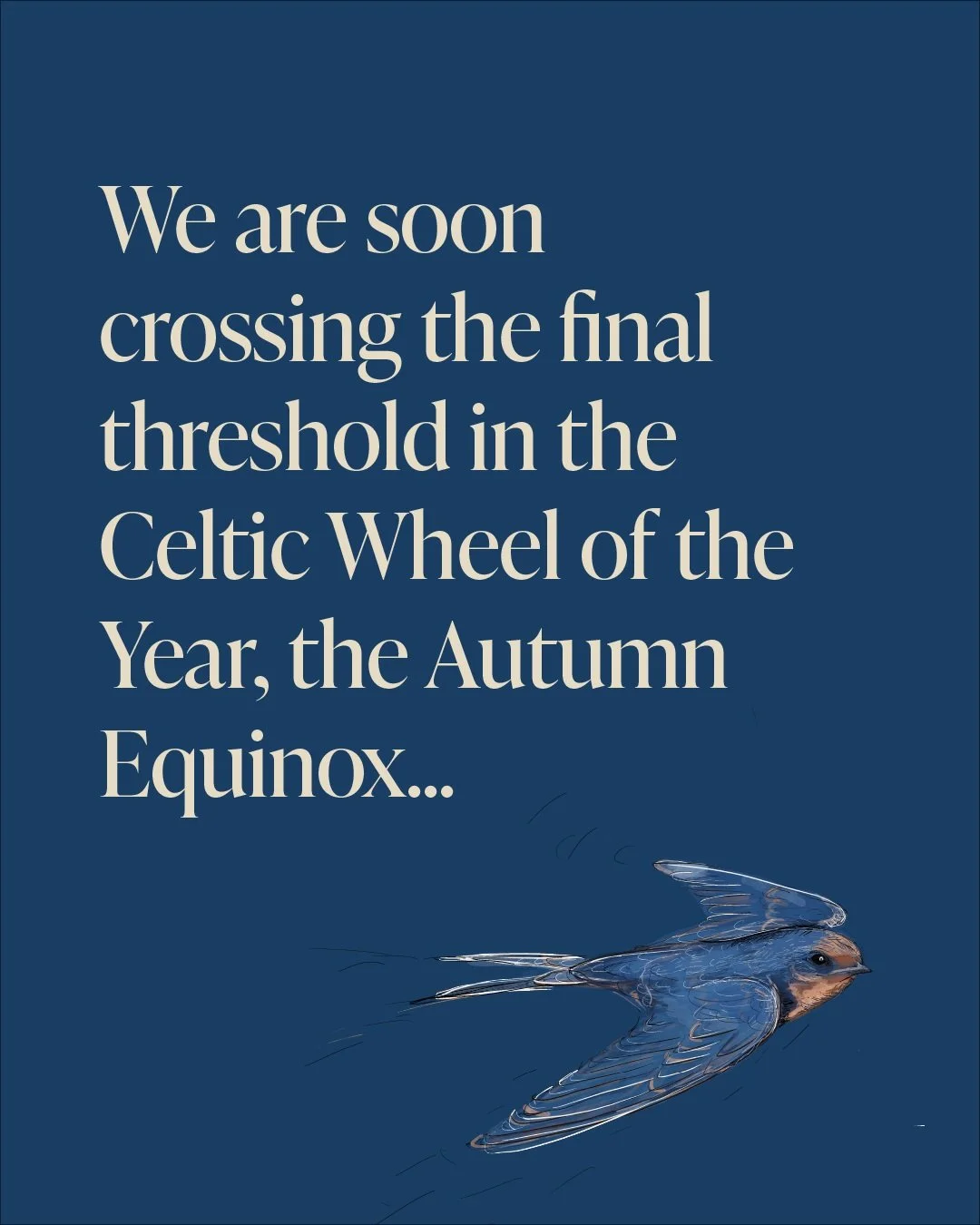

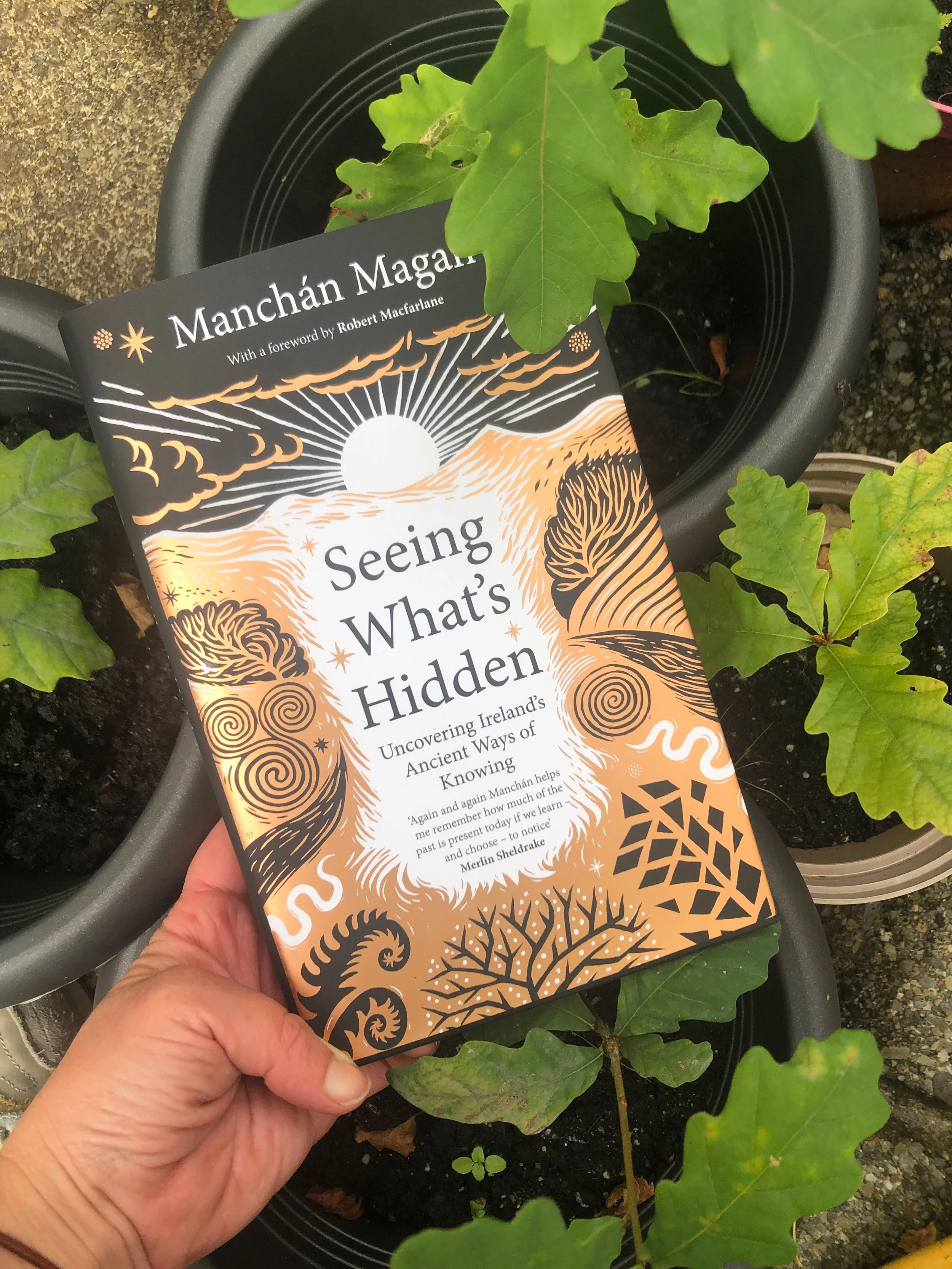
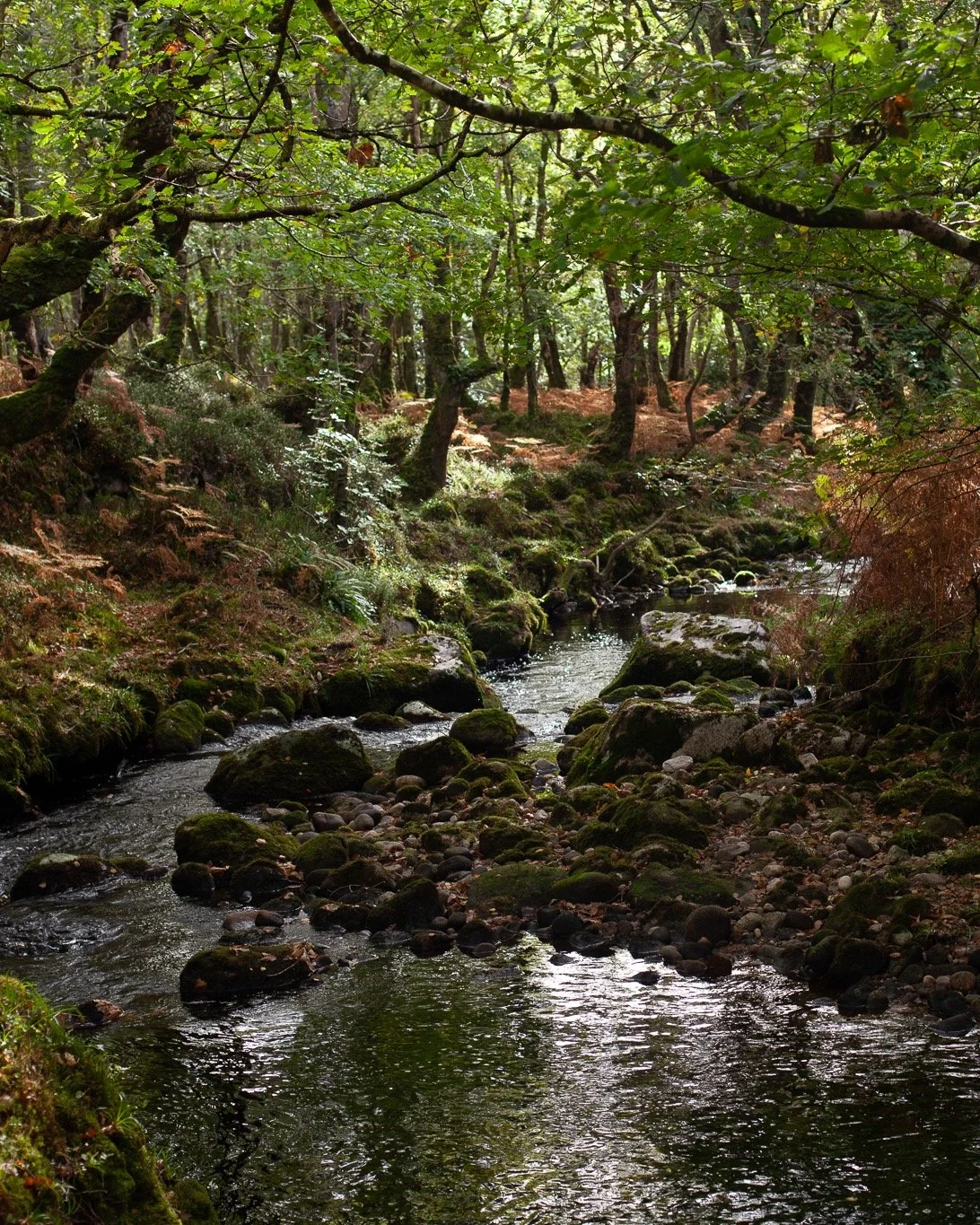
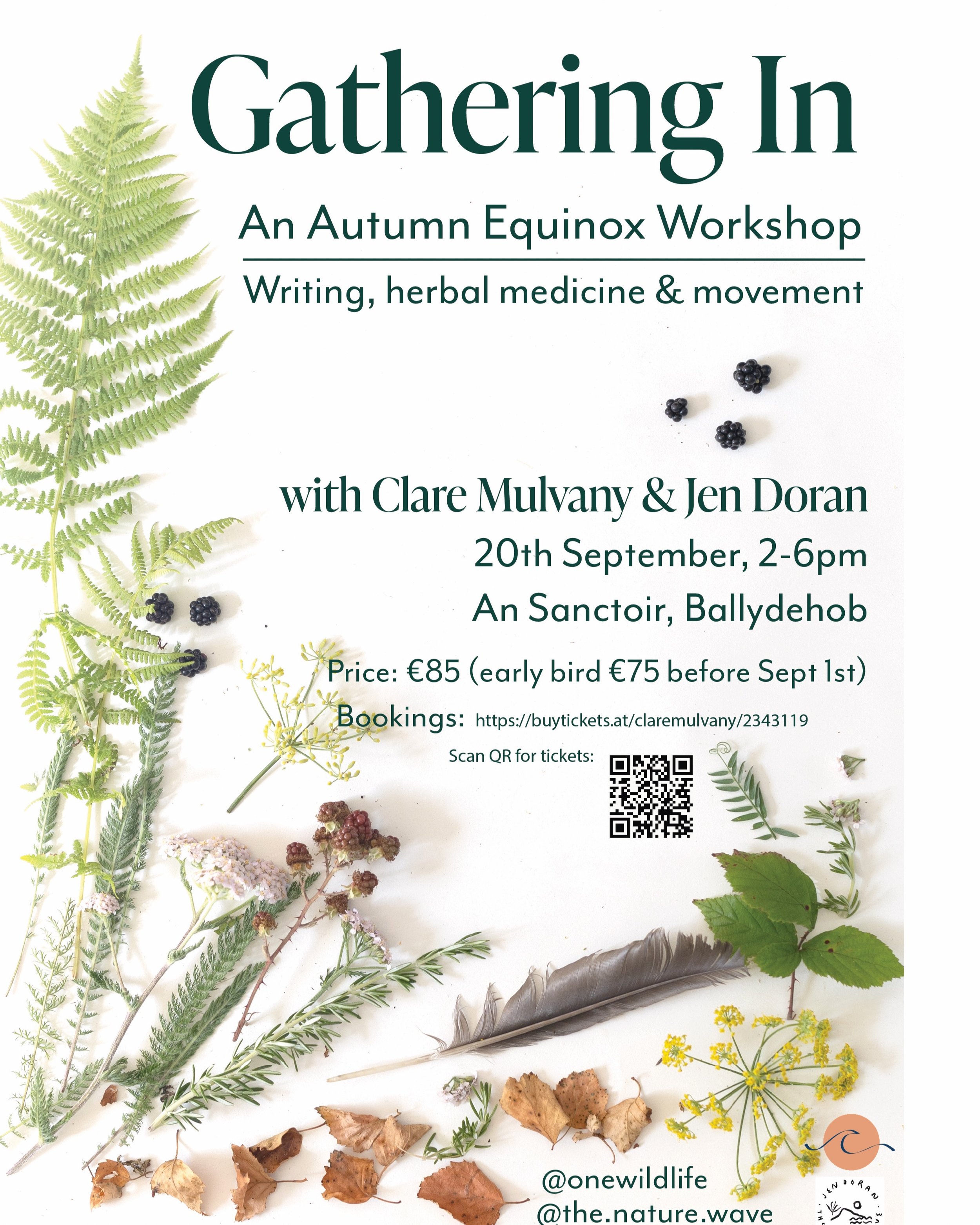
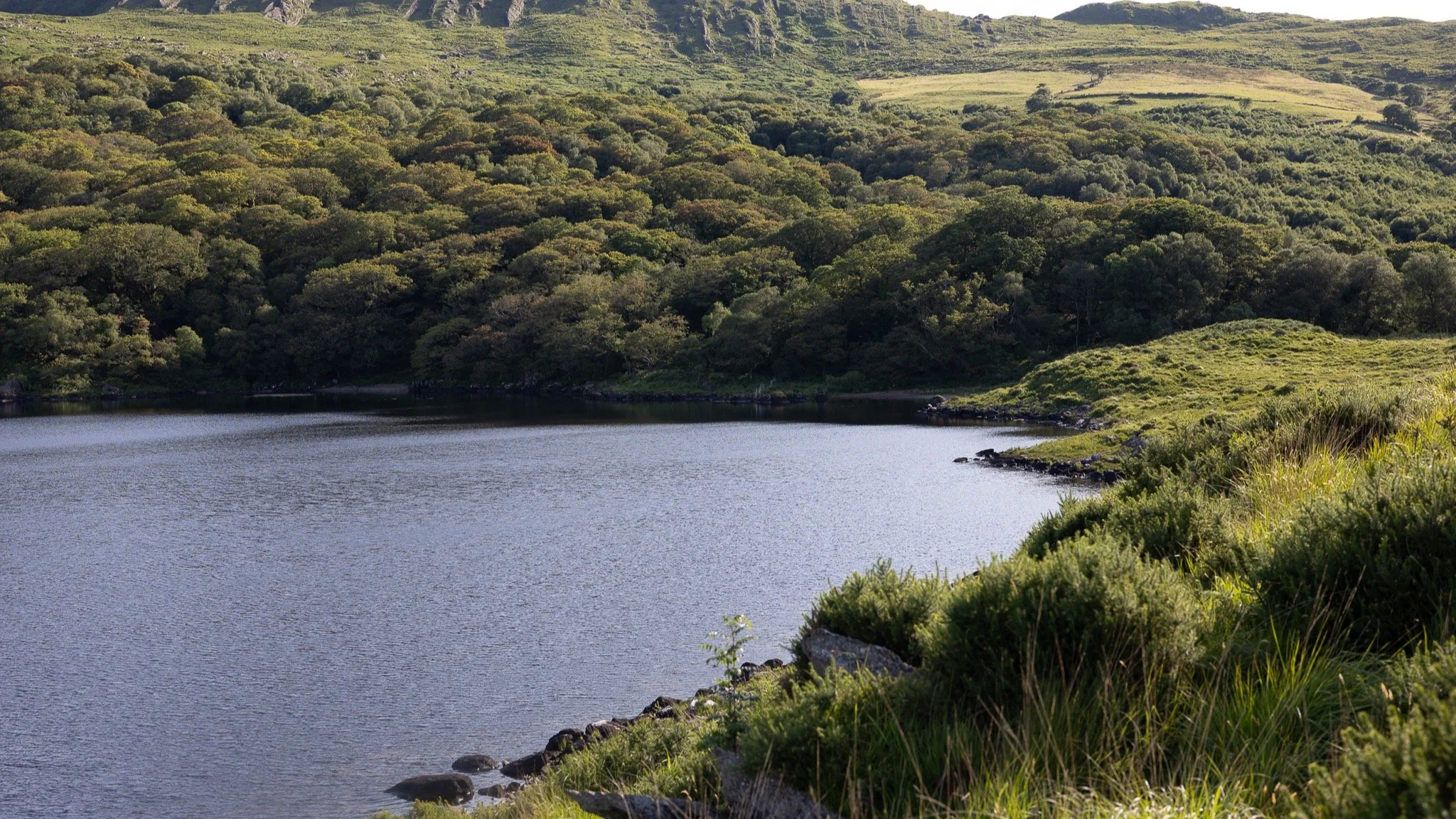
Follow Along