

A Writing Spell
A little story on the nurturing space of the blank page.
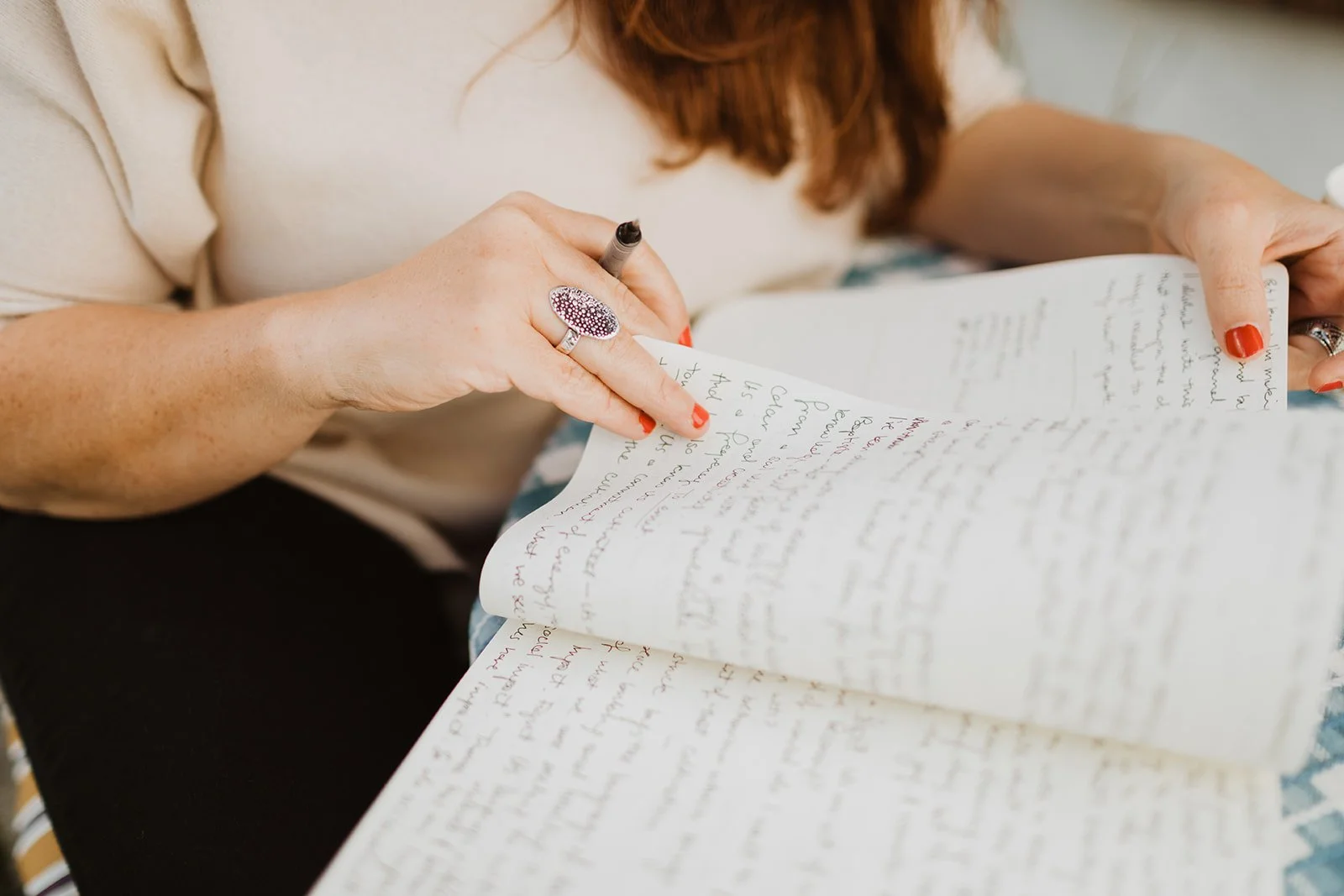
photo by Kate Bean
Dublin got me in a frazzle this week. I tend to pack in a lot when I am here. This week I’ve been teaching in Trinity College, running a facilitation workshop, having some private client calls, preparing for a facilitation gig, seeing friends, visiting family, working on some writing projects and not tending to the thing that helps to keep it all together: the blank page.
By yesterday afternoon, I was tired and feeling out of sorts but couldn’t quite place why. Then I realised, just how many days had passed. It was nearly a week since I journaled properly. Time to active the ritual!
I took myself to one of my old haunts, Fallon & Byrne, a fancy food hall with a wonderful window bench, where the buzz of the city can whirl around, and where you read for long spells, sipping on tea. The bench was full when I got there, so instead, I reluctantly positioned myself in the centre communal bench, feeling a little more exposed, and took put my journal. My writing was a ball of scribbles, erratic waffle, notes to self, and general spillage of brain buzz onto the page. I hadn’t really paid much attention to the couple opposite me, until packing to leave.
‘You’re writing’, the man said, rather obviously, but with a kind curiosity in his voice.
‘Oh, just a bit of waffle’, I replied.
‘You don’t see many people writing by hand these days’
‘It helps me think’.
‘Good for the brain’, he said, ‘connects things’.
I could sense he was speaking from experience. ‘So, you write too’, I stated, knowing the answer already.
That little sentence unlocked a brief but beautiful conversation. We spoke about the power of poetry, what one gains from it, and our favourite poets. We talked about the rich Irish literary tradition and how lucky we are to be proximate to it. We spoke about ‘flow state’, and how writing can bring us to a place in ourselves which otherwise remains unseen, un-nurtured.
As we spoke, it was like we had shared access to an ancient secret, right at our fingertips, amplified through poems and the magic of laying sentences. I took my final sip of tea, shared a knowing smile, then left, two strangers off to meet the blank page in their own intimate directions
Leaving the cafe, notes scribbled, a tender buzz had replaced the frazzle. Instead was the page, and a shared connection to what can happen there. I raced back to where I am currently staying, and spent the night deep in a writing project until it was way past midnight and the page had swallowed all the hours like a spell.
…
Your Writing Spell
If you are feeling a little frazzled too, here is a ten minute writing spell for you.
I recommend writing by hand for this one. If you have a favourite journal and a pen you enjoy writing with, all the better.
Set a 10 minute timer, and go…
Imagine that writing on a blank page is a form of magic spell.
Write about the power writing can hold for you.
Describe the alchemy of words by transforming thoughts into stories and ideas.
Write about how do you think this might change you?
photo by Kate Bean

Coming up this Month
Sanctuary: Next Session October 20th

Sanctuary
This is a monthly guided writing gathering online. One hour of supportive journaling practice, in community . Find out more and book tickets here.
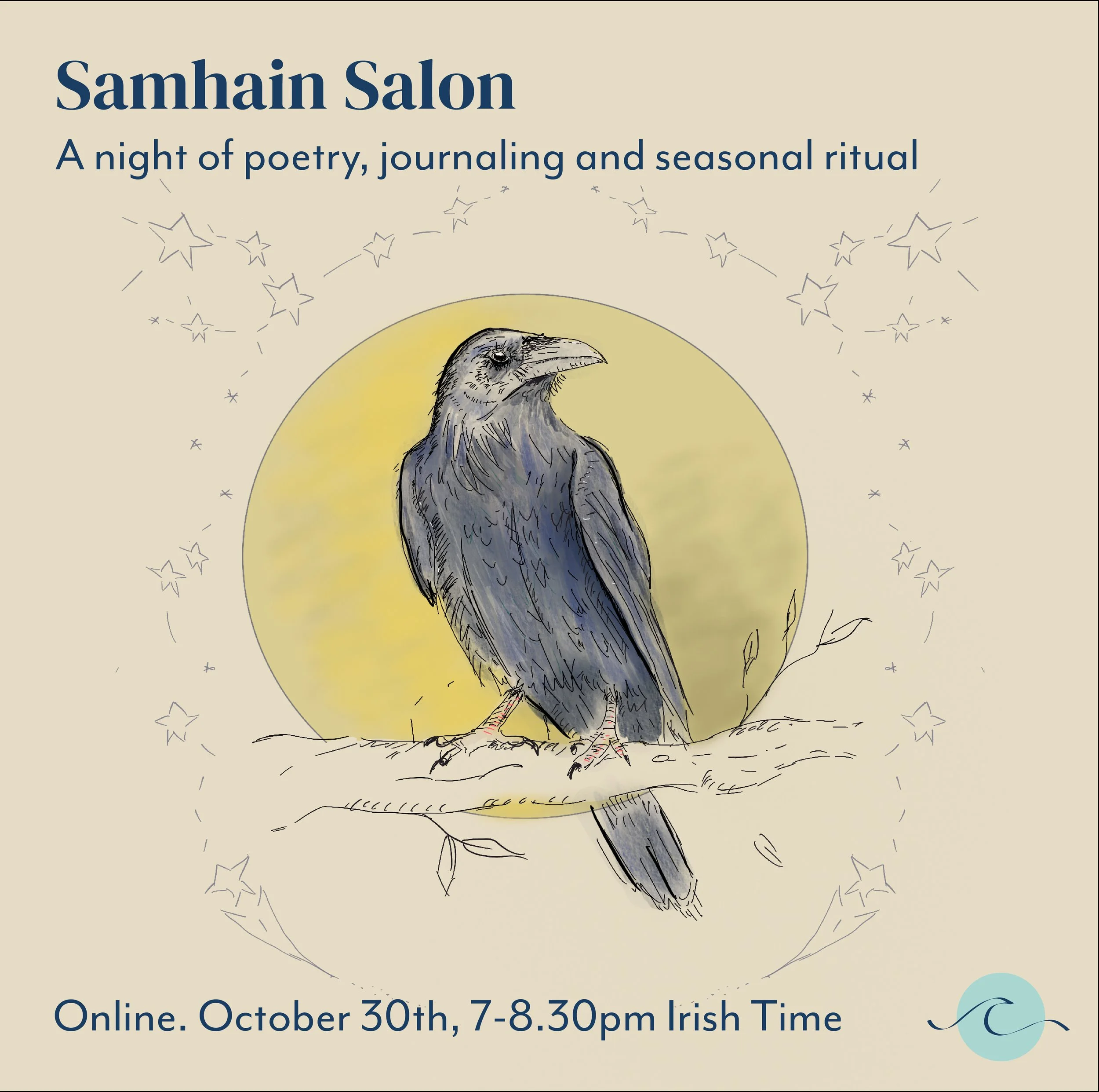
Samhain Salon- Oct 30th
An evening of poetry, writing and ritual to make the Samhain season. Tickets here.

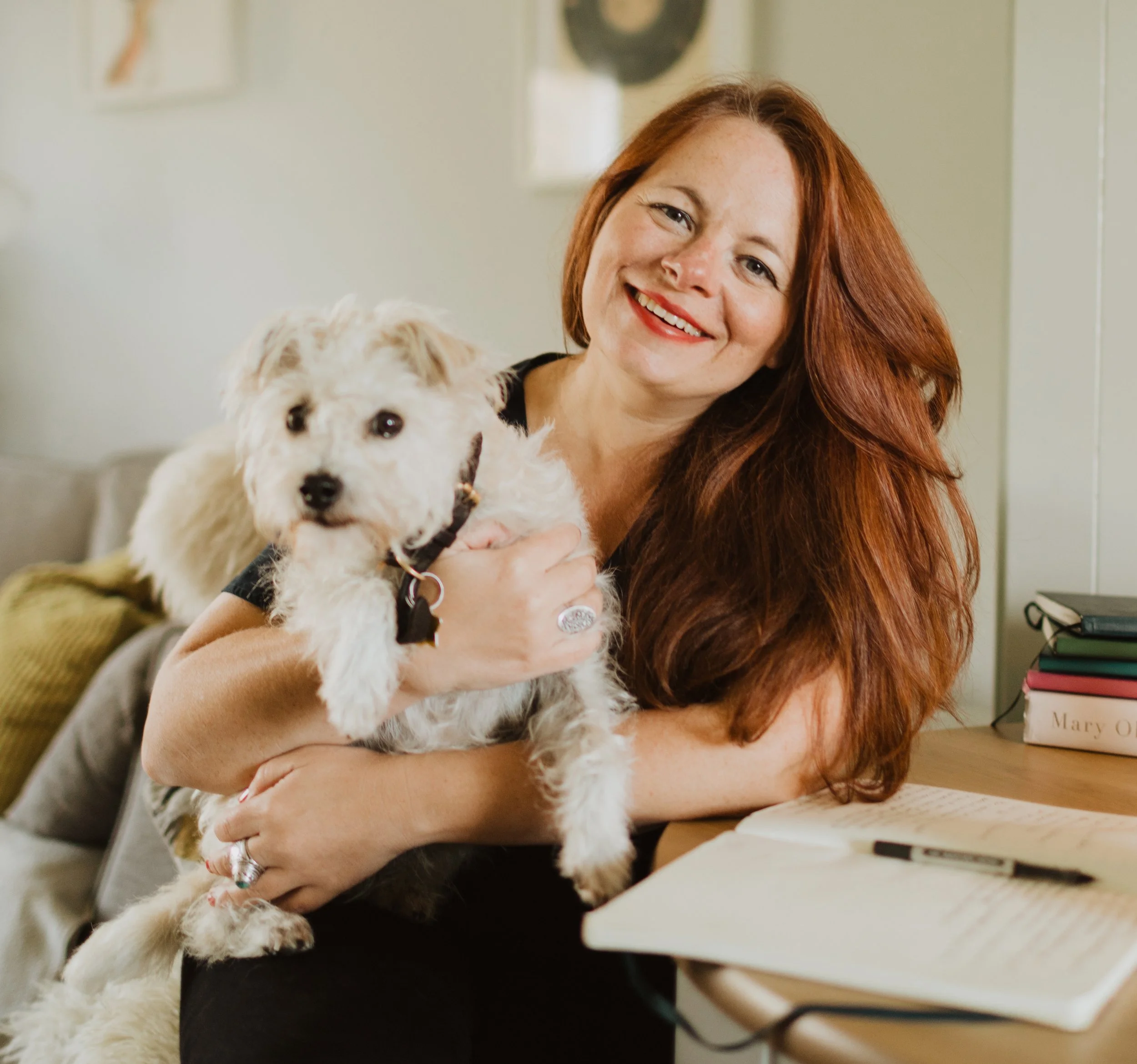
Hello. I'm Clare
I'm a writer, educator and facilitator, living in beautiful West Cork, Ireland. I love to share resources and learning to help harness the regenerative power of words, place and story. I hope my work offers nourishment for mind and soul. Thank you for being here. Clare x


In a field by the oaks near a church on the hill.

You can listen to this piece here, and at the bottom of the post, you will find a series of creative prompts to support your refections.
October has come with its attendant twists. The season turns towards the dark; migrant swallows have fled from the skies; leaves are in their dance to fade. As the evening draws it’s cloak, it’s an open passage to the night, where fires spark and long awaiting stacks of books, ideas, poems and stirrings sit in anticipation of witness, of writing. As spring sends postcards from the other side of the world, I twist a leaf from the Celtic calendar and let the turning inwards commence. It’s like permission from the skies to arrive at the blank page; to let it do it’s tricks on me. For it is here, I am ever more convinced, that the stories which are written there, and the cultures that they shift, the world is made.
I’ve been thinking more than ordinarily about the role of art, literature and poetry in these dark times. I’ve been thinking of is necessity, and absurdity. I’ve been thinking how stories are like the thread, holding things in place, just about. I’m thinking, sometimes we need to pull the thread tighter. I’m thinking, this is one of those times.
Last month, I travelled up to Co. Wicklow to attend a festival called ‘The Shaking Bog’ — a community led curatorial treat, gathering artists, writers, film-makers, musicians, performers and educators for a weekend to honour the nexus of art and nature. At the centre of it all was a nested set of questions: what if art could, as the organises urge, ‘reawaken and illuminate our often forgotten connection to the natural world - to biodiversity, heritage and place, but also to our deepest impulse to belong, to nurture and to care’.
And in the centre of it all, what I found there was something akin to a word I don’t use lightly, nor without some corresponding nuance; a word which is so often over subscribed, yet undervalued. Hope.
In finding hope, found something else there too: an affirmation of the collective power of art in the dark times, and by that I don’t just mean winter, but these days as a whole, in which I need not remind you of the nexus of complex political crises, biodiversity collapse, of homelands and heartlands in turmoil. It’s heavy out there.
Yet, yet…
There is a church on a hill beyond the woods, where for a while the church is more than a church. The woods are home to the sessile oak. In the aisles of the church as the people speak of efforts to protect the oak, they know they are also protecting themselves. In the church on the hill by the oak, there is a man speaking about his encounter with a grey whale, and how the encounter with the eye of that great creaturely presence was an encounter with a sentience beyond the depths of soul. In the church on the hill there is a poet. Her hair is white with wisdom and she wears it braided down her back, so much of it to carry. Her poems are weavers of a different kind; of mythic incantations to the feminine divine, and to the muse herself, embodied. The church on the hill is full of listeners. On a dark star studded night, poetry has a new altar in the hearts of the seekers.
The alter plays host to other music too. There is the master of the fiddle, who spins tunes which speak to the power of place and the landscapes which shaped them. Between the pulpit and a cross, there is a travelling song collector, who has been gathering the tales and stories from a time when song and story were currencies of understanding larger cycles of time, place and collective memory. The church is not about the church.
And so it continued.
In a postbox near the church on the hill there is a short film about the oaks and the mountains and the valley which shapes the soul of the place. In the centre in the woods, the children are printing on bunting, learning a new way of making patterns, and there is man hand-building bat boxes.
The culture starts to shift in churches on the hills, and bat box building and new patterns in the hands of children.
In a field by the valley, the sun emerges and sets the leaves to golden. The song collector leads us into circle, suggests we take our shoes off, tells us about perception in the souls of our feet; about how we have forgotten so many of the wayfinding ways. He tells us about finding our footing through sensory perception with our whole selves, and invites us to place blindfolds on. We put our hands on each other’s shoulders, and like a tight braid, we are guided to an open field, which we are blind to now, except we are not. Our ears are our eyes. Our skin is our guide. The field is breathing around us, so alive to itself it is singing its song of welcome.
The field is where culture shifts.
In my toes I follow the grasses. There are stories in my feet. In my ears I follow a drum. Someone is calling us. In my bones I feel the old way. In my skin I let the song carry. In my eyes, in my eyes, in my eyes.
I am a young girl, blindfolded, being led to her death for speaking out.
I am a refugee, walking across a border to save my life.
I am a mother, leading her child across a threshold to the unknown.
I am a young girl, from a country so carnaged through an ill-justified story of politics and progress that I can no longer carry the weight of my belonging.
I leave the blindfold on.
In a field by the hill by the oaks by the church, I can feel all these things because of the field on the hill by the oaks by the church. I can hear the music of the fiddler. And I can find the map in my feet again, because of the blindfold from the story-gatherer.
The ground is the place where new stories are born. And the church, and the song, and the hope.
Culture shifts in these moments. Poem by poem. Note by note. Step by step. Not one. But many.
In the centre of it all, of the church, of the field of the blindfold, I walk into a new nest of questions. It starts with what if.
What if we flooded the world we stories of valleys and oaks and women who walk across borders. What if there were stories of whales with eyes so deep with soul they can change a life forever. What if it was not just one church on a hill, but many. What if it was not just one story collector, or poet, or song, or homemaker for bats. Not one rung of bunting. Not one weekend.
What if the story was so collectively strong it could tear down policies, the ones that make the women flee. What if the story was so empowering, that it could make a valley fill with oaks again, which became a policy, which became a new culture of planting, not just oaks, but other life-giving things. What if there were more of us; the song-carriers, the story givers, the planters, the fiddlers, the print makers, the people who open their churches, and homes and hearts to let the story in.
What if.
As the dark takes over the day, I light a candle and hear the fire crackle. The page is blank and inviting me to walk into it.
I am finding my way, pulling the thread, blindfolded.
It’s how I know the culture shifts.

Creative Prompts
Below are a series of thematic writing prompts, based on this piece.
I recommend you pick one of the themes, and then spend 10 mins writing. It can be helpful to set a timer. The prompts might be small reflective pieces for you, or may spark a longer cycle of explorative writing.
The Story-Gatherer:
Think about yourself as a story-gatherer, tasked with collecting stories to pass down the generations.
What key narratives or themes would you collect? What transformative stories from your own life would you include? What songs, books, films would you add to your collection?
The Church by the Oaks on the Hill.
Think about a place in your life, where you feel deeply connected to nature or creativity.
What draws you there? How does that place speak to you? How has your connection to it changed or evolved over time. What is the story you tell of that place?
Whale’s Eye:
Reflect on a moment when you encountered something vast and awe-inspiring—whether in nature, in art, or in a moment of deep connection with another person.
What did that experience reveal to you? How has it shaped you, or shifted your perspective?
The Nest of What If Questions.
Think of your creative life embedded in a nest of ‘What If’ questions.
What would those questions be? What themes emerge from the questions? How can these questions be a guide to you?
.. .
Gratitude
A huge thanks to the organisers of The Shaking Bog Festival.
To the fiddle-player, Caoimhín Ó’Raghllaigh
To the poet, Paula Meehan.
The the song-gatherer, Sam Lee.
The the whale writer, Philip Hoare.
And to the field, and the oaks and every living creature in between.
.
Want to sustain your own writing process? I have a several ways to support you
Poetry Salon: Next Session October 13th

Poetry Salon
This is an hour of reading, listening and savouring to poetry. Find out more and book tickets here.
Sanctuary: Next Session October 20th
Sanctuary
This is a monthly guided writing gathering online. One hour of supportive journaling practice, in community . Find out more and book tickets here.
Samhain Salon: October 30th
Samhain Salon- Oct 30th
An evening of poetry, writing and ritual to make the Samhain season. Tickets here.
There are many people reading this who know they have a book or writing project brewing but are not sure where to begin, how to structure it, or lack the courage and confidence to bring a draft to the next level. My writing mentoring packages are here to support. From private one-to-one workshops, a three month intensive, or a year long engagement, I hope your writing and story has a chance to grow.
Hello. I'm Clare
I'm a writer, educator and facilitator, living in beautiful West Cork, Ireland. I love to share resources and learning to help harness the regenerative power of words, place and story. I hope my work offers nourishment for mind and soul. Thank you for being here. Clare x

When No is a Secret Gateway to Yes
When no is a secret gateway to yes.
You can listen to this piece here:
When no is a secret gateway to the real yes.
The morning sun still holds the promise of summer, yet there is a distinctive autumnal turn. The ‘back to school’ vibe is real, with its corresponding prepping mode. September always feels like a new start for me — my work is still connected to academic cycles, but my psychology is too. Come late August, I become squirrel, furrowing, burrowing, plotting and planning to give myself a good foundation for what are traditionally busy months ahead.
As a school kid, I loved the opportunity to get new stationary and the ritual of covering my new school books. I seem to need these physical triggers, to mark a new clearing. At the weekend, for instance, I did some tedious but deceptively pleasurable tasks. What was a fridge in desperate need of defrosting, now ordered to a ‘capsule wardrobe’ of condiments. I was never going to eat that ferment really. But alongside the physical sorting, there is the mental sorting. In the time it takes to clear a fridge, there is space for review, reflecting on learnings and reconnecting with priorities to buttress the months ahead.
In looking back, I have a chance to think about this past summer, one which held an incredible opportunity and incredible challenge. The opportunity: to take on the running of a beautiful building (cafe/ pottery studio/ learning space) in the village where I live, and develop community events and learning programmes. The challenge: exactly that!
So, trying to put into practice what I teach, I set about applying design methodologies to the task. There was so much learning in the process. From engaging in deep listening approaches, using community participatory practices and ultimately listening to my instinct, after almost three months of research, I realised on a fateful dark night of the soul, that while a wonderful prospect, the opportunity was not for me. There are moments in life you have to give a full yes, and there are moments in life where you have to listen to a full no. Embarking on the process, a strong values-driven yes, led me into the possibility, but it was a gut instinct, body based, no, which led me the decision to not to proceed. Sometimes no is a gateway to the real yes.
I’m so glad I tried. And I am so grateful to people, the place, and tools that have helped me. It was not the summer I expected, but it was a summer of learning, then letting go with confidence in the process which underpinned the path which took me here. (Given the richness of the learning experience, I have written more about the process over on Thrive School- which I hope might be a useful resource to those embarking on their own projects)
So, the real yes. Isn’t that always the challenge, and the opportunity.
I don’t think our yes is ever singular, or crystal or static. Our yes can speak in whispers, nudges, bringing us closer towards that idea, image or story that just won’t loose grip. It’s not always linear or logical. It requires listening. Sometimes over and over again.
For me, that yes starts in my journal. There are scribblings, sketchy inklings, allowing ideas and longings to land, perhaps for years, letting them ripen, grow, find ground in my psych and soul. The ideas which keep repeating, the desires which keep rising, over time, these patterns become evident on the page.
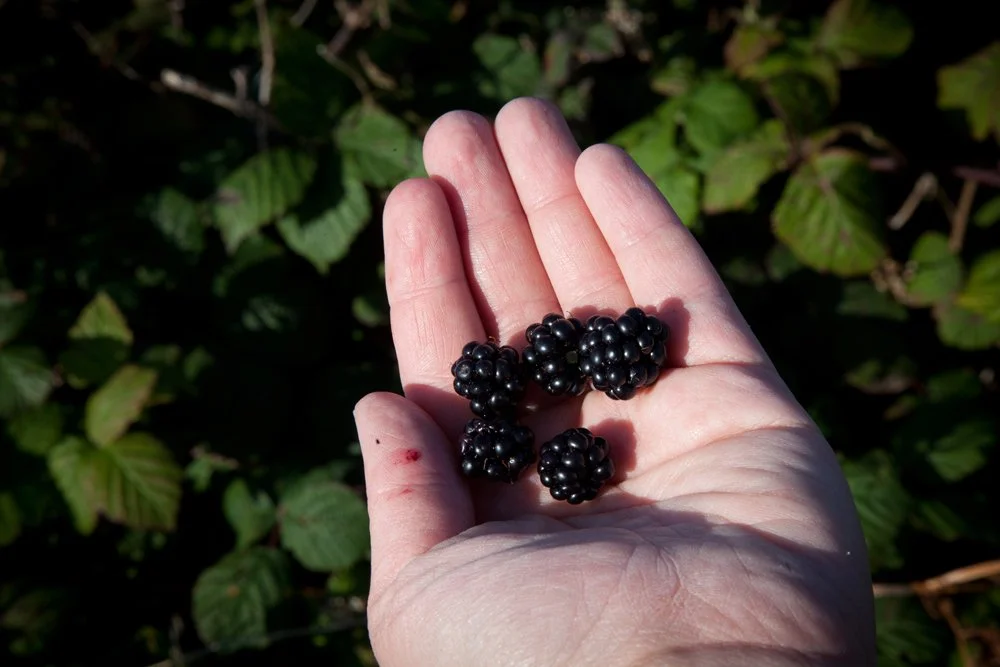
The listening is supported with ritual. Yesterday, I took a wander down some overgrown paths, on the hunt for blackberries. The picking is such a marker of the season, both in its turning and its gifts. As I was picking, with the birds and the waves as sonic companionship, I was thinking of the privilege and power of such space, of where I find myself. I was thinking of the preciousness of time, and how to use it wisely. I was thinking of hope.
There are so many needs in the world right now, so many causes and urgencies, no one person can bear. At times I find myself numbing, blanking out the news and the social feeds of another tragedy. And there is one part of myself which shames me for doing this- how can I turn away, how can I be so removed, from my place of privilege and vantage. Another part of my brain knows that the numbness is a protective mechanism from grief. It’s how the limbic brain has learned to be animal: fight, flight, freeze. Freeze can be strategy for survival. The challenge with freeze though, it’s cold and solid and immovable, and it too requires defrosting.
Plug out, remove the clutter, replace only the essentials, leave space.
Who knew that lessons from deep cleaning a fridge could be so valuable.
Alongside the briars, there are fruits, ready for picking. In a quiet, unplugged solitary afternoon, I pick enough to fill a small container. A few are bitter, but they are mostly sweet, products of time and weather, just enough sun to ripen. I return home, invite a friend over, bake a blackberry pudding, and together we eat the season, letting the inky berries stain our tongues, leaving them longing for more. So we have some.
Later, I take out my journal, and can see the patterns more clearly again, these inky stains of longing. My pen meets some questions.
What am I longing for?
When that question is exhausted with ink, it’s time to go to the next one:
But what am I really really longing for?
And when that one is done, the next:
But what am I not giving myself permission to really long for, but secretly do?
This last question, it is hard, and revelatory. For me right now, it plugs me into long held ambitions around my writing, teaching, owning a home, and travel. It also brings me to questions about how I am using my voice to speak up and out about injustices, and climate, and the issues I care about. It demands that I focus and keep on dreaming. It demands that I keep going, even when the path ahead is uncertain. Longings are not tame like that; they make us become more of ourselves, so we can continue to bring our gifts to the world. Secretly, they have our back. And when we let them, perhaps not so secretly after all.
Your ten minute writing practice.
What are you longing for?
What are you really really longing for?
What are you not giving yourself permission to really long for, but secretly do?
Want to sustain your own writing process? I have a several ways to support you, online or in-person
Sanctuary: Next Session September 22nd
Sanctuary
This is a monthly guided writing gathering online. One hour of supportive journaling practice, in community . Find out more and book tickets here.
Final in the Summer series.
Live a New Story. September 7th, Schull, West Cork.
Learning about the art of personal narrative writing in this one day workshop. Book your tickets today.
There are many people reading this who know they have a book or writing project brewing but are not sure where to begin, how to structure it, or lack the courage and confidence to bring a draft to the next level. My writing mentoring packages are here to support. From private one-to-one workshops, a three month intensive, or a year long engagement, I hope your writing and story has a chance to grow.
Hello. I'm Clare
I'm a writer, educator and facilitator, living in beautiful West Cork, Ireland. I love to share resources and learning to help harness the regenerative power of words, place and story. I hope my work offers nourishment for mind and soul. Thank you for being here. Clare x
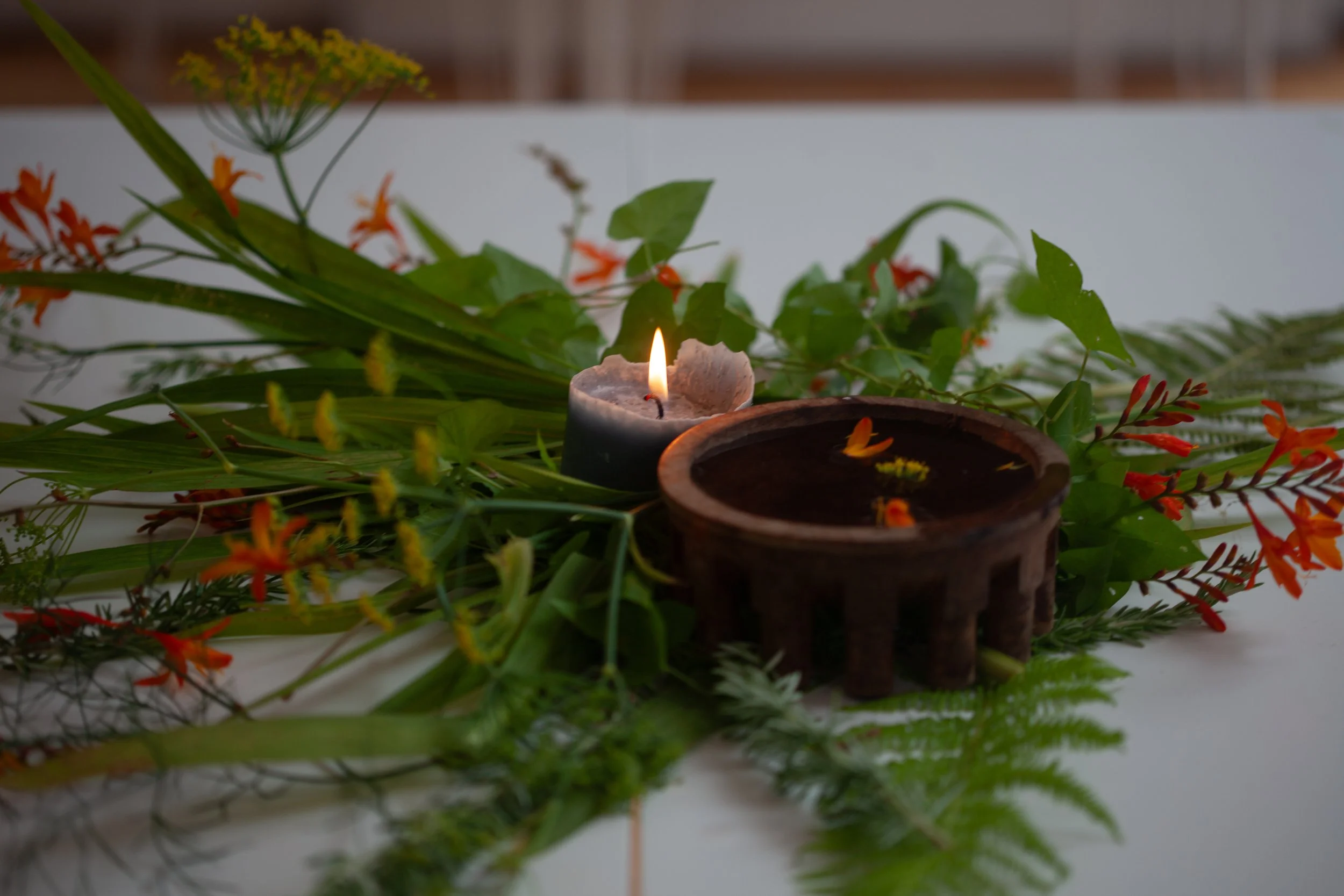
What Beauty Might We Yet Create?
A 5 minute writing practice and prompt.
Something a little different today. A five minute writing practice for you.
Here is a piece of my own writing, followed by a prompt, where I accompany you in your writing.
Grab a pen, paper and comfy spot. And press play!
July has come, with its attendant blooms and night songs. Dawn comes early too, and the chatter of the birds rises me. It is not the only the birds keeping me awake though. It is all the questions which are spooling in these times of uncertainty and change. Yet, it is the birds which give me courage. The butterflies too. And between every curl of foxglove, the darting swoop of swallow and wing. Yes, it is beauty which gives me courage, and nature’s insistence on becoming all it can be.
Recently I was editing a piece with reference to swallows. Moments later I walked upstairs, and there was a swallow sitting on a picture frame, shocked and surprised, both of us —an awe of encounter, and then, on my part, a flurry to open all the windows to encourage flight back to the skies again. This tiny remarkable being who has the will, power, stamina, determination to cross continents, cross deserts and mountains, seas; straddling its place in the world. Between Ireland and South Africa, a home in two parts, and an entire mystery of migration in between.
I wonder sometimes what would happen if we all stopped for a moment and pondered the true marvel of even a single blade of grass, or just one flap of wing; how the world might be different; how we too might insist on crossing continents, opening to our full bloom, rising in the early morning to let our song out. What would we sing? What beauty might we yet create?
…
The Prompt:
What beauty might I yet create…

Want to sustain your own writing process?
This summer I have a several ways to support to, online or in-person
Sanctuary: Next Session July 20th
Sanctuary
Next session: Sunday July 20th. This is a monthly guided writing gathering online. One hour of supportive journaling practice, in community . Find out more and book tickets here.
Come to West Cork this summer.
Next sessions 6th July, 14th July or Aug 3rd
Across the summer I have a series of beautiful writing workshops planned, in Schull and in Leap. From nature writing to learning the art of personal narrative writing it’s writing + nature + west cork. What’s not to love. Book your tickets today.
There are many people reading this who know they have a book or writing project brewing but are not sure where to begin, how to structure it, or lack the courage and confidence to bring a draft to the next level. My writing mentoring packages are here to support. From private one-to-one workshops, a three month intensive, or a year long engagement, I hope your writing and story has a chance to grow.
Hello. I'm Clare
I'm a writer, educator and facilitator, living in beautiful West Cork, Ireland. I love to share resources and learning to help harness the regenerative power of words, place and story. I hope my work offers nourishment for mind and soul. Thank you for being here. Clare x

Writing as Assemblage- and Overcoming Rejection
On writing as an act of assemblage, overcoming writing rejection and the transformative power of the creative process…

You can listen to this piece here…
There’s a thread you follow. It goes among
things that change. But it doesn’t change.
People wonder about what you are pursuing.
You have to explain about the thread.
- William Stafford
In personal narrative writing I’ve come to understand that the story is never singular. It is more layered and mosaic than anything chronological or linear. If anything, writing our story is an act of assemblage. It is about learning how the pieces may thread together to create something new which holds an adherence to truth (for it is only there that we get to the really transformative material). But there is also a call to beauty, asking us, ‘How can the story take shape in a new, artful way? What else might I uncover? From what, or whose, other perspectives might this be written from?
Holding out for duality, plurality, and beauty, opens possibilities not just within the narrative arcs, but in also in the writer themselves, a measurement of ‘success’ which is often outlooked when gauging the value of the writing process and outcome.
Publication is so often used as the final benchmark of writing success. Yes, it is one way to measure, but it is also such a small measure which the commercialised world thrives on. So many people try, are rejected, then stop writing. But we loose so much when external indicators of success are taken as the gatekeepers into one’s own power and potential; ones own story.
The publishing world is an industry driven by the judgment and validation of market forces and profit margins- it is an industry after all, with it’s own metrics. There are disruptors within the industry for sure (I love what Unbound Books are doing for instance, or The Pound Project), but as someone who has submitted many book proposals, and received many rejections, I am grateful that I understand the value of writing for my own growth, curiosity and creativity outside the limited bounds of these external markets.
When I was looking for a publisher for my own memoir which I wrote as a rite of passage/ ritual for my 40th birthday, the resounding response from agents and publishers was ‘we love this, but we don’t know how to sell it’. I came very close with several publishers, but in the end they choose not to take it on. I’ll be honest, the rejection was hard. With multiple doors opening, then closing, it felt raw, particularly with writing so personal. I had to remember: it is the book they are rejecting because they cannot see how it fits into their market, for now. It was not my writing or me they were rejecting. That shift in perspective has kept me going. I love writing too much to stop because of market forces. It is too much a part of how I navigate this world to give up.
I put the memoir down for now (I may come back to it again later), and I just returned to my journalling practice, and kept going. Page after page after page, and slowly something new has been emerging. I work with publication in mind, for sure, but I also work with my own creativity, imagination and love for the craft in mind. The process in and of itself is a gift I give to myself, one which continually helps to strengthen me, change me, show me a way forward, enrich.
Writing, particularly writing personal narrative, demands that we pay attention to the truth, lies, half-truths, and influences which mould and make us. In the assemblage we get to make the links and connections we otherwise would not have noticed, and ultimately I believe we can meet ourselves and therefore others, with more compassion and nuance. Whether one is published, or not, is not the final measure of success for me. Am I being true to myself? Am I listening? And I learning? Am I being of service? These are more interesting questions for me to help guide the process. Writing personal narrative- whether in essay crafting, in looser journaling form, in that sense, is a medium in which the transformation of self can be both moderated and witnessed. The words are the mould makers and the mould breakers. The words themselves are the alchemist’s thread, which I will happily follow. Where they will lead, I have no idea really, but it is a journey so worth taking.
Want to spark or sustain your own writing process?
This summer I have a several ways to support to, online or in-person
Sanctuary
On June 16th ‘Sanctuary’ commences. This is a monthly guided writing gathering online. One hour of supportive journaling practice, in community . Book tickets here.
West Cork Writing Workshops
Come to West Cork this summer!
In July, August and September, I have a series of beautiful writing workshops planned, in Schull and in Leap. From nature writing to learning the art of personal narrative writing it’s writing + nature + west cork. What’s not to love. Book your tickets today.
New Writing Mentoring
There are many people reading this who know they have a book or writing project brewing but are not sure where to begin, how to structure it, or lack the courage and confidence to bring a draft to the next level. My writing mentoring packages are here to support. From private one-to-one workshops, a three month intensive, or a year long engagement, I hope your writing and story has a chance to grow.

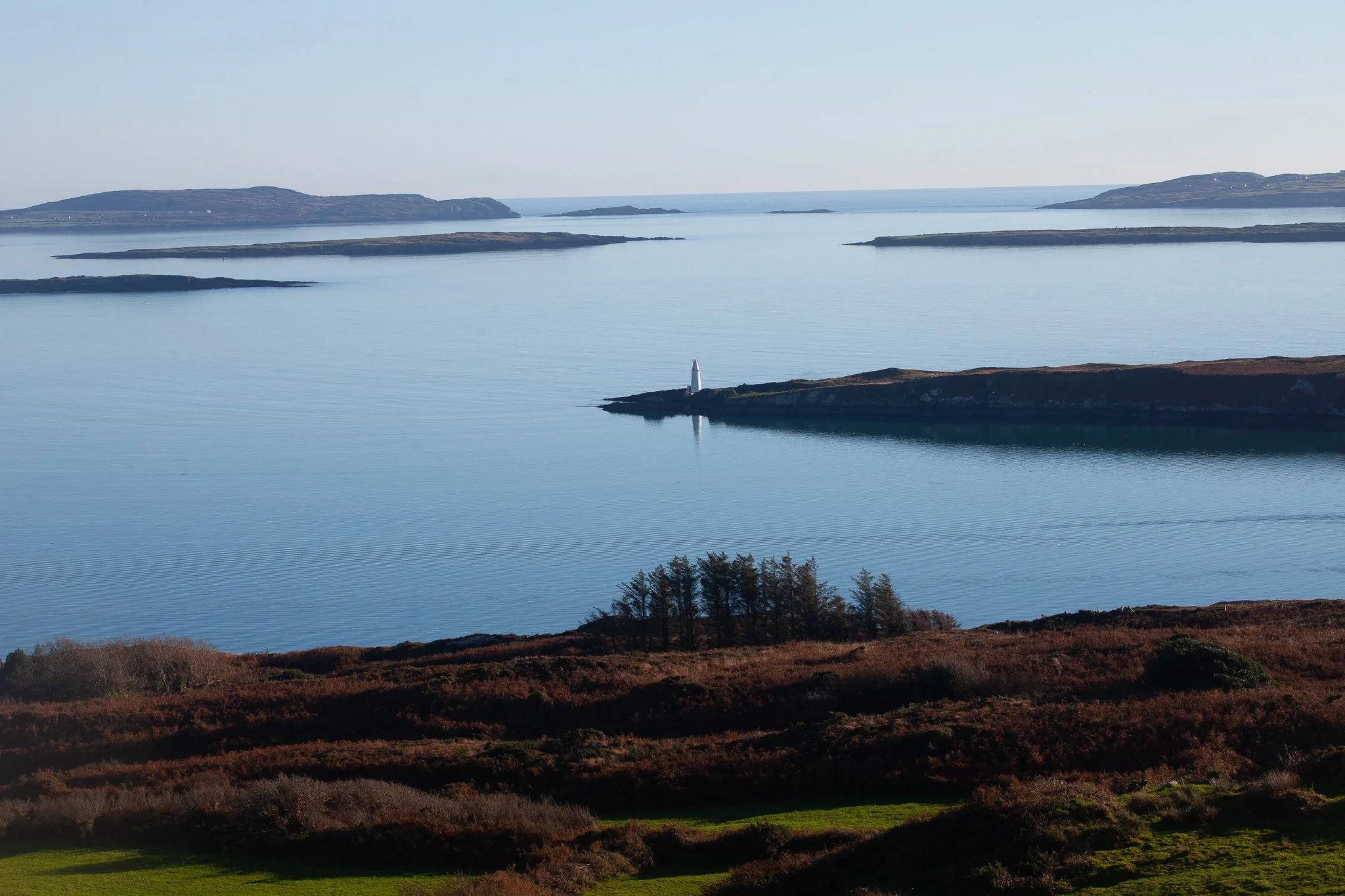
Summer Writing Workshops, West Cork. June-Sept
Join me for a series of writing workshops in Schull or Leap, West Cork, Summer 2024
Hello. I'm Clare
I'm a writer, educator and facilitator, living in beautiful West Cork, Ireland. I love to share resources and learning to help harness the regenerative power of words, place and story. I hope my work offers nourishment for mind and soul. Thank you for being here. Clare x

One of the scariest places
One of the scariest places in the world is…
What is one of the scariest places in the world?
It is a question I often ask students. I get a range of responses from sniggers to specific locations. ‘My grandmother’s knicker’s’, a student once said, to which the room took a collective gasp, then broke into hysterics.
‘How about the blank page… ‘ I offer.
They look at me as if I’m half mad.
But it’s true. I believe the blank page is one of the scariest places in the world. But it is also one of the most exhilarating, wondrous, powerful and transformative places there is. It’s a place not just where stories and books are born, but lives too. It’s a place of homecoming, connection. In times of loss, it can be a place of solace, and in times of joy, a place to celebrate.
The marriage of ink and page is a loyal companion to action and insight. The data confirms it: commit an intention or a goal to the page, write down specifics with a deadline, and it is more likely to happen. Writing is as much about making the world, as it is narrating it.
I’m sharing all this because I’ve been in a reflective space around the power of writing in my life. I started writing a regular journal when I was 11 and have kept one ever since. That’s a lot of blank pages. A lot of mundanity and lists too, yet when I look back on those pages I see the origins of my ideas and the evolution of how my creative life and career have mapped around them. I’ve seen that it is the habit of returning over and over to the page which has been the bedrock not just to my creative life, but to my career as well. The blank page + a pen + regular habit =…..
….
This summer I’ve lots of ways for you to engage with writing and supporting your own creative habits.
Sanctuary
On June 16th ‘Sanctuary’ commences. This is a monthly guided writing gathering online. One hour of supportive journaling practice, in community . Book tickets here.
West Cork Writing Workshops
Come to West Cork this summer! . In July, August and September, I have a series of beautiful writing workshops planned, in Schull and in Leap. From nature writing to learning the art of personal narrative writing it’s writing + nature + west cork. What’s not to love. Book your tickets today.
New Writing Mentoring
There are many people reading this who know they have a book or writing project brewing but are not sure where to begin, how to structure it, or lack the courage and confidence to bring a draft to the next level. My writing mentoring packages are here to support. From private one-to-one workshops, a three month intensive, or a year long engagement, I hope your writing and story has a chance to grow.
Summer Writing Workshops, West Cork. June-Sept
Join me for a series of writing workshops in Schull or Leap, West Cork, Summer 2024
Hello. I'm Clare
I'm a writer, educator and facilitator, living in beautiful West Cork, Ireland. I love to share resources and learning to help harness the regenerative power of words, place and story. I hope my work offers nourishment for mind and soul. Thank you for being here. Clare x

Burren Winter School: A Story in Layers
Over the few days of the Winter School, I see the participants getting to know each other better, and being in this layered learning together. I can’t help but play with the landscape as metaphor too. The Winter School has become a haven in the fissures of our global fracture. Here are 22 participants gathering to pause, learn, regenerate. They represent 15 nationalities. There are singers and scientists, social entrepreneurs and sociologists. There is a medic from South Africa, a young family from Afghanistan. They are from Palestine, Cambodia, Nigeria, Japan, Germany, India, Ireland. They are all people who want to be part of writing a new story: This is Ireland. This is us.
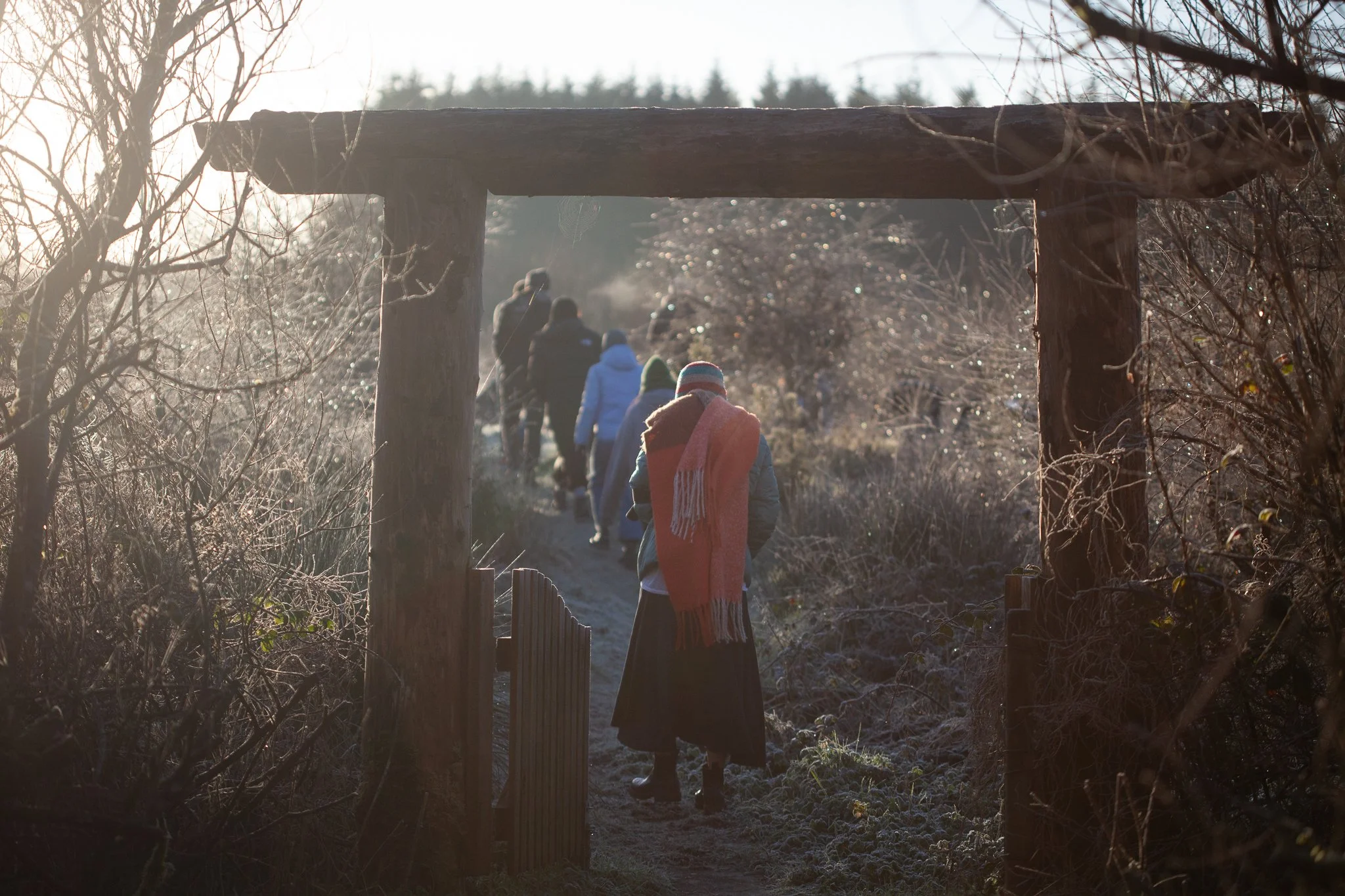
Photo by Caitriona Rogerson
You can listen to this story below (10 mins)
The Burren landscape is full of cracks. Fractures and fissures divide the limestone, which, as we walked across the stone slabs on a cold, crisp January morning, were rendered both beautiful and dangerously slippy. The light that morning was as if Yeats himself had laid down the heaven’s embroidered cloth, but we were also were being warned: thread softly.
We had gathered as part of the Suas/ Stand Changemakers Academy, a 6 month learning programme designed to support young changemakers with the learning required to both navigate the fractures and fissures of our world, and gain skills to build, repair and advocate for a better one. I have been fortunate to be a part of the design of the programme and was now in attendance as a facilitator at their Winter School through my work with Thrive School. Our home base for the week was Common Knowledge, a regenerative learning centre, rooted in the Burren. On this wintery morning, as the rocks and cracks told their ancient story, we were being guided on a place-based learning walk with Áine Bird, from the Burren Beo Trust, another organisation which seeks to connect people to the landscape and its care.

Photo by Caitriona Rogerson
Bearing the fossilised memory of millennia, on first glance it can be easy to read the story of the Burren as one of erosion, but, as Áine points out to us, on deeper reading, it also tells a story of protection, conservation and preservation. What we learn instead is that the system in which the landscape evolved is a complex interweave of narratives: human, ecological, agricultural, religious and cultural. To understand the full, systemic story, we must understand the relationship between the layers.
‘Live in the layers’, another poet, Stanley Kunitz has counselled, and so: the layers. When we put on an ecological lens we learn that the fissures are home to some of the rarest plants and insect life in the country. As the rest of Ireland becomes increasingly depleted of its biodiversity, it is landscapes such as this that become both habitat havens and critical species preservation hubs.

Photo: Clare Mulvany
Next layer: reading the landscape as a sacred text, we learn of the large cycles of worship which have played out on its altar. From pagan rituals, to early christian oratories, from holy wells and places of pilgrimage, time and ceremony have marked meaning and myth into the stone. With eyes in search of the sacred, we see the sacred.
Then with the eyes of an agriculturalist, we learn of the complex, interconnected relationships between man, bovine, plant and place; how the landscape- this place of sanctuary for marginal and rare species only is because of relationship. Take the cow, for example. As the wintering herds graze, keeping back potentially encroaching hazel bush, so too do they distribute seeds and nutrients to enable the flowering of rare spring bloom. Wild flower meadow and cow literally sustain each other. What dies, becomes, and what becomes feeds a wider circle of life. The key is in finding a balance between the elements: hazel bush, grazers, cows, plants and the right timing of the seasonal movement of herds to enable the plant life to flourish. Here communication is transhuman- man, animal, plant and place all in dialogue in to ensure mutual flourishing.
Next layer. With the eyes of the historian, in a single frame we can see the parallel of past and present. The mounds of an ancient Fulacht fiadh- thought to be an old cooking pit, now sits adjacent to a concrete watering trough for cattle. Just out of frame, there is also a famine house, its crumbling walls telling part of the larger story of how a community faded into decline through the systemic interplay of colonialism, economy, land rights and food sovereignty.
Each layer offers more readings. Each reading, brings up its own set of questions. The landscape is a living text, only fully decoded with open eyes, open minds and open hearts. So, in a complex layered system, and particularly as changemakers, we need to ask questions which probe into each layer, questions such as: Whose needs do you prioritise? Whose wellbeing is centred? What story is given voice? Who is not being heard? Without understanding the layers and characters in the narrative, we risk telling, and preserving, only a partial story. Story, we learn, is central. Without story, we may just fall through the cracks.

Photo: Clare Mulvany
Over the few days of the Winter School, I see the participants getting to know each other better, and being in this layered learning together. I can’t help but play with the landscape as metaphor too. The Winter School has become a haven in the fissures of our global fracture. Here are 22 participants gathering to pause, learn, regenerate. They represent 15 nationalities. There are singers and scientists, social entrepreneurs and sociologists. There is a medic from South Africa, a young family from Afghanistan. They are from Palestine, Cambodia, Nigeria, Japan, Germany, India, Ireland. They are all people who want to be part of writing a new story: This is Ireland. This is us.
We begin our days in circle. The circle is a container to hold the learning and each other, as we meet our edges and our hopes. I invite in our difficult questions, and our uncomfortable quests. How can we learn to navigate them if we can not support each other to be brave enough to ask them. Our questions are so we may learn to move through the layers of self and the systems we inhabit, to live more vitally and more fully, for all of us.

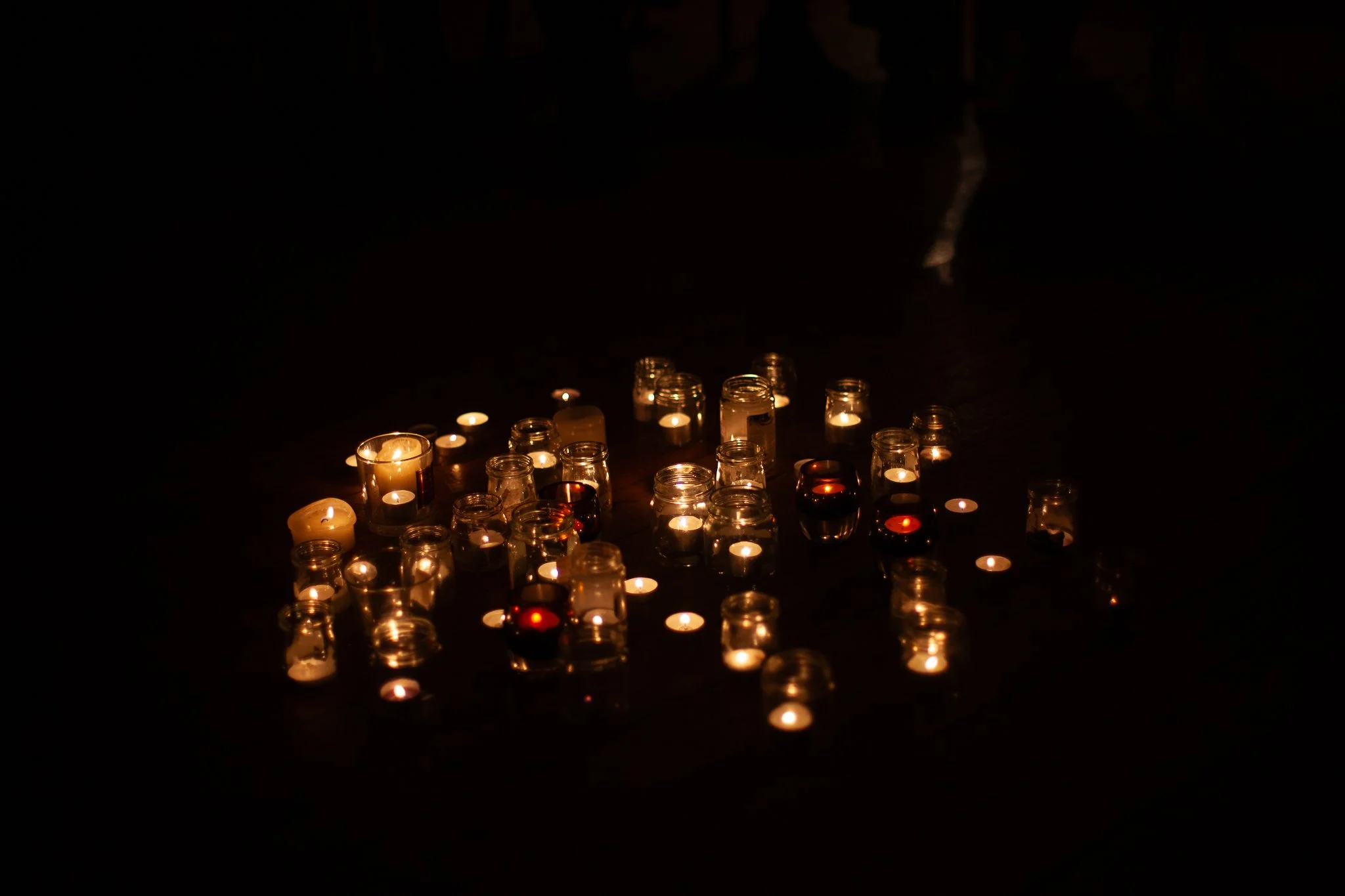
On our opening night, as the winter light falls back to a breathing dark, we light a gathering of candles in the centre of our circle. It’s an acknowledgment of the darkness in our systems, in our midst. A soulful young man from Palestine reads a poem from his people, in English, then in Arabic. The poetry travels as remembrance and witness. We leave the silence rest for a few moments, then we give the night to poetry.
The poetry salon comes into shape by way of gathering around candlelit tables. I speak a little to how poetry can open us up to insight and meaning making, which otherwise may remain out of view. I’ve choose a selection of poems which speak to the inner quest for purpose and value, and how we may travel. ‘Start close in’, came words from David Whyte, words which teach us how and where to listen. ‘To know kindness as the deepest thing inside, we must also know sorrow as the other deepest thing’, offers Naomi Shihab Nye. But let us not forget to rise, says Maya Angelou, nor forget to feast on our lives, reminds Derek Walcott. As each poem arrives, the salon participants share their responses. They speak to the questions the poems deliver or expose, and to the memories the words may evoke. Poetry is opening a door, and we step through.

Over the few days there is also project work. The participants have been assigned teams, and given challenge briefs by a range of community partners. They learn about design thinking and root cause systems work to build solution prototypes. There is an ideas to action cafe, to help them design and evolve their own personal projects too- a project which will nudge them to develop the changemaking skills they are seeking to strengthen. Then we add a buddy system to help sustain the process beyond the School.
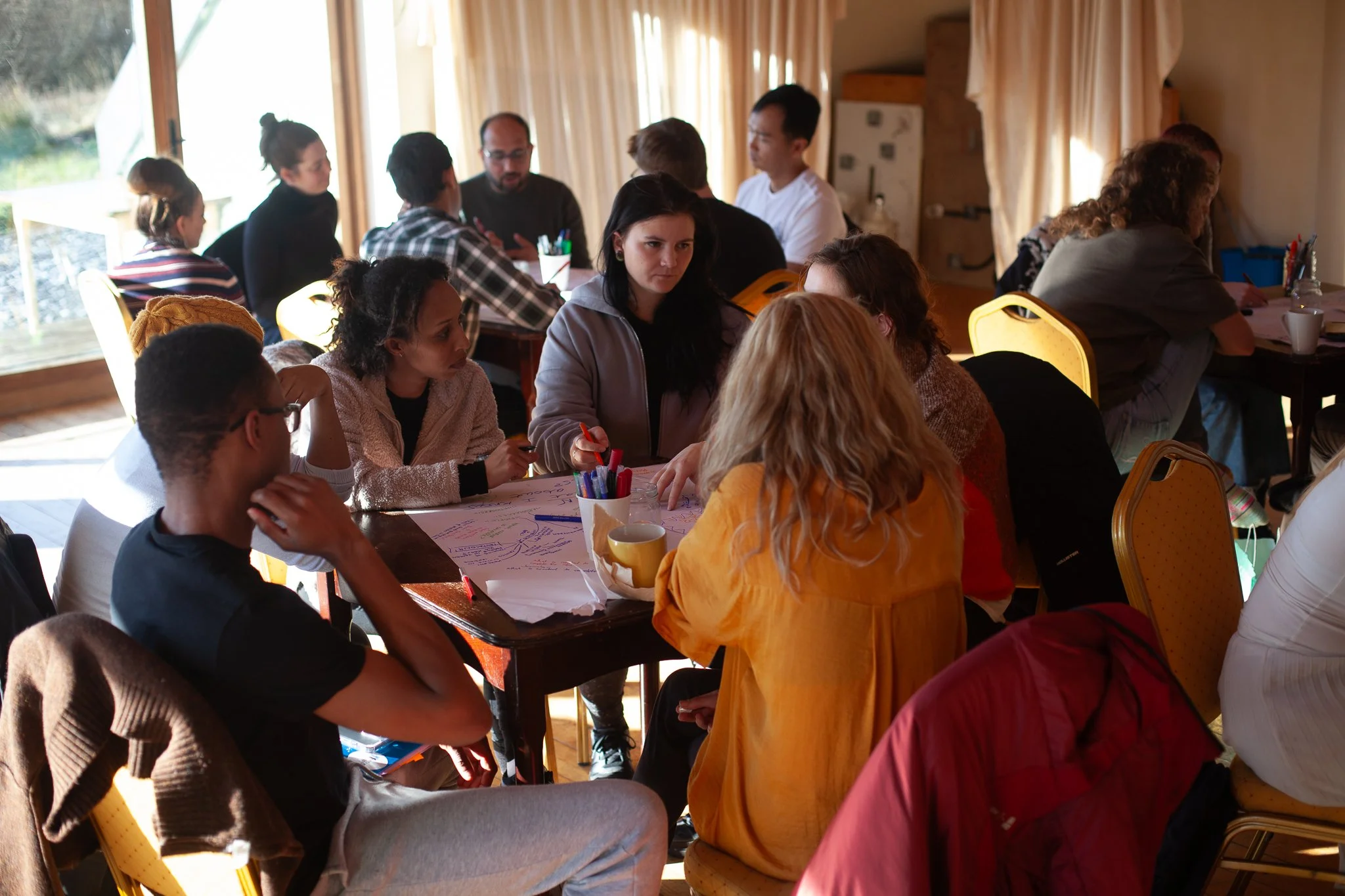
Another morning, still threading softly, we go on a silent Imram- a mythic Celtic walk out into the layered landscape which helps us listen to ourselves and our questions more fully. ‘Everything is connected’, says a participant as she begins to see in relationship and not in silos. ‘When I am quiet, memories can rise’, says another as he gets in touch with the regenerative power of nature’s wisdom, and it’s beautifully dangerous awakening too.
Then there are games and laughter, and career talks and delicious food, and by night, we fall back to story and song. Inspired by The Moth Storytelling movement, we tell stories of rupture and relief, of courage and confidence, and even some of pure embarrassment. The stories are torches, illuminating pathways of connection. Later there is a night of song and dance, and making room for what happens when we feel free to offer whatever talents or gifts are seeking to be shared.
Everything is connected, yes, and so are we.

Photo: Caitriona Rogerson

That winter morning as we walked down from the Burren with the light cascading in ribbons of honey and awe, careful of our footing, Yeats words came back to me, and I spoke them aloud.
Had I the heavens’ embroidered cloths,
Enwrought with golden and silver light,
The blue and the dim and the dark cloths
Of night and light and the half-light,
I would spread the cloths under your feet:
But I, being poor, have only my dreams;
I have spread my dreams under your feet;
Tread softly because you tread on my dreams.
My dream, I realise, is this new story in the making. As we thread softly alongside the fissures and the cracks, as these young people, and myself, learn to listen to the layers of story, as we try to build the skills, and moral muscle to straddle the divides, I can’t help but feel expanded, connected. The dream is in the layers and in the rising. The dream is in the writing and the telling. But it’s also in the circle, with a light at the centre. And they are it. We can all be it. It’s all connected.


Hello. I'm Clare
I'm a writer, educator and facilitator, living in beautiful West Cork, Ireland. I love to share resources and learning to help harness the regenerative power of words, place and story. I hope my work offers nourishment for mind and soul. Thank you for being here. Clare x
In their own words
 Thrive School is back. It’s been a journey too, starting this thing, and in the process I have been learning and one of the best things has been getting to know groups of amazing open individuals and support them as they grow, connect and learn together.
 As the new Dublin programme is soon to kick off (application deadline Aug 29th), and dates are in the planning for the next Cork programme, I thought it would be a nice thing to tell you a little more about some of the past participants, where they are now and the learning that they have been taking with them…. the people below are just a few of the gems in the mix. It such a pleasure to introduce you to....
Máirín O Grady
 Máirín is one of those people who lights up a room. When she arrives she brings insight, fun, delight and a dazzling commitment to her practices of yoga and teaching. She’s been practicing as a freelance yoga teacher for a number of years, has a passion and flair for creative writing, and was seeking ways of creating a more systemic approach to her work- how to creative programmes and courses which would reach new audiences and have a greater impact. Thrive School offered her space and community to do just that… (and also teamed up with fellow Thrive Schooler, photographer, Aoife Giles to have these lovely portraits taken) In her words: Thrive School has been an enlightening adventure into a more holistic picture of my life. It has offered me a fresh and reassuring perspective on how I am living my life, providing me with the space and also the structure to dream. It helped me to identify my values, my story, my why and to move from a space that honoured this and facilitated me in analysing my work/life balance and finance/life balance and in identifying what is enough. In identifying my values and my story it allowed me to see my unique offering, and to value this offering, aided by the support and feedback of Clare and my fellow Thrive Schoolers. Thrive School provided me with a license to pursue what brings me joy and excitement and to offer that to my students and clients with renewed energy. Máirín has kicked off this new approach with The Sunday School of Yoga, which captures her passion for yoga. Here she is again:
 Sunday School of Yoga is a dynamic workshop series where we come together to map our path towards inner connection, to hone our physical practice of Yoga, and to develop our skills of Breath and Awareness. It is a guided and supported journey where we build a toolkit for a sustainable and virtuous practice of care in our lives, allowing you to discover, sustain and root YOUR Yoga. It’s not a drop in class. It is a workshop. A chance to ask questions. It’s a chance to stop and reflect upon our practice. …It is a chance to pour the tea and grow as a community. Sunday School is the day where we digest, reflect, nourish, and refuel. It is the kind of school where we make friends. It is it the kind of school that teaches us the road home. Sunday School - Term 1 is an earthing and delicious collaboration with The Market Kitchen by the flowing river of Mullins Mill, Kells, Co. Kilkenny. Find out more about book online here
...
Niamh Gallagher
 When Niamh Gallagher speaks, you listen. Her voice is melodic, hypnotic and so very wise. She speaks from a wealth of experience and an expansive reservoir of practice. With a background in fundraising, copywriting and marketing, Niamh made the transition into becoming a reiki practitioner, yoga nidra and meditation teacher, and a health coach. ‘Through my work, I want to bring people together so they don't have to struggle alone; to provide a space for stillness, self-compassion and coming home to yourself’, she told me, ‘We are often led to believe that our struggles are either a sign of personal failure...or something that we can just take a pill to get rid of. The truth is that we are supposed to turn to each other and to heal in community. To rely on those who have been through similar struggles for support when we, in turn, need it’Coming to Thrive School Niamh was seeking a community she could collaborate with. She dived right in, with grace and elegance, as only Niamh can….In her own words: What I got from Thrive School was exactly what I was hoping for (and desperately in need of!) - community. A community of like-minded people in Dublin who were on the same journey as I was. The importance of social support can't be underestimated when you're starting a new business or project. Online courses have their place, but there's still nothing like building real relationships face-to-face!I've made some great friends through Thrive School and a year since taking the course, I'm still partnering with other Thrive Schoolers on successful classes and events. When your start-up business does not fit the conventional mould, it can be hard to find the support you need. Thrive School fills the gap for anyone with a vision to offer the world something soulful, healing or creative.A very important aspect of the course for me was Clare's coaching which helped me move through some big fears and blocks. She's a really talented and intuitive coach and just a fantastic cheerleader. Niamh teamed up with some other Thrive Schoolers- Ffion and Jane, to collaborate on new meditation programmes in Dublin, and has since started a series of yoga and message. The next in the hugely popular 'Sunday Sanctuary' events takes place on Sunday 20th August at Fumbally Stables - deep relaxation, meditation, massage and lunch. More info and bookings here: http://createawholenewyou.com/sunday-sanctuary/Niamh practices reiki at Oscailt Integrative Health Centre, Dublin 4. All details here: http://createawholenewyou.com/reiki
...
Máirín Murray
 Máirín’s interests have many currents- from yoga to holistic therapies, but it is in the digital and tech realm where she is focusing her passions and interests. Since completing Thrive School she has set up the Tech for Good branch in Dublin- a group promoting the intersection of technology and social impact and is also involved with setting up an non-profit called ‘Refugees Welcome’. Her main work comes from her new business, Digital Doddle, a content and production studio for digital innovation products. It’s all taken off since Thrive School- she is scriptwriting, making digital products and working mainly in the health education sector to bring digital learning to patients and families…Mairin was in the first Thrive School cohort and I asked her what it is she takes with her now… her’s what she said:
- To think big and be ambitious. No-one is served by playing things small and safe. As Marianne Williamson says when we shine our light we give others permission to do the same. This has led to huge growth for my projects, and my vision.
- Action has its own momentum. I learned that it is important to start now and today to do the work. The answers and insights come while the work is in progress. The important thing is to keep moving. Small actions, consistently taken, have helped me find the work I am being called to.
- That having multiple interests and passions is good. I found others in Thrive School who were just like me, who do not want to pigeon hole themselves but instead contribute their skills meaningfully to make a difference.
You can find our more about Máirín on Digital Doddle, Tech for Good Dublin
...
Catherine Weld
 Catherine Weld is an artist and teacher living in West Cork. When Thrive School started, she jumped on board. Catherine had a dream of starting her own art workshops in the area and also getting her work out to more people. During the Thrive School process she worked on launching her website, designing a new series of art workshops and planning for more exhibitions. Just this week she has launched a new group exhibition in Schull! In her own words: The Thrive School material helps participants identify and work with the foundations that will underpin their creative and entrepreneurial activities. Motivation and self discipline are important requirements – the monthly meetings form the framework around which the course develops while weekly checkins with other participants offer a source of support and advice. Working as a group is a very important element as it adds hugely to the potential for valuable ongoing connections and can provide access to high levels of skill in areas that are complementary to our own.
 It is so very excited to witness how Catherine has been stepping up into her own artistry and fulfilling life long dreams- this is the stuff of inspiration.You can see more of Catherine’s work here and find out about her art courses here:https://www.catherineweld.com/courses/
...
Cathy Kolbolm- Kelleher
 Cathy Kolbolm- Kelleher packs a powerful punch. Literally. She’s been training in boxing. When Cathy shared her story with us it knocked us off track too. Having had health challenges as a child she was determined to change her life around. She became passionate about fitness, nutrition, science and wellbeing -and is …. an Applied Health Nutritionist, Sports Nutritionist, Exercise Scientist, Fitness Instructor, Clinical Exercise Physical Activity Specialist and Phlebotomist! ‘I am on a mission to activate a revitalisation in health, wellbeing and performance’, she told me.Cathy came to Thrive School seeking structure, fresh perspective and people who would ‘get’ her. Since she finished the programme in June she has gone on to seek external funding, grants and additional support from the local enterprise office, set up her business name and is very much on track to develop a wonderful business which blends her expertise in health, nutrition and fitness. She’s defiantly one to watch…In her own words: I feel now I am much more clearer, structured and confident in my ideas going forward and over the course I have gone from not having clear plans, lots of chaos to something I can start to roll out over the next few months. I also found Clare’s feedback and guidance invaluable. Even from what I was able to take away and learn from the feedback from the pitch has directed me to fine tune details.
…..
The next Dublin Thrive School starts on Sept 9th. Find out more over here, and apply online by Aug 29th. PS- Thrive School is not just for women! There have been men too :)


Kyle Zimmer - Firstbook
 The One Wild Life +10 series continues- these are follow up interviews with the amazing, diverse and passionate social entrepreneurs who I met on my travels 10 years ago and whose stories were chronicled in my book, 'One Wild Life'We are heading to the Washington DC next with First Book's founder, Kyle Zimmer.FirstBook's premise is a simple one; that books change lives. It was this deeply rooted belief that led Kyle Zimmer to forgo a successful law career to run an organisation that has since gone on to distribute over 100 millions books to children from low income families and communities.First Book impressed me 10 years ago not just for its mission, but the way it designed strategic funding and systems to drive their growth and sustainability. Many organisations start out with brilliant and bold intentions but don't always have the foresight and skills to put the time and resources into developing the systems needed to scale their models. But that's exactly what First Book has done: sticking to their original vision and using data and clever funding streams to build a robust and brilliant organisation...Over to Kyle to tell us more and share some of her learning along the way...
 First Book is a nonprofit social enterprise I co-founded with two friends in 1992 to tackle the lack of affordable, relevant books for children growing up at the base of the economic pyramid. Even here, in a wealthy country like the U.S., 32 million U.S. children – 44% of U.S. kids! – are growing up in low-income families, where the cost of books keeps them out of the hands of those who could use them the most. A recent study by a prominent researcher found one book for every 830 kids in a Washington, D.C. neighborhood – a neighborhood not too far from my office. Without access to books, there is also no culture of reading -- stifling learning and failing to provide opportunity for millions of children. We established First Book with the goal of developing a systemic, market-driven solution to this enormous social issue.How has your path shifted and evolved since I interviewed you for One Wild Life? Where are you now and what are you working on? First Book’s model has changed dramatically over the last 10 years. Nearly 20 years ago, we started the First Book National Book Bank, becoming the first national clearinghouse for publishers to donate excess inventory to classrooms and programs serving children in need. The National Book Bank has grown into a major success story over the years, providing approximately 15 million books annually at present -- free books to children in need. While the First Book National Book Bank is extraordinary, over the last 9 years we’ve built a brand new, self-sustaining model that has become a jet engine for our efforts.In recent years we have focused on aggregating the voice and purchasing power of formal and informal educators serving children in need. By the end of this year, our online network will include 300,000 teachers and caregivers. The First Book Network is growing fast – more than 7,000 members are joining every month. We are already the largest and fast growing network of educators serving children in need in North America and our goal is to reach 1 million educators and programs in the next five years.
  By harnessing the power of our Network, we created the First Book Marketplace, an e-commerce site that provides brand new high quality books and educational resources for children in need ages 0 to 18 – all for free or at the lowest prices possible. This is an unprecedented model that collaboratively disrupts both the publishing industry and the retail industry – to serve the children at the base of the economic pyramid for the first time. Instead of relying on donated inventory, the inventory available through the First Book Marketplace is driven by the very educators serving children in need, enabling First Book to purchase in bulk the exact titles and types of resources most needed to support curriculum, fuel learning and help inspire reading. The First Book Marketplace now carries more than 6,000 new books and resources. And in response to educators’ requests, we’ve expanded the First Book Marketplace to also carry resources uniquely needed to serve children who show up to school cold, hungry and suffering from chronic stress. We now carry winter coats, socks and underwear; nonperishable snacks, backpacks and school supplies, and essential needs items such as toothbrushes and toothpaste. All of our products are specifically designed to eliminate barriers to equal education.We’re also using the First Book Marketplace to help make recent educational expertise and resources more actionable and accessible to educators serving children in need, providing research updates, tipsheets for educators and parents, and curated collections of books that support such issues as social and emotional learning and mental health.There have been a lot of changes over the past 10 years. For example, we’ve shifted away from our earlier volunteer model – which was expensive to support and was difficult to scale. In its place we have built a volunteer platform called ‘Team First Book’ that better reflects the volunteer interests of the next generation.In more recent years, we have also begun to scale our efforts globally with pilot initiatives through local NGO and corporate partners in more than 30 countries.And finally, we’ve been able to use market-based levers to request new content from publishers, instead of being a reactive and captive market. In this way we have been able to begin to elevate diversity in children’s literature. It’s been an amazing 10 years; I am sure I could not have predicted many of these developments when we spoke 10 years ago.What are some of your highlights of the past 10 years? One of the highlights is the skill level we’ve built within the organization. Don’t get me wrong: we’ve always been hugely fortunate to have incredibly dedicated, compassionate, smart and wonderful people here at First Book. But ten years ago, there were fewer people and we had to multi-task in areas that weren’t always our strengths. As we’ve grown, we’ve been able to hire the skill sets we need – on staff and through outside support.We’ve also benefitted from some incredible partnerships – including corporate and foundation funders, amazing business and community leaders and social sector supporters who have believed in us and helped us grow.Nearly 5 years ago, we celebrated our 20th anniversary by distributing our 100 millionth book – two major milestones. We held our celebration at the same D.C. soup kitchen where I volunteered 20 years ago, and where I first learned that so many of our children are growing up without books.
 Another highlight for me has been the launch of our Stories for All Project, the first market-driven initiative tackling the lack of diversity in children’s books. Since 2013, First Book has distributed millions of diverse, inclusive books. In fact, educators can now access a wide range of diverse titles from First Book, with books featuring different cultures, races and ethnicities, as well as different religions, family structures, sexual orientation, individual abilities, experiences and neighborhoods. In addition, the Stories for All Project is serving as a catalyst for bringing culturally relevant books to the retail market, so that all children have access to more diverse books. We see how necessary that is every day – not just to turn non-readers into readers, but to better understand our commonalities and our differences and to build a path forward with empathy and understanding.But the real highlights for all of us at First Book are hearing from educators and children about the difference that First Book is making: in classrooms, in afterschool programs, in homeless shelters, in libraries and museums, and in the lives of children and families across the country every day.What have been some of the challenges of the past 10 years? What would you have done differently? One of the challenges has been getting to self-sufficiency. Through our models, we are closing in on 50% self-sufficiency. It’s been a fist fight to get there – as we challenge ourselves to reinvent our models to be as efficient as possible and to harness the aggregated power of those serving children in need to become a market driver.But I should note that the fact that we are nearing 50% self-sufficiency is amazing in the field of social enterprise. We are very hopeful about getting to complete self sufficiency in the next few years, given that our network of educators has grown by 500% over recent years. Few companies – even in the private sector -- experience that type of growth trajectory – so just managing that growth in itself has also been a challenge.Knowing what you know now, what advice would you give to yourself 10 years ago? I would be less worried and more bold in the steps that we take. I think when you’re running a smaller organization that is more fragile, you can waste a lot of time and energy being too cautious about taking the next step. I always believe in doing your homework – writing a full business plan – and then LEAP!For example, I had us pilot our online First Book Marketplace for several years so we could test it, work the kinks out, and see how to make it work best for educators. It was a completely new approach for us and for the world. It necessitated that we change our strategy, how we were staffed, and how we saw ourselves. We were really testing out the idea of becoming a market builder. Knowing what I know now, I wish I had launched the First Book Marketplace years earlier. My advice: stop waiting – do your homework and then -- just do it.What do you see as some of today’s global challenges and what opportunities do you see?
 Multi-culturalism is in peril. Fear is driving a lot of political actions, social agendas and military actions. We have to know each other better than we do. For First Book, those same challenges also present us with an enormous opportunity. We know that education is a key to furthering understanding, to creating a better life for ourselves and our families, for building more just and peaceful communities. We also know that developing empathy in children elevates the likelihood of their success in school and in life.In 2009, First Book Canada began operations; in 2013 we launched the First Book Global Marketplace; and we have been piloting new efforts with book distributions and in-country discussions with publishers and authors from India to South and Central America.We know there are opportunities to continue to build partnerships in countries across the globe that can help us reach more children and educators with the very resources needed to unlock the future. First Book is experimenting with ideas that will enable us to unify the terrific organizations working in countries around the world. Stay tuned!!Over the last 10 years, the field of social entrepreneurship has evolved and got better known and supported. What would you say is the next stage of growth for the field and what are some of the main questions or challenges which it faces? There are so many very pressing issues that need to be addressed, and we have to be nimble, and be willing to question everything; to innovate and try new approaches. As the field of social entrepreneurship has gotten bigger, there is a tendency to slide back into old models. It is a natural tendency – but we have to fight it. We need to continue to develop new models and strive for self-sufficiency.That means identifying models that have helped address another issue and think about how those models can be applied in new ways. It also means applying modern business practices and approaches to rethink the social sector. First Book is using predictive analytics and big data to help make new strides in our work: from understanding the resources that educators need most, to determining which educators are more likely to utilize First Book’s resources. We want to fuel learning and educational equality as fast as we can, with approaches that help us reach as many children and teachers as possible, as quickly as we can.Another social sector initiative that I am championing is that we have more dialogue around how we are failing. In fact, that we make it an expectation and place value on the discussion of failure. I’m working with a partner organization to host a series of moderated panel discussions on just this topic. We want to create a new norm, where funders regularly request - and expect - to hear about failure and that we share those failures willingly because we know that what didn’t work is just as important as what did work to move the needle on what we can try next. I believe this is critical if we want to further the field.Why do you continue to do what you do? And how do you sustain yourself in the process? I continue to do this work because I know this is a solvable problem. Educated people make sure their children are educated. That is the simple and powerful truth. So when you educate a generation, they will make sure their kids are educated as well. This is especially true when we invest in educating women. And it is true in countries all over the world. This means that if we put our minds to it – we could solve this problem in one generation.While we have a long way to go to reach every child and to solve the issue, as we approach our 25th anniversary, I’m more hopeful than I’ve ever been. We’ve had a lot of success. We’ve piloted a lot of things that have worked. Now we need to amplify and build up our systems – and be part of a grand new era – where teachers have everything they need to fuel equal education for all children.What advice would you share with others setting out on their own entrepreneurial path? My advice would be this:
- You don’t need to know everything.
- Instead, make a list of the 10 smartest people you can think of. You don’t have to know them. Then call them; ask them questions. Tell them about your challenges and ask if they’ll help you think of solutions. My experience is that 9 out of 10 people are happy to help and flattered that you asked them.
- Celebrate your milestones! And then set the next ones even higher.
- Do not fear failure. Remember: You can fail without ever succeeding – but you cannot succeed without ever failing.
- Understand this: the social sector needs experimentation and people who are willing to try. Look at the failure rate of new businesses. If we’re not doubling that rate to address social issues, then shame on us.
Anything else you’d like to add? Thank you for the opportunity to reflect on this wild ride of the last 10 years. As our world becomes smaller and more intertwined, as poverty, climate change and other issues reach critical stages, the role of social entrepreneurs has never been more important. We are the mediators, facilitators, and change agents, unbeholden to political parties, military regimes or institutional priorities. It is our collective actions, our self-sustaining models and our ability to galvanize public willpower that help achieve the social change needed to provide opportunities for a more peaceful and prosperous world.
...
Thank you so much Kyle of long-term dedication and tenacity to keep going. It is so inspiring to read of your growth and continued commitment to the transformative power of education.
..
Want to stay in touch? Hope on over here to sign up for news, happening and resources.
......................
Nick Moon
 It’s time to hop back across to Africa, this time to Kenya for the next in the One Wild Life +10 interview series. Next up is Nick Moon.I first met Nick in Nairobi in 2006 when I interviewed him for the original book. He was one of the first interviews of my trip and I remember clearly his warmth, generosity and deep interest and expertise in development. We talked for hours. I liked his irreverence and humour too, underpinned by a willingness to tear up the imaginary rulebook combined with his approach to giving things a go and experimenting with new methods. This attitude has continued over the years.Back in 2006, Nick, alongside his co-founder Martin Fisher was running kickstart.org, a social entreprise which was developing low cost farming equipment or ‘appropriate technologies’ to kickstart rural development. They had developed an oil press, a building block press and a manual water irrigation pump- marketed as ‘The Money Maker’! That organisation is still running, now focused solely on water pumps and has gone on to support 200,000 families to create successful farming businesses and help over a million people out of poverty. (More impressive stats and information can be found on their website here)But five years ago, Nick felt it was time to move on, support others, share his expertise and expand the range of his projects. He became grandfather too, and a new father! Never one rest on laurels, I’ll let Nick tell you more ...
 How has your path shifted and evolved since I interviewed you for One Wild Life? Where are you now and what are you working on? Has it been 10 years? Blimey. Some 5 years ago I thought that it was time to do something new. I felt that Kickstart was well and truly on its way and didn’t really need me any more, and in any case I was getting stale. Starting something from scratch and building it up is one thing; managing a large established organization is something else. So I reckoned it was time to make a move. KickStart was and is in very good hands under co-founder Martin Fisher.In 2011 my eldest daughter Marion Atieno Moon, who had graduated with a business degree in 2006 and had been working for big corporates, had just decided to start a brand-new for-profit social enterprise, Wanda Organic, here in Kenya. Wanda finds and brings the latest breakthrough soil health and fertility solutions to smallholder farmers. We agreed that my experience with KickStart would be very helpful in developing this new organization, so that’s what triggered a new chapter.I am now the executive chairman of Wanda, and heavily invested financially (I sold the house) and emotionally in its growth. I am currently busy helping her set up the local production of bio-organic fertilizers in Kenya and innovating distribution and marketing strategies to develop awareness and build and serve demand.Working with my own daughter has its challenges of course, and she is the founder, the boss, so I have to be sensitive to that. Accordingly I don’t work full time at Wanda and keep busy in other ways.I had accepted an invitation in 2010 to mentor a young visionary Kenyan, Eddy Gicheru Oketch, as he built up an organization he had started in 2008 - in the wake of the horrifying period of “Post Election Violence” in Kenya - which sought to help Kenyan youth understand and overcome the twin pressures of poverty and the cynical manipulations of self-serving politicians who were pitting them against each other by inciting violence across tribal/ethnic lines. My advice to Eddy was that it is near impossible to love thy neighbour if you are hungry and jobless, so there can be no lasting peace and reconciliation without a certain measure of prosperity. In 2012 he asked me to help in developing and restructuring his organization to assist youth to identify economic opportunities and set up group enterprises which create employment and social value. I did what I could. The organization is now known as Ongoza (means ‘to lead’ in Swahili) and doing pretty well. We recruited a great CEO and built the team, developed the program, and are expanding outreach. I am the Chairman of its Board.I have always had an interest in social and cultural, as well as economic, development and so am also busy – again at Board level – with The Theatre Company of Kenya, which is all about promoting skills and professionalism in the Performing Arts. We train actors – loadsa raw creative talent here - and nurture the creation and production of local performance. One notable high point for us was when our troop performed a Swahili adaptation of Shakespeare’s “Merry Wives of Windsor” (Wanawake wa Heri wa Winsa) at the Globe Theatre in London.
 Nick's daughter, Marion
What are some of your highlights of the past 10 years? See above - there is never a dull moment!I suppose the big thing was taking the step out and away from KickStart five years ago - although once a founder always a founder, and I remain on the Board there too, and ready to expound our Theory of Change to anyone who will listen! This has meant attendance as a delegate or speaker or moderator at different high level conferences addressing economic or agricultural development in Africa – World Economic Forum meetings, Skoll World Forums, Global Entrepreneurship Summits, African Green Revolution conferences. Trips to USA, UK, France, Switzerland, China, India, South Africa, Zambia, Tanzania, Ghana, Mali, Senegal, Rwanda, Uganda and other places. These have been interesting and useful (sometimes) in terms of high level policy formulation, but can also be described in some ways as “low lights” given that such a lot of time and money is spent on talking and intellectualizing, propounding and debating, passing lofty resolutions and the like. But a lot of this waffle does not get turned into practical action, or at least not as quickly or effectively as it should or could. Even so it has been a great privilege and pleasure to meet all manner of truly remarkable people at these events. One thing I have realized here is that a lot of truly good work is done by people who do not seek to aggrandize themselves, who steer clear of the limelight and just get on with stuff.Talking of modest people getting on with stuff and not making a fuss, another highlight for me at a direct personal level has been to watch the development and growth of the 30 or so “OVC” (orphaned and vulnerable children) – almost all girls - whom my wife supports and raises at her children’s home in Kakamega County, Western Kenya. These are girls who were once victims, and/or at serious risk, of sexual abuse, violence and other forms of exploitation. One (actually a boy – well, a young man now) will graduate in clinical medicine in December. Another has a degree in actuarial science. Another is studying economics and statistics at the University of Nairobi. It is wonderful to see them grow up and go out there into the big bad world, confident and capable, after starting off at such severe disadvanatage. www.vumilia.orgWhat have been some of the challenges of the past 10 years?Challenges? One is that there are so many things to do and so it can be tricky to decide what to focus on. Another big challenge in this part of the world is the high levels of corruption in government, although maybe this is just a perception based on the blatant almost unashamed nature of corruption, cronyism, nepotism, greed and so on here; I have a feeling that you will come across this everywhere, only in other parts of the world it is better disguised. Related to this, one also comes across negative people, negative attitudes rather too often – people who seem intent on why an idea or plan cannot work, rather than how it can be made to work. Overcoming or bypassing negativity takes time and energy which might otherwise be used more productivelyKnowing what you know now, what advice would you give to yourself 10 years ago? Don’t get yer knickers in such a twist. 
(with Kenzo Shane)
What do you see as some of today’s global challenges and what opportunities do you see?The grim and grumbly things include:
- Climate Change denial and how the Fossil Fools are so resistant to renewables. Fracking about, horizontal drilling, tar sands and shale gas and so on, whereas there are proven preferable energy alternatives which can now be implemented at similar financial/economic cost and very much lower environmental and social costs. That’s a big one.
- The pharisaical sanctimonious self-regard of the banking industry.
- Industrial-chemical agriculture’s dominance in food supply and distribution. Bad for biodiversity and good food.
- Global corporate capitalism’s unwillingness to really recognize or accept any other value beyond shareholder value, (mealy-mouthed lip service not enough)
- The growing gap between rich and poor – among nations and people within nations
- Religious extremism and everything that follows on from it
- Mendacious rabble-rousing media
- Governments serving the interests of big industries not people
- A growing shortage of empathy and compassion among the comfortable and prosperous
Reasons not to give up in the face of all this?.
- Science and technology continually advancing, with new solutions/innovations in energy, health, agriculture, industry and even finance, coming along thicker and faster than ever before
- The growing understanding, especially among young people, that we can change things for the better if we really want to, and work at it.
- The nascent movement toward a post-capitalist era where values go beyond the simply material or monetary to include social and environmental values
- Immigration and transmigration of people generally – stirs things up in a good way, prevents atrophy and stagnation
- Communications technologies and social media enabling people to be informed and get organized better, faster.
- Plenty of courageous changemakers and status-quo challengers emerging in all spheres of life and everywhere
- Empathy and compassion alive and well and growing among so-called ordinary people
- Human ingenuity, adaptability, resilience, creativity, innovativeness, invention alive and well despite threats and opposition from the dinosaurs.
Over the last 10 year the field of social entrepreneurship has evolved and got better known and supported. What would you say is the next stage of growth for the field and what are some of the main questions or challenges which it faces? As implied above Social Enterprise seeks to upset equilibria, complacency, stases. It has evolved over the last 20-30 years for sure and done a great job in developing new (or rediscovered?) perceptions of value, and an approach that demonstrates how social and environmental benefits can be offered by a commercial entity for whom monetary profit and economic gain are not ends in themselves, but rather the means by which the other values can be sustainably delivered.Even so, while a growing number of people and markets are learning and adjusting to these new paradigms, no cigar yet. There is need and room for a lot more social enterprise. I would hope that the theory of a ‘million little pieces’ will prevail, the realization that loads and loads of relatively small, local community-facing, social enterprises can have an aggregate impact for the better. And move away from the obsession with growing monolithic, monopolistic enterprises of any kind. Or we will fall into the ‘Too Big To Fail’ mindset/trap again where sheer size is taken as an indicator of worth. Boo to that.Why do you continue to do what you do? And how do you sustain yourself in the process? What else is there to do? And besides, its fun. How do I sustain myself? Largely by avoiding the question, and expecting that things will turn out OK. Avoid gloom and pessimism. Glass is ¾ empty? No mate, its ¼ full.What advice would you share with others setting out on their own entrepreneurial path? Just get on and do it. Don’t worry about the risks and costs. “Nothing ventured ..” and all that. Just as long as your prime motivation is not money, nor fame. They might come, or not. But if you don’t enjoy it any more, stop it, and do something else. And don’t get too full of yourself.
...
Thank you so much Nick. So brilliant to hear your updates. Thank you for your continued work and optimism. It spreads. Clare x
......
STAY IN TOUCH.
Sign up here for extra resources, news and happenings...
................................................................................................................................
Letters from Clare
Stay in touch…
@onewildlife
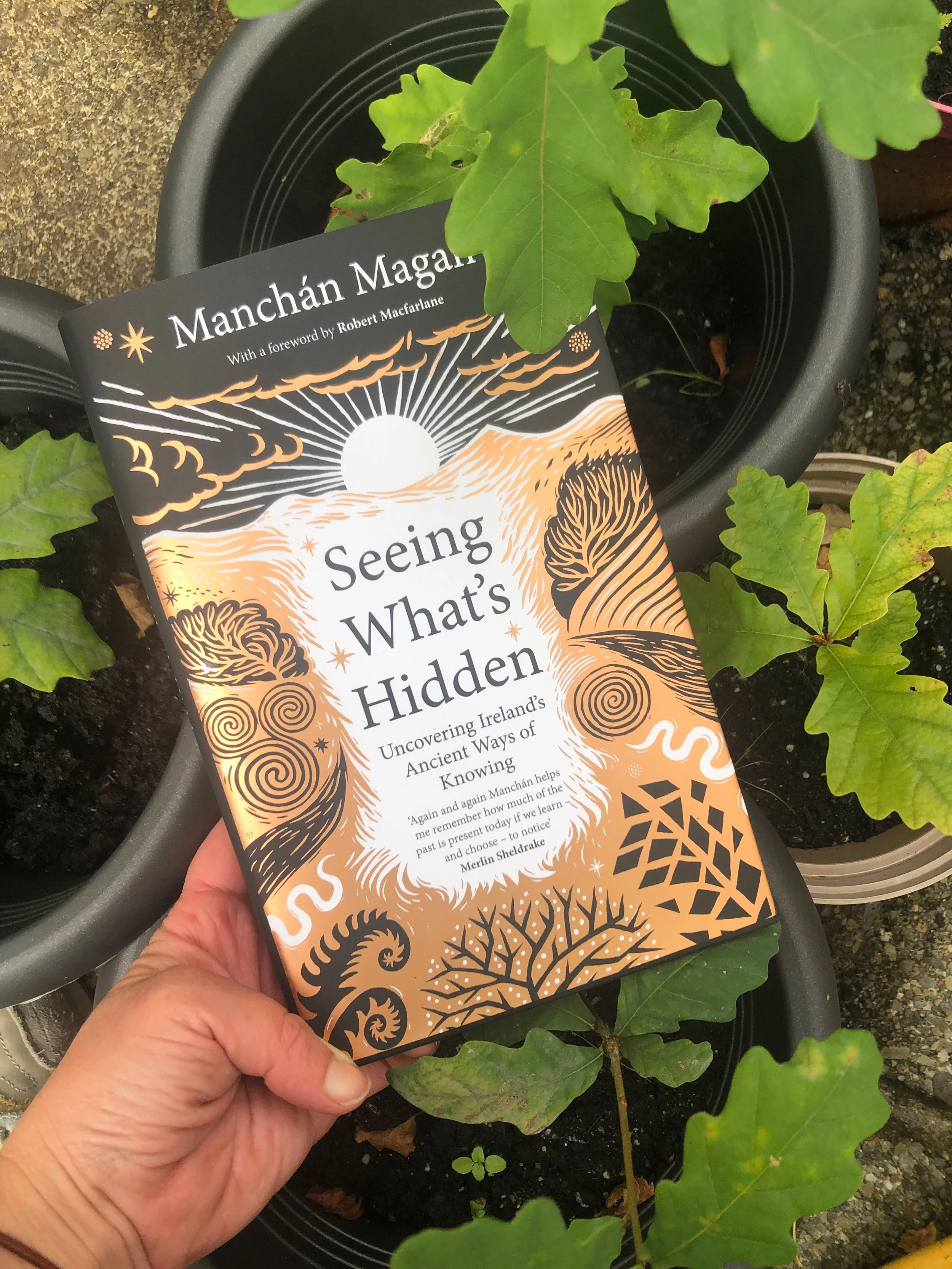
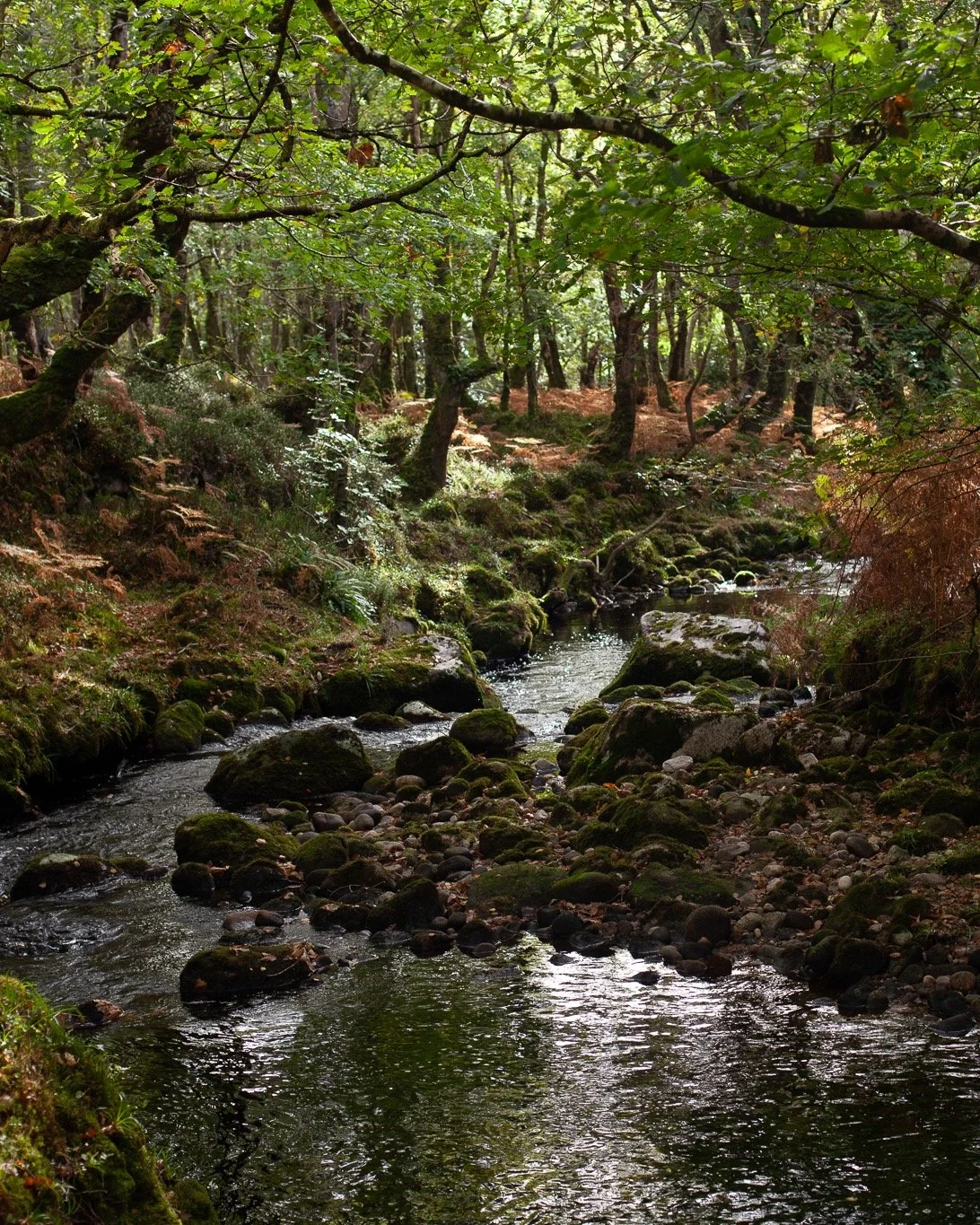
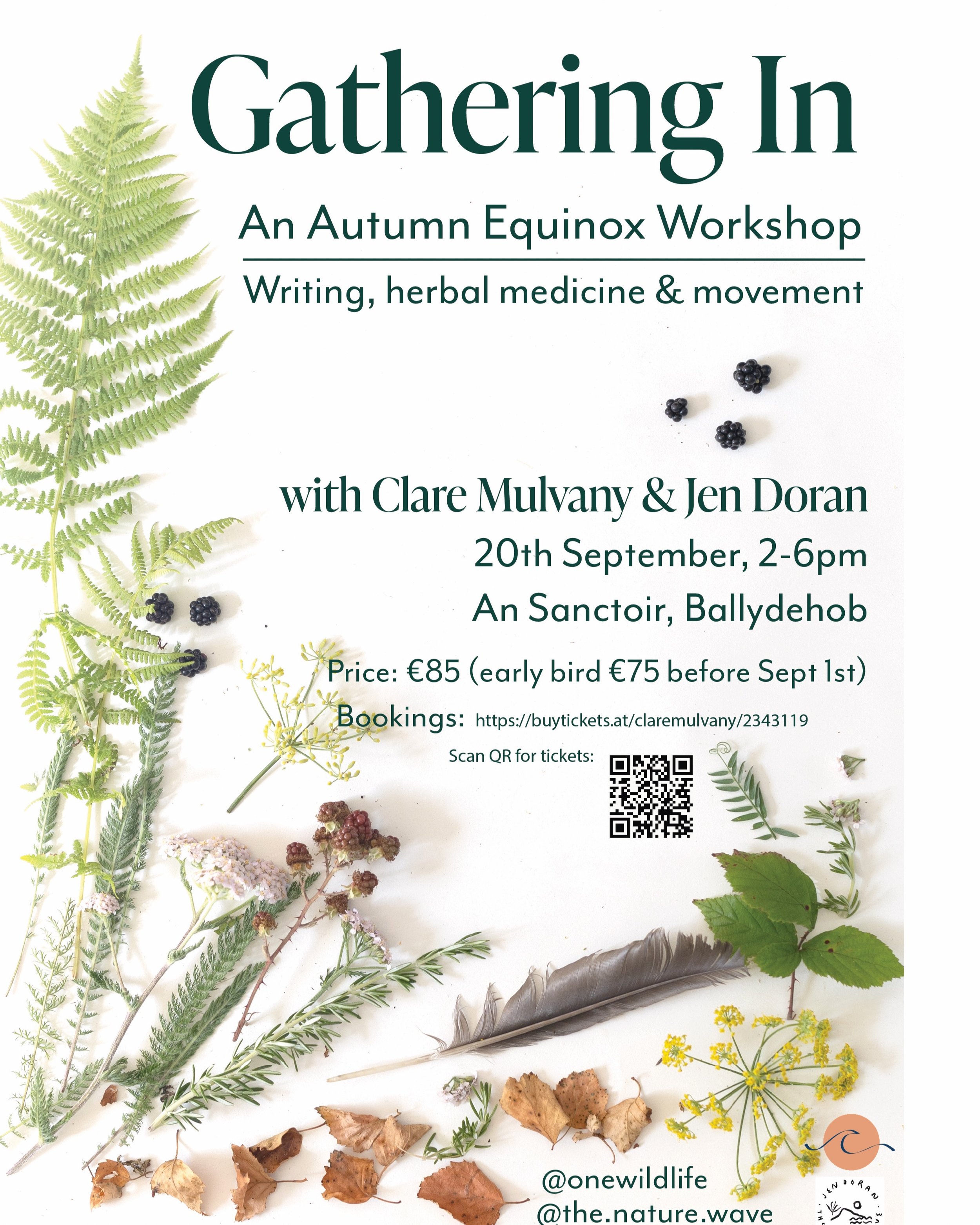
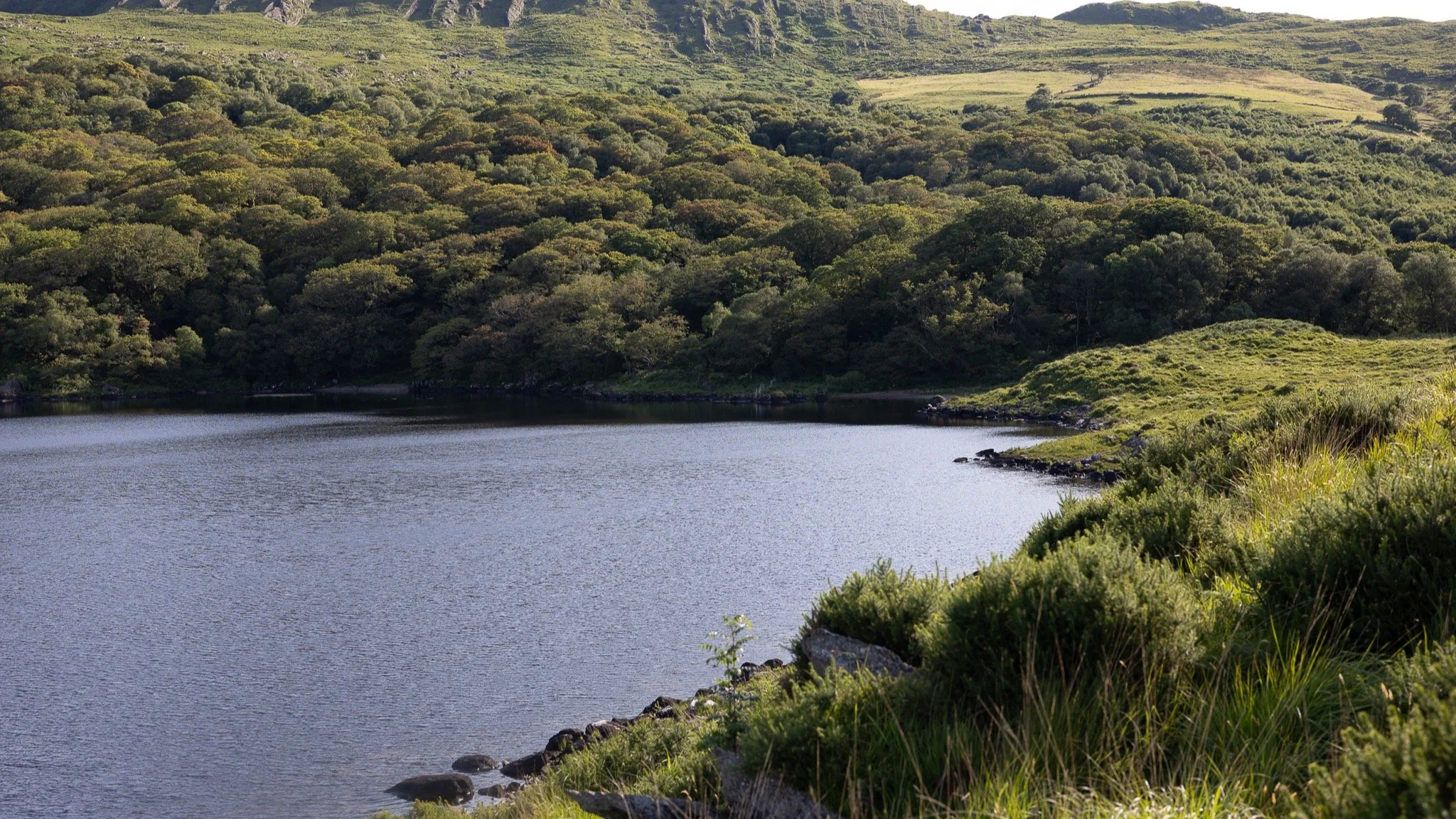
Follow Along