
Burren Winter School: A Story in Layers
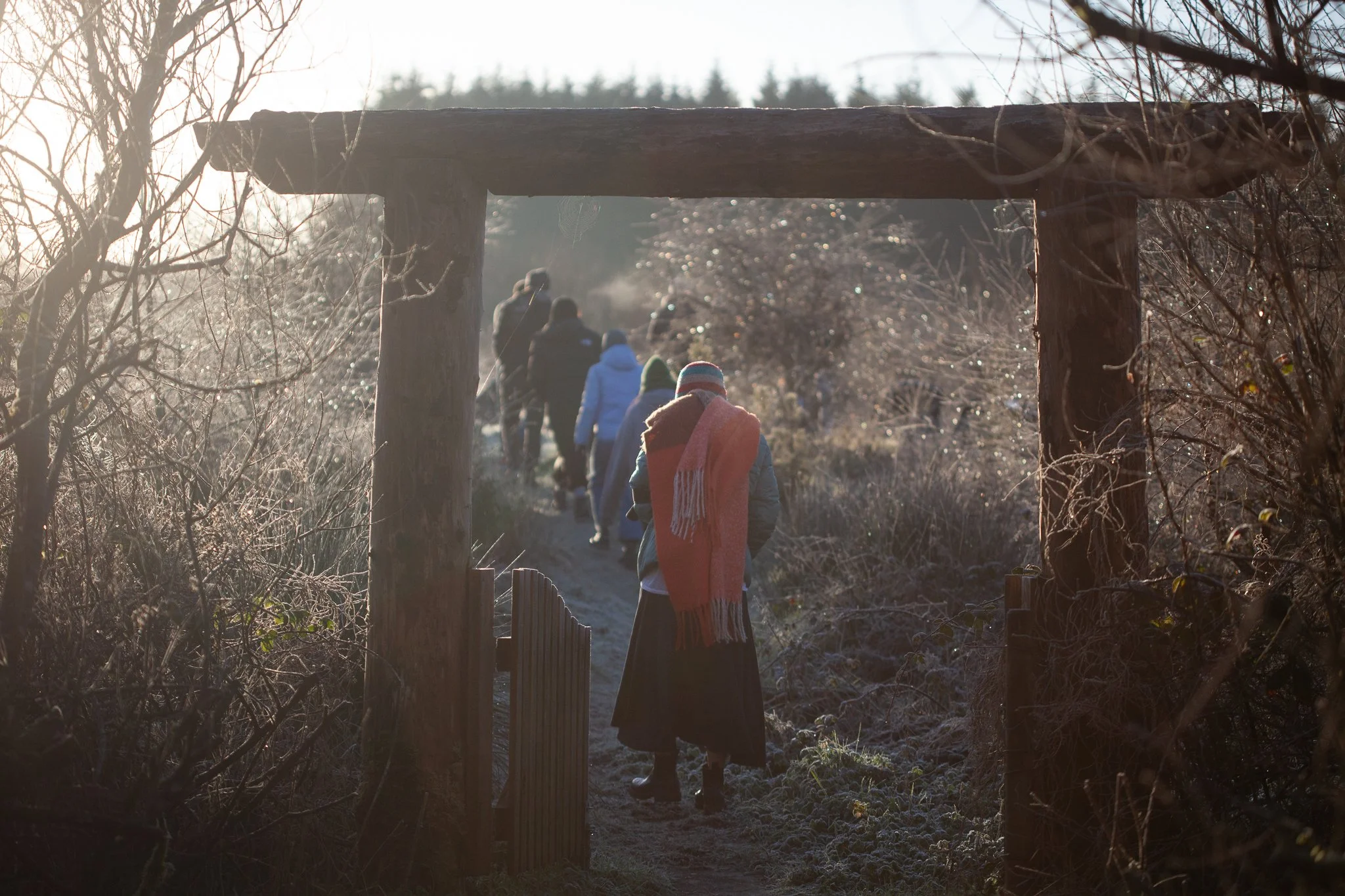
Photo by Caitriona Rogerson
You can listen to this story below (10 mins)
The Burren landscape is full of cracks. Fractures and fissures divide the limestone, which, as we walked across the stone slabs on a cold, crisp January morning, were rendered both beautiful and dangerously slippy. The light that morning was as if Yeats himself had laid down the heaven’s embroidered cloth, but we were also were being warned: thread softly.
We had gathered as part of the Suas/ Stand Changemakers Academy, a 6 month learning programme designed to support young changemakers with the learning required to both navigate the fractures and fissures of our world, and gain skills to build, repair and advocate for a better one. I have been fortunate to be a part of the design of the programme and was now in attendance as a facilitator at their Winter School through my work with Thrive School. Our home base for the week was Common Knowledge, a regenerative learning centre, rooted in the Burren. On this wintery morning, as the rocks and cracks told their ancient story, we were being guided on a place-based learning walk with Áine Bird, from the Burren Beo Trust, another organisation which seeks to connect people to the landscape and its care.

Photo by Caitriona Rogerson
Bearing the fossilised memory of millennia, on first glance it can be easy to read the story of the Burren as one of erosion, but, as Áine points out to us, on deeper reading, it also tells a story of protection, conservation and preservation. What we learn instead is that the system in which the landscape evolved is a complex interweave of narratives: human, ecological, agricultural, religious and cultural. To understand the full, systemic story, we must understand the relationship between the layers.
‘Live in the layers’, another poet, Stanley Kunitz has counselled, and so: the layers. When we put on an ecological lens we learn that the fissures are home to some of the rarest plants and insect life in the country. As the rest of Ireland becomes increasingly depleted of its biodiversity, it is landscapes such as this that become both habitat havens and critical species preservation hubs.

Photo: Clare Mulvany
Next layer: reading the landscape as a sacred text, we learn of the large cycles of worship which have played out on its altar. From pagan rituals, to early christian oratories, from holy wells and places of pilgrimage, time and ceremony have marked meaning and myth into the stone. With eyes in search of the sacred, we see the sacred.
Then with the eyes of an agriculturalist, we learn of the complex, interconnected relationships between man, bovine, plant and place; how the landscape- this place of sanctuary for marginal and rare species only is because of relationship. Take the cow, for example. As the wintering herds graze, keeping back potentially encroaching hazel bush, so too do they distribute seeds and nutrients to enable the flowering of rare spring bloom. Wild flower meadow and cow literally sustain each other. What dies, becomes, and what becomes feeds a wider circle of life. The key is in finding a balance between the elements: hazel bush, grazers, cows, plants and the right timing of the seasonal movement of herds to enable the plant life to flourish. Here communication is transhuman- man, animal, plant and place all in dialogue in to ensure mutual flourishing.
Next layer. With the eyes of the historian, in a single frame we can see the parallel of past and present. The mounds of an ancient Fulacht fiadh- thought to be an old cooking pit, now sits adjacent to a concrete watering trough for cattle. Just out of frame, there is also a famine house, its crumbling walls telling part of the larger story of how a community faded into decline through the systemic interplay of colonialism, economy, land rights and food sovereignty.
Each layer offers more readings. Each reading, brings up its own set of questions. The landscape is a living text, only fully decoded with open eyes, open minds and open hearts. So, in a complex layered system, and particularly as changemakers, we need to ask questions which probe into each layer, questions such as: Whose needs do you prioritise? Whose wellbeing is centred? What story is given voice? Who is not being heard? Without understanding the layers and characters in the narrative, we risk telling, and preserving, only a partial story. Story, we learn, is central. Without story, we may just fall through the cracks.

Photo: Clare Mulvany
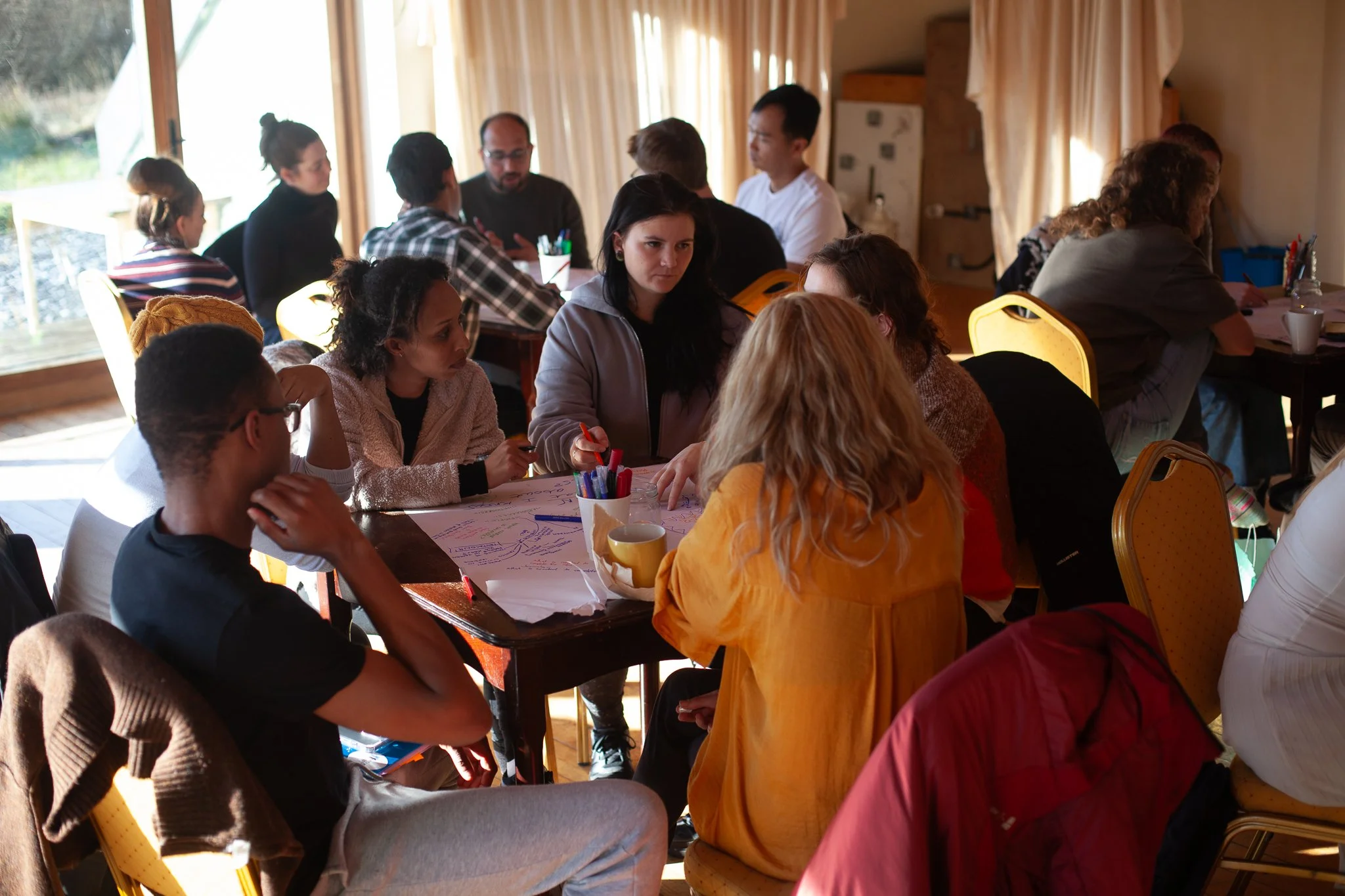
Over the few days of the Winter School, I see the participants getting to know each other better, and being in this layered learning together. I can’t help but play with the landscape as metaphor too. The Winter School has become a haven in the fissures of our global fracture. Here are 22 participants gathering to pause, learn, regenerate. They represent 15 nationalities. There are singers and scientists, social entrepreneurs and sociologists. There is a medic from South Africa, a young family from Afghanistan. They are from Palestine, Cambodia, Nigeria, Japan, Germany, India, Ireland. They are all people who want to be part of writing a new story: This is Ireland. This is us.
We begin our days in circle. The circle is a container to hold the learning and each other, as we meet our edges and our hopes. I invite in our difficult questions, and our uncomfortable quests. How can we learn to navigate them if we can not support each other to be brave enough to ask them. Our questions are so we may learn to move through the layers of self and the systems we inhabit, to live more vitally and more fully, for all of us.

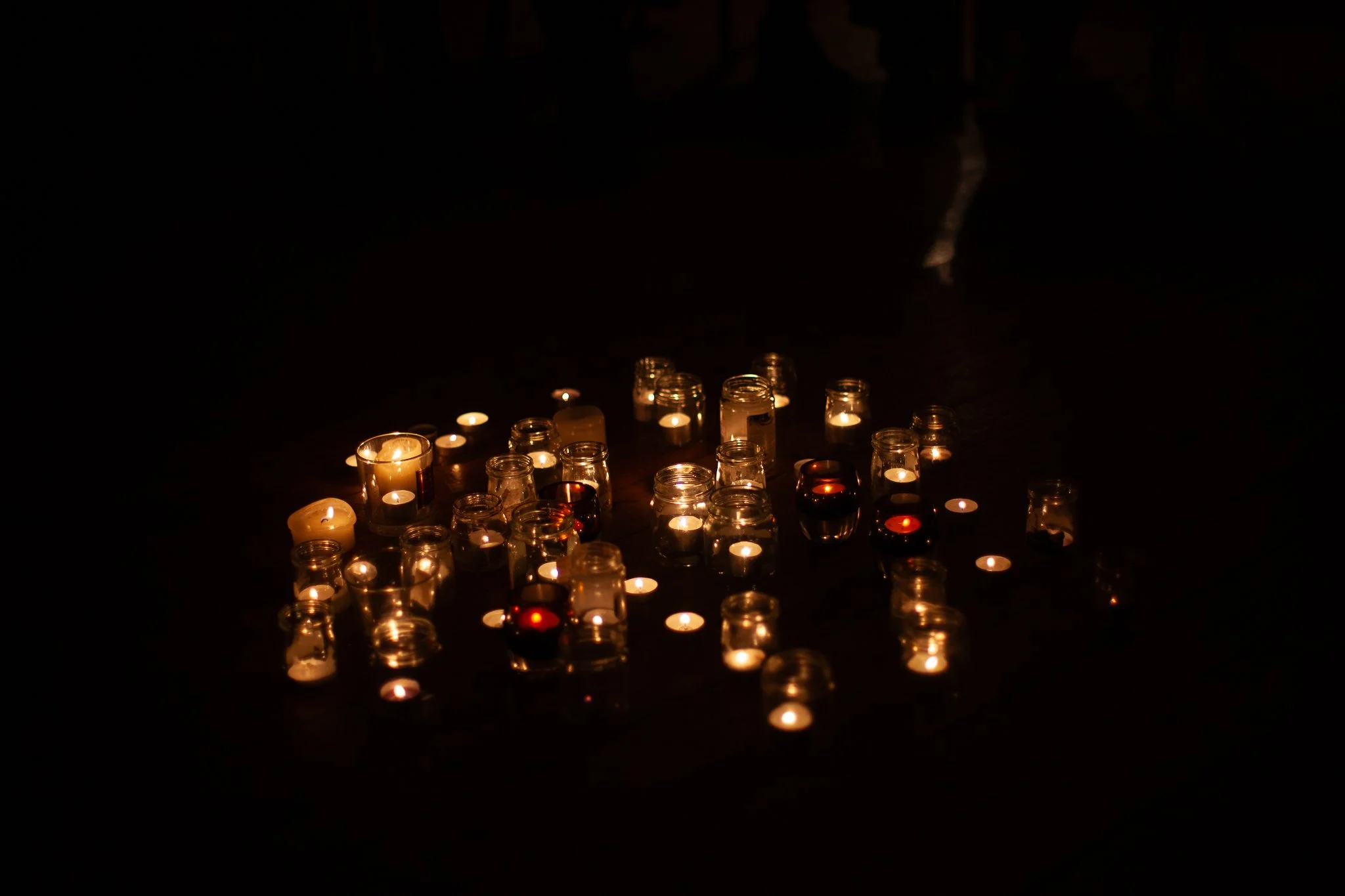
On our opening night, as the winter light falls back to a breathing dark, we light a gathering of candles in the centre of our circle. It’s an acknowledgment of the darkness in our systems, in our midst. A soulful young man from Palestine reads a poem from his people, in English, then in Arabic. The poetry travels as remembrance and witness. We leave the silence rest for a few moments, then we give the night to poetry.
The poetry salon comes into shape by way of gathering around candlelit tables. I speak a little to how poetry can open us up to insight and meaning making, which otherwise may remain out of view. I’ve choose a selection of poems which speak to the inner quest for purpose and value, and how we may travel. ‘Start close in’, came words from David Whyte, words which teach us how and where to listen. ‘To know kindness as the deepest thing inside, we must also know sorrow as the other deepest thing’, offers Naomi Shihab Nye. But let us not forget to rise, says Maya Angelou, nor forget to feast on our lives, reminds Derek Walcott. As each poem arrives, the salon participants share their responses. They speak to the questions the poems deliver or expose, and to the memories the words may evoke. Poetry is opening a door, and we step through.

Over the few days there is also project work. The participants have been assigned teams, and given challenge briefs by a range of community partners. They learn about design thinking and root cause systems work to build solution prototypes. There is an ideas to action cafe, to help them design and evolve their own personal projects too- a project which will nudge them to develop the changemaking skills they are seeking to strengthen. Then we add a buddy system to help sustain the process beyond the School.
Another morning, still threading softly, we go on a silent Imram- a mythic Celtic walk out into the layered landscape which helps us listen to ourselves and our questions more fully. ‘Everything is connected’, says a participant as she begins to see in relationship and not in silos. ‘When I am quiet, memories can rise’, says another as he gets in touch with the regenerative power of nature’s wisdom, and it’s beautifully dangerous awakening too.
Then there are games and laughter, and career talks and delicious food, and by night, we fall back to story and song. Inspired by The Moth Storytelling movement, we tell stories of rupture and relief, of courage and confidence, and even some of pure embarrassment. The stories are torches, illuminating pathways of connection. Later there is a night of song and dance, and making room for what happens when we feel free to offer whatever talents or gifts are seeking to be shared.
Everything is connected, yes, and so are we.

Photo: Caitriona Rogerson

That winter morning as we walked down from the Burren with the light cascading in ribbons of honey and awe, careful of our footing, Yeats words came back to me, and I spoke them aloud.
Had I the heavens’ embroidered cloths,
Enwrought with golden and silver light,
The blue and the dim and the dark cloths
Of night and light and the half-light,
I would spread the cloths under your feet:
But I, being poor, have only my dreams;
I have spread my dreams under your feet;
Tread softly because you tread on my dreams.
My dream, I realise, is this new story in the making. As we thread softly alongside the fissures and the cracks, as these young people, and myself, learn to listen to the layers of story, as we try to build the skills, and moral muscle to straddle the divides, I can’t help but feel expanded, connected. The dream is in the layers and in the rising. The dream is in the writing and the telling. But it’s also in the circle, with a light at the centre. And they are it. We can all be it. It’s all connected.



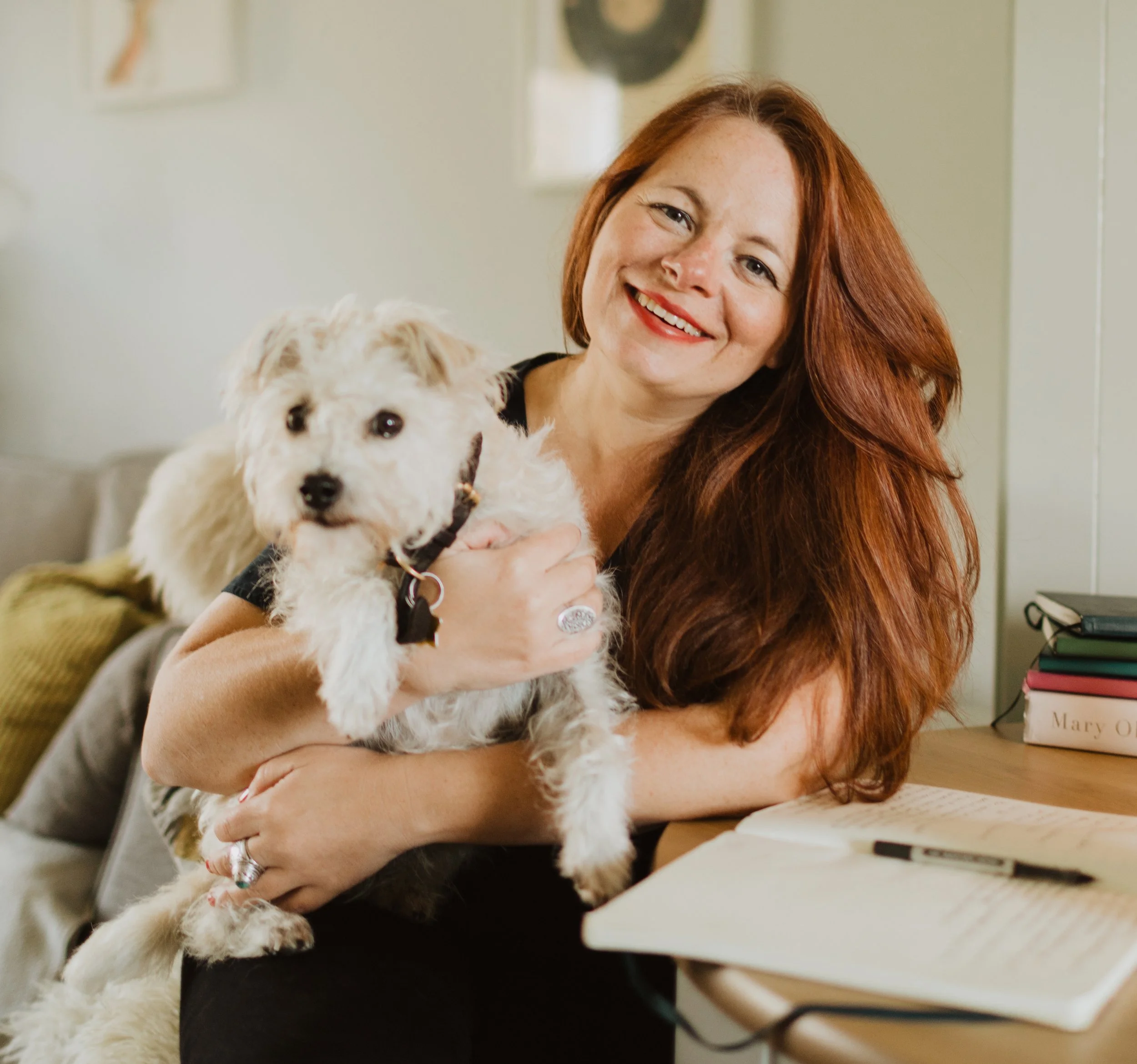
Hello. I'm Clare
I'm a writer, educator and facilitator, living in beautiful West Cork, Ireland. I love to share resources and learning to help harness the regenerative power of words, place and story. I hope my work offers nourishment for mind and soul. Thank you for being here. Clare x

